
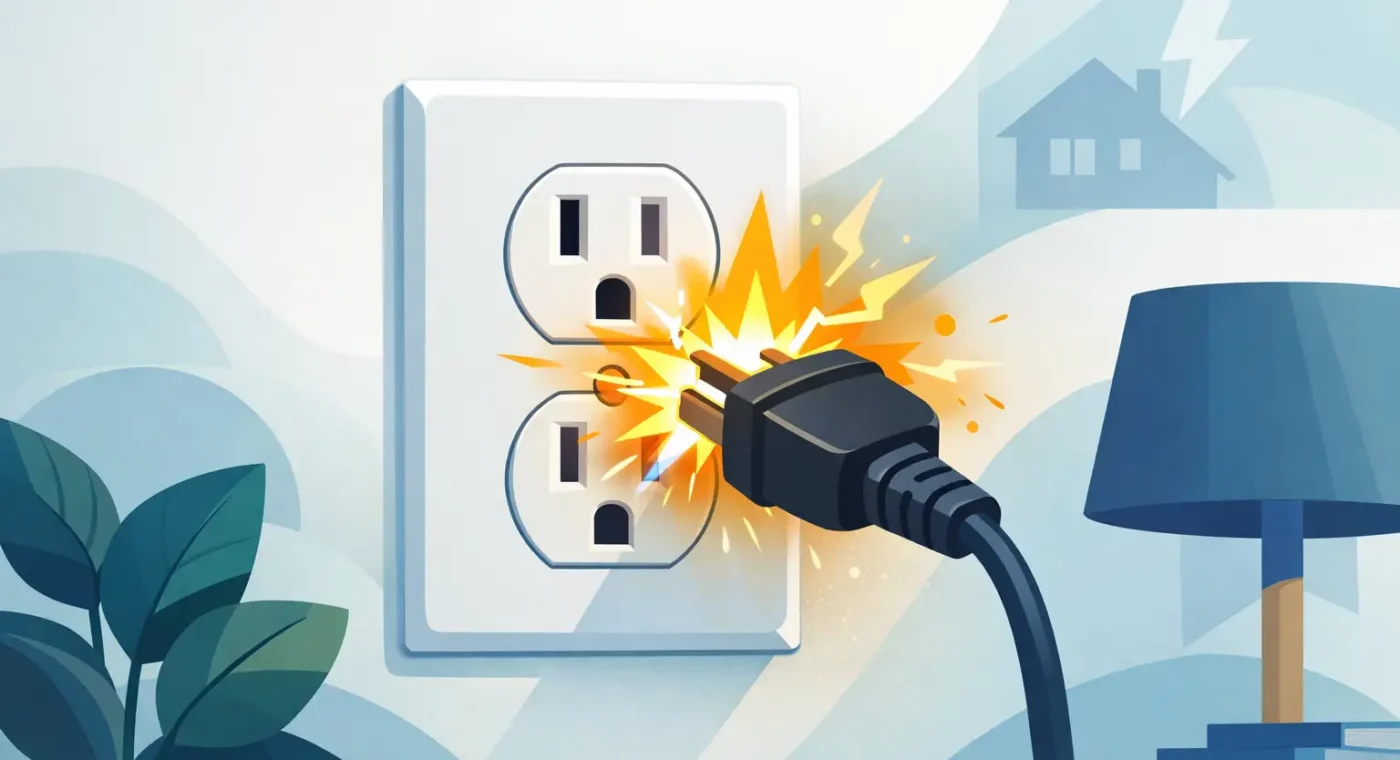
You plug in a lamp, phone charger, or microwave and see a quick flash at the outlet. Your first thought is usually the right one: why is my outlet sparking, and is this dangerous? Sometimes the answer is minor. Other times, that spark is an early warning of a loose connection, overloaded circuit, or damaged outlet that needs professional attention right away.
A sparking outlet should never be ignored. Electricity does not usually give many second chances, and what starts as a small flash can turn into melted wiring, a tripped breaker, appliance damage, or even an electrical fire. The key is knowing the difference between a normal one-time spark and a sign that something is failing behind the wall.
Why is my outlet sparking when I plug something in?
A small blue spark at the moment you plug in a device can happen when electricity jumps quickly from the outlet to the plug prongs. This is more common with devices that draw a lot of power right away, such as space heaters, window AC units, hair dryers, toasters, or microwaves. In some cases, that brief spark is not automatically a sign of a major problem.
But context matters. If the spark is large, yellow or white, makes a popping noise, leaves a burn mark, or happens repeatedly with different devices, that is no longer something to brush off. Those details point to excess heat, arcing, or poor contact inside the outlet.
An outlet that sparks once in a while under heavy load is very different from an outlet that crackles, smells burnt, or feels warm. The first may be explainable. The second needs a licensed electrician.
Common reasons an outlet sparks
The most common cause is a loose connection. Over time, the metal contacts inside an outlet can wear down or loosen. When the plug does not fit tightly, electricity may arc instead of flowing cleanly. That arc creates heat, and heat is what turns a simple repair into a safety issue.
Another common cause is an overloaded circuit. If you are running high-demand appliances on one circuit, the outlet may be under more stress than it was meant to handle. This often shows up in kitchens, laundry areas, garages, and older homes where modern electrical demand has outgrown the original wiring.
Damaged wiring is another possibility. Wires behind the outlet can become loose, frayed, or degraded from age, improper installation, vibration, or past overheating. In commercial properties and rental units, repeated use can speed up wear, especially in outlets that serve cleaning equipment, refrigerators, office machines, or kitchen appliances.
Moisture also causes trouble. If an outlet is near a sink, in a bathroom, outdoors, in a laundry room, or anywhere humidity is high, water intrusion can create arcing and shorting. That is especially concerning if the outlet is not GFCI-protected where required.
Sometimes the issue is not the outlet at all. A damaged plug, bent prongs, or a failing appliance can cause sparking at the connection point. If one specific device sparks at multiple outlets, stop using that device until it can be inspected.
Signs the sparking outlet is dangerous
Some warning signs mean you should stop using the outlet immediately. If the faceplate is discolored, the outlet feels hot, you smell something burning, or you hear buzzing or crackling, the problem has likely moved beyond a harmless plug-in spark.
Frequent breaker trips are another red flag. Breakers trip to protect your wiring from overheating, so if a sparking outlet and a tripping breaker are happening together, the circuit may be overloaded or damaged.
You should also take it seriously if plugs fall out easily. A loose-fitting outlet often means the internal contacts are worn. That poor connection can create repeated arcing every time the outlet is used.
For property managers and business owners, timing matters too. If an outlet serving refrigeration, office equipment, point-of-sale systems, or kitchen appliances starts sparking, delaying repairs can turn a small electrical issue into downtime and equipment loss.
What to do right away if your outlet sparks
First, stop using the outlet. Unplug the device if it is safe to do so. If the plug is stuck, hot, or showing signs of melting, do not force it. Turn off the breaker to that circuit and leave it alone until it can be inspected.
Next, take a quick look without opening anything. If you see black marks, melted plastic, smoke residue, or any sign of heat damage, the outlet should stay out of service. Do not test it again to see if it still works.
If the outlet is near water or feels hot, shut off power to the circuit as soon as possible. Electrical problems around moisture or heat deserve urgent service.
This is also a good time to think about what was plugged in. Was it a heavy-load appliance? Was it connected through a power strip or extension cord? Did the plug fit loosely? That information helps with accurate diagnosis and faster repair.
Why outlet sparks happen more in older homes and busy commercial spaces
In older homes, outlets may simply be worn out. Many were installed long before people ran multiple TVs, chargers, gaming systems, microwaves, and portable AC units at the same time. Even if the outlet still looks fine from the outside, the internal parts may be past their reliable service life.
Commercial spaces have a different kind of wear. More frequent plug-in and unplug cycles, heavier equipment loads, and long operating hours all put stress on outlets and circuits. A sparking outlet in a break room, office, retail counter, or commercial kitchen often points to a connection that is failing under repeated use.
That is why diagnosis matters more than guesswork. Replacing the visible outlet may solve the problem, but if the real issue is a loose wire, overloaded branch circuit, or appliance fault, the spark will come back.
Can I fix a sparking outlet myself?
If all you are doing is unplugging a device and turning off the breaker, that is a smart immediate step. Beyond that, caution is the better choice. Electrical repairs are not the place for trial and error, especially when arcing or overheating is involved.
A sparking outlet can mean damaged wiring behind the wall, and that is not always visible from the front. Even if the outlet itself is the only failed part, the safe repair still depends on proper testing, secure terminations, and confirming the circuit is in good condition.
For homeowners, landlords, and business operators, the real cost is not just the repair itself. It is what happens if the wrong fix leaves a hidden hazard in place. Professional service helps prevent repeat failures, appliance damage, and avoidable safety risks.
When to call an electrician for a sparking outlet
Call a licensed electrician right away if the outlet sparks repeatedly, feels warm, smells burnt, has visible damage, makes noise, or trips the breaker. You should also call if the outlet is in a kitchen, bathroom, laundry room, garage, or outdoor area where moisture may be a factor.
If you manage rental property or a commercial facility, fast service is especially important. Electrical issues rarely stay contained, and what looks small at one outlet can point to a larger circuit problem affecting safety and operations.
A dependable electrical technician can identify whether the problem is the outlet, the wiring, the breaker, the connected appliance, or a load issue somewhere else on the circuit. That kind of diagnosis saves time and avoids replacing parts that were never the real problem.
At EAAIRS Services and Repair Ltd., this is exactly the kind of issue that should be handled quickly and correctly – with clear communication, fair pricing, and repairs that restore confidence in the space.
How to reduce the chance of outlet sparking in the future
Use the right outlet for the job. High-demand appliances should not share overloaded power strips or extension cords. If a plug feels loose, do not keep using that outlet just because it still works. And if you notice flickering power, warm faceplates, or intermittent operation, treat those as early warning signs instead of waiting for a failure.
It also helps to update aging outlets in hard-working areas of the property. Kitchens, laundry rooms, workshops, and commercial prep areas often benefit from inspection and replacement before visible damage appears.
If you keep asking, why is my outlet sparking, the safest answer is this: a small spark might be normal, but repeated or severe sparking is not. When electricity starts acting differently, fast attention is the best way to protect your property, your equipment, and the people using the space every day.