
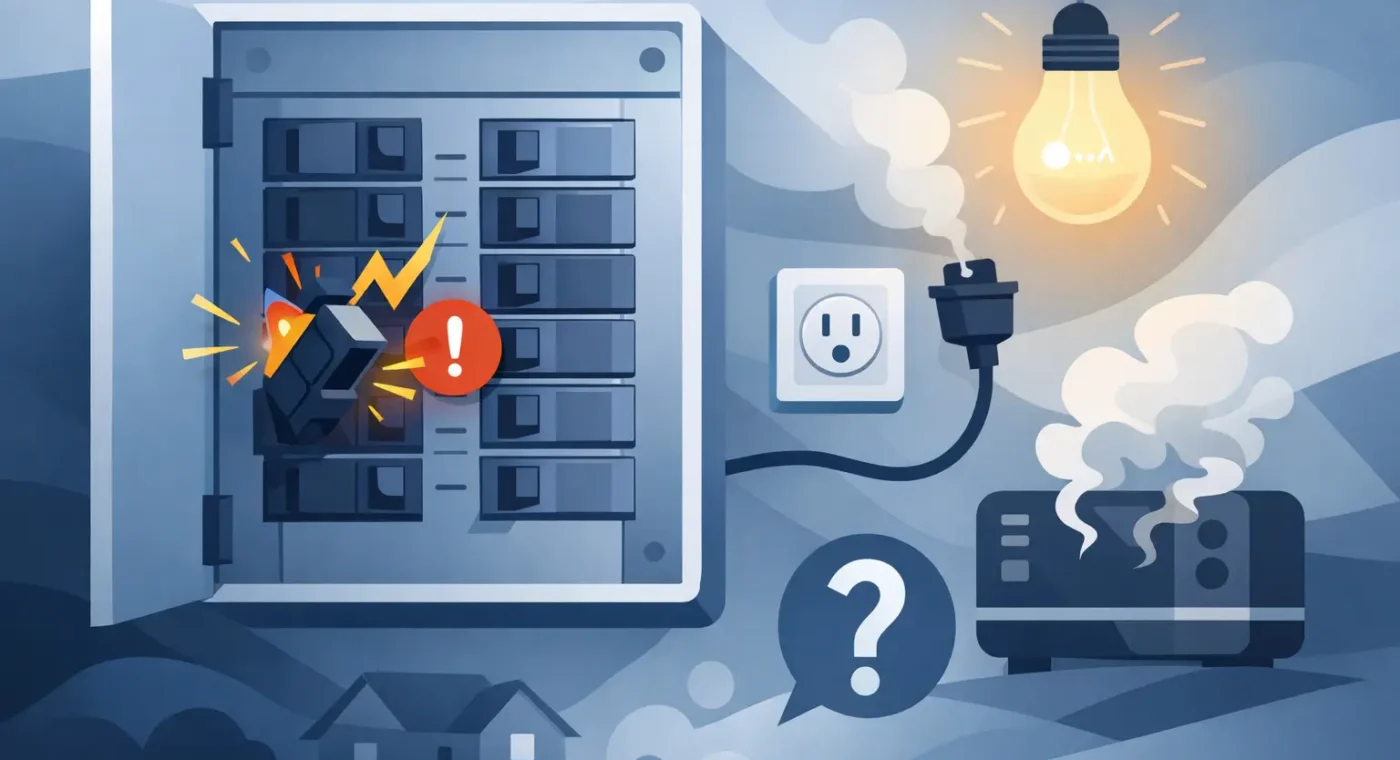
A breaker that trips once during a storm is annoying. A breaker that keeps tripping when you run the microwave, AC, or office equipment is a warning sign. If you’re asking, “why is my breaker tripping,” the short answer is that your electrical system is trying to protect you from overheating, overload, or a wiring fault.
That protection is a good thing. What matters is finding out whether the issue is something simple, like too many devices on one circuit, or something more serious, like a short circuit, ground fault, failing breaker, or appliance problem. The longer it keeps happening, the more likely it is to disrupt your day and point to a safety issue that should not be ignored.
Why is my breaker tripping in the first place?
Your breaker is designed to shut off power when the electrical current on a circuit becomes unsafe. Instead of letting wires overheat behind walls or inside equipment, the breaker cuts power before the problem gets worse.
In homes and commercial spaces, the most common reason is an overloaded circuit. That means the circuit is being asked to power more than it was designed to handle. It can happen all at once, like running a toaster oven, coffee maker, and microwave on the same kitchen line, or gradually, like adding more equipment to a workspace over time.
But overload is not the only cause. A breaker can also trip because of a short circuit, a ground fault, moisture intrusion, damaged wiring, a worn-out breaker, or an appliance that is drawing too much current. Newer breakers may also be AFCI or GFCI types, which are more sensitive by design and can trip when they detect conditions that older systems might have missed.
The most common causes of a tripping breaker
An overloaded circuit is usually the easiest problem to understand. Every circuit has a limit based on its wire size and breaker rating. If the total electrical demand goes past that limit, the breaker trips. This is common in kitchens, laundry rooms, garages, older homes, and commercial spaces where equipment has been added without updating the circuit layout.
A short circuit is more serious. This happens when a hot wire touches a neutral wire, creating a sudden surge of current. You may notice the breaker trips immediately when turned on, or when a specific device is plugged in. Sometimes there is a burning smell, discoloration around an outlet, or visible damage to a cord.
A ground fault is similar, but the hot wire touches a grounded surface or grounding path instead. This is especially common in bathrooms, kitchens, outdoors, utility areas, and anywhere moisture is present. Ground faults are dangerous because they can increase the risk of shock.
Sometimes the breaker itself is the problem. Breakers do wear out. A weak breaker may trip more easily than it should, especially after years of heat cycles and repeated use. That said, replacing a breaker without diagnosing the cause first can waste time and money if the real issue is in the wiring or connected equipment.
Appliances are another major source of trouble. Air conditioners, refrigerators, space heaters, dryers, microwaves, and commercial kitchen equipment all place real demand on a circuit. If an appliance motor is failing, a heating element is damaged, or internal wiring is compromised, it may trip the breaker even if the rest of the circuit is fine.
Why is my breaker tripping when I use one specific appliance?
When the breaker trips only when one appliance turns on, that appliance becomes the first suspect. A window AC unit with a struggling compressor, a dryer with a heating fault, or a refrigerator with a failing motor can all draw more current than normal.
There is a catch, though. The appliance may not be defective if it is simply on the wrong circuit. Many larger appliances need a dedicated circuit. If they share power with lights, outlets, or other equipment, normal operation can be enough to push the circuit over the limit.
This is where accurate diagnosis matters. The symptom looks the same from the panel, but the repair can be completely different. One situation calls for appliance repair. Another calls for electrical circuit upgrades. In some cases, both systems need attention.
What you can check safely before calling for service
You do not need to guess blindly, but you should stay within safe limits. Start by noticing patterns. Does the breaker trip at the same time every day, when a certain appliance starts, or only when several things are running together? That information helps narrow down the cause quickly.
Next, unplug or turn off the devices on the affected circuit. Reset the breaker once. If it holds, begin reconnecting items one at a time. If the breaker trips again when a certain device is used, stop there. Do not keep resetting and retrying. Repeated trips are a signal, not an inconvenience to force past.
You can also look for visible warning signs such as a damaged cord, a loose plug, a warm outlet cover, scorch marks, buzzing sounds, or moisture near outlets and equipment. If any of those are present, leave the circuit off and schedule professional service.
If the breaker trips immediately even with everything unplugged, the issue is more likely in the wiring, the breaker itself, or a hardwired device on that circuit. That is not a DIY situation.
When a tripping breaker becomes urgent
Some breaker issues can wait a day. Others should be treated as urgent. If you smell burning, see smoke, hear crackling, notice panel heat, or lose power to critical equipment, do not keep testing the system. Shut off the affected circuit if safe to do so and call a licensed electrician.
Urgency also goes up in commercial spaces. A breaker that trips in a restaurant kitchen, office server area, rental property, or tenant unit can affect operations, food safety, comfort, and liability. What starts as an electrical nuisance can quickly turn into downtime or a bigger repair if ignored.
This is one reason many property owners prefer working with a service company that can handle electrical issues alongside appliance and equipment diagnosis. If the breaker and the connected machine are both possible causes, a coordinated repair approach can save time and reduce repeat visits.
Why is my breaker tripping in an older home or building?
Older properties often have circuits that were designed for lighter electrical use than what people expect today. Decades ago, kitchens had fewer countertop appliances, bedrooms had fewer electronics, and commercial operations often used different equipment loads than they do now.
That does not mean an older building is unsafe by default. It does mean the electrical system may be undersized for current demand, especially if additions, remodels, or new equipment were installed over time. In these cases, the breaker may be doing exactly what it should do.
The right fix depends on the setup. Sometimes load balancing solves the problem. Sometimes a dedicated circuit is needed for a high-demand appliance. Sometimes panel work or wiring upgrades make more sense. There is no honest one-size-fits-all answer, and that is why a proper inspection matters.
What a professional diagnosis usually involves
A licensed technician will typically start at the panel, confirm breaker size and circuit load, and test how the circuit is behaving under use. They may inspect outlets, switches, junctions, and connected equipment, especially if the tripping appears tied to a specific appliance or area.
From there, the goal is to separate symptom from cause. Is the breaker weak, or is it responding correctly to excess current? Is the wiring damaged, or is a motor drawing too hard on startup? Is the problem intermittent because of heat, vibration, or moisture? Those details matter because the wrong repair can leave the issue unresolved.
At EAAIRS Services and Repair Ltd., this kind of problem is approached with the same priority customers expect from any essential system failure – fast response, clear communication, and repairs that solve the actual issue instead of masking it.
The mistake to avoid
The biggest mistake is treating a tripping breaker like a reset button that just needs persistence. If a breaker keeps tripping, it is doing its job. Forcing it back on without understanding why can put stress on wiring, equipment, and the panel itself.
The second mistake is assuming the cheapest explanation is always right. Yes, sometimes it is just an overloaded circuit. Other times the real issue is a failing appliance, hidden wiring damage, moisture intrusion, or a circuit that was never properly sized for the load. The difference is not always visible from the outside.
If your breaker has tripped more than once, the safest next step is not more trial and error. It is getting the circuit checked, the load evaluated, and the source of the problem confirmed so your home or business can get back to normal without unnecessary risk.
A reliable electrical system should not keep interrupting your routine. When it does, taking it seriously early is usually the fastest way to protect your property, restore power, and avoid a much bigger repair later.
5 Reply on “Why Is My Breaker Tripping?”