
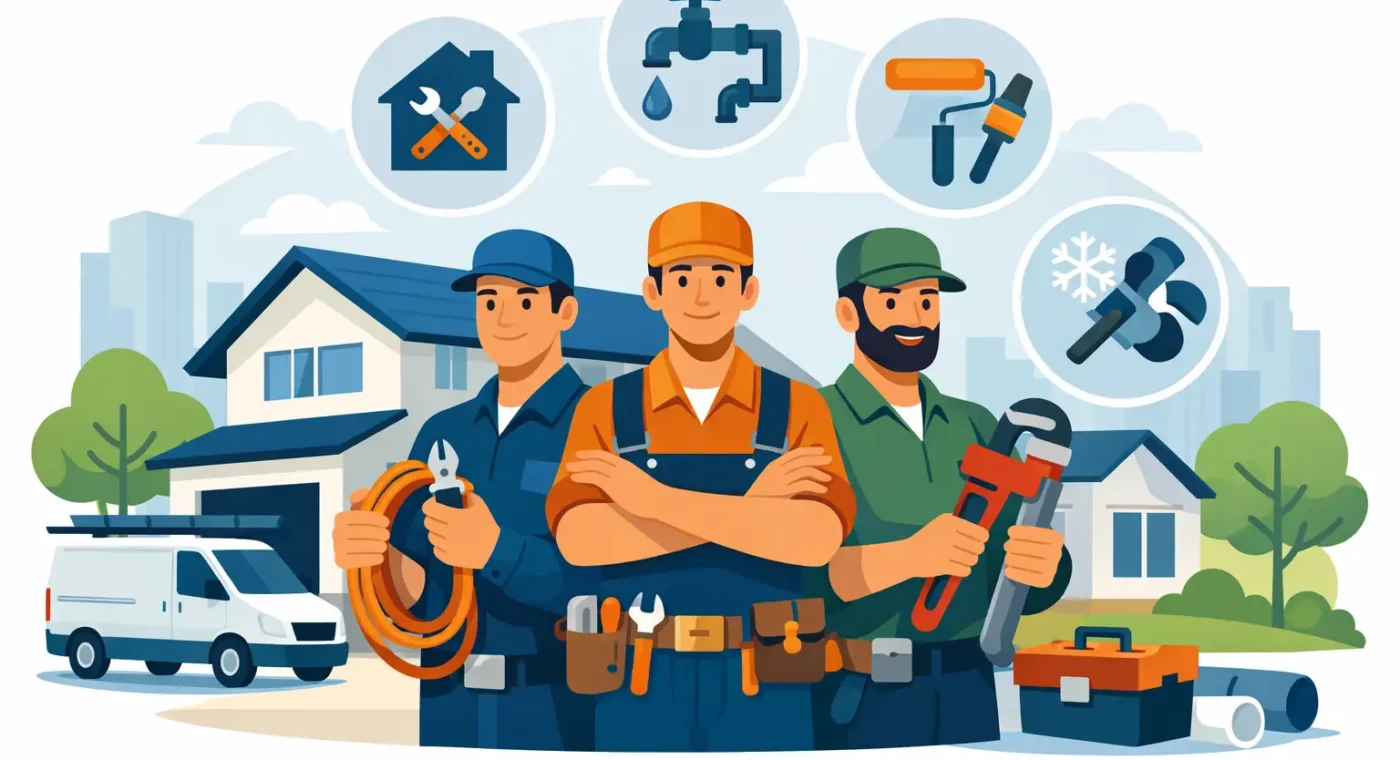
When the AC stops cooling, the water heater starts leaking, and a kitchen circuit keeps tripping, most property owners do not want three separate contractors, three schedules, and three chances for delays. That is where a multi trade home service company makes a real difference. Instead of piecing together help from different providers, you get one reliable team that can handle multiple essential systems with a faster, more coordinated approach.
For homeowners, landlords, property managers, and business operators, the value is practical. You want the problem diagnosed correctly, repaired safely, and resolved without wasting days on phone calls and callbacks. You also want clear pricing, fast availability, and technicians who understand how one issue can affect the rest of the property. That is exactly why the multi-trade model has become more appealing for both residential and commercial service needs.
What a multi trade home service company actually does
A multi trade home service company brings together several skilled service areas under one provider. Depending on the company, that can include electrical work, appliance repair and installation, air conditioning service, water heater repair, dryer duct cleaning, and commercial equipment support.
The biggest advantage is not just convenience. It is coordination. A single-service contractor may only see the issue that falls inside their lane. A multi-trade team can spot related problems earlier. If a dryer is underperforming, the issue may involve the appliance itself, the electrical connection, or a blocked duct. If a water heater is not working properly, the cause may be mechanical, electrical, or installation-related. When one company can assess the full picture, customers often get a more accurate answer sooner.
This approach also reduces the back-and-forth that frustrates so many customers. You are less likely to hear, “That part is not our responsibility,” or, “You need to call someone else for that.” Instead, the goal is to solve the issue with one point of contact and one service process.
Why customers are moving away from single-trade scheduling
Most service calls do not happen at a convenient time. They happen when comfort drops, operations slow down, or a small issue starts turning into a bigger one. In those moments, speed matters, but so does trust.
Working with separate contractors can create delays at every step. One provider diagnoses an issue, another has to verify it, and a third may be needed to complete the actual repair. That can stretch a one-day problem into a week-long disruption. For a homeowner, that means stress and inconvenience. For a business, it can mean lost revenue, unhappy tenants, or interrupted operations.
A multi-trade provider simplifies that process. Scheduling is easier because you are working through one team. Communication is clearer because there is a single service record and a more complete understanding of the property. The result is often faster restoration of comfort, safety, and normal routine.
That does not mean every job should automatically go to one company. Some highly specialized projects may still call for a niche expert. But for day-to-day repairs, replacements, maintenance, and urgent service needs, a company with multiple technical trades can be a smarter fit.
The real benefits of a multi trade home service company
The first benefit is time. Customers are not just paying for labor. They are paying to reduce disruption. When one company can inspect, diagnose, and handle more than one system, the service experience becomes more efficient.
The second benefit is accountability. If several contractors are involved, it can be hard to know who owns the outcome. A multi-trade company has a stronger incentive to solve the full problem because the customer relationship stays under one roof. That usually leads to better follow-up and fewer loose ends.
The third benefit is consistency. From the first phone call to the final invoice, customers want a process that feels organized and predictable. A dependable service company provides that with straightforward communication, appointment updates, professional technicians, and transparent pricing.
The fourth benefit is better support for properties with ongoing needs. Rental homes, multi-unit buildings, restaurants, and busy households rarely have just one maintenance issue over the course of a year. A provider that already knows the property can respond faster and make better recommendations over time.
Where this model helps most
The multi-trade approach is especially useful when systems overlap. Residential properties often have issues that do not fit into a neat box. A homeowner may need an appliance installed, an outlet updated, and an AC concern checked in the same week. Calling one service partner instead of three saves time and avoids scheduling headaches.
For landlords and property managers, the benefits are even clearer. Tenant satisfaction often depends on how quickly maintenance issues are handled. Delays create complaints, vacancy risk, and extra administrative work. A provider that can cover electrical, appliance, water heater, and comfort-related service needs becomes much easier to manage.
Commercial operators also benefit because downtime has direct costs. A restaurant with equipment trouble or an office with cooling issues needs a fast, professional response. In commercial settings, service is not just about comfort. It is about continuity. A company that understands both technical repair and the urgency of business operations can be far more valuable than a patchwork of vendors.
What to look for before you hire one
Not every company that offers multiple services delivers the same level of quality across each trade. That is why customers should look beyond the service list.
Licensing and technician qualifications should come first. If a company handles electrical work, HVAC-related service, appliance repair, and installations, customers should feel confident that trained professionals are doing the work safely and correctly. Fast scheduling only matters if the diagnosis is accurate.
Response time matters too, especially for urgent repairs. A good provider should be able to communicate clearly about availability, arrival windows, and next steps. Customers dealing with no hot water, a failed AC unit, or commercial equipment problems should not have to chase updates.
Pricing transparency is another major factor. A trustworthy company explains the issue, outlines the recommended solution, and provides clear estimates before work begins. That removes a lot of the anxiety customers feel when they are already dealing with an unexpected problem.
It also helps to ask how the company handles follow-up. Service should not end the moment the repair is completed. Strong providers stand behind their work, answer questions, and make sure the customer is satisfied after the visit.
Why one point of contact matters more than people think
Customers often focus on the repair itself, but the service experience around the repair matters just as much. When there is one point of contact, everything gets easier. The person booking the appointment understands the service history. The technician arrives with better context. The billing is simpler. The follow-up is more organized.
That kind of continuity matters when issues are urgent, but it is also valuable for long-term property care. A trusted provider can help customers stay ahead of breakdowns, make informed replacement decisions, and prioritize maintenance based on real conditions instead of guesswork.
This is one reason companies like EAAIRS Services and Repair Ltd. appeal to customers who want reliable support without the usual contractor shuffle. The combination of licensed expertise, fast response, fair pricing, and multi-trade capability gives people a more practical way to manage both routine service and urgent repairs.
A better fit for how properties really operate
Homes and commercial spaces do not run on one system alone. Electrical components, appliances, heating and cooling equipment, ventilation, and hot water systems all affect comfort and functionality. When one starts failing, others may be involved. Service should reflect that reality.
A multi-trade company is not just selling convenience. It is offering a more complete response to the way real properties work. That can mean fewer appointments, quicker resolutions, and less stress for the customer. It can also mean a safer result, especially when the problem crosses technical boundaries.
If you are hiring for a one-off specialty project, it may make sense to compare highly focused experts. But if you want reliable help for the systems your home or business depends on every day, a multi-trade provider is often the stronger choice.
The best service call is the one that solves the problem without creating new complications, and that usually starts with choosing a company built to handle more than one thing well.