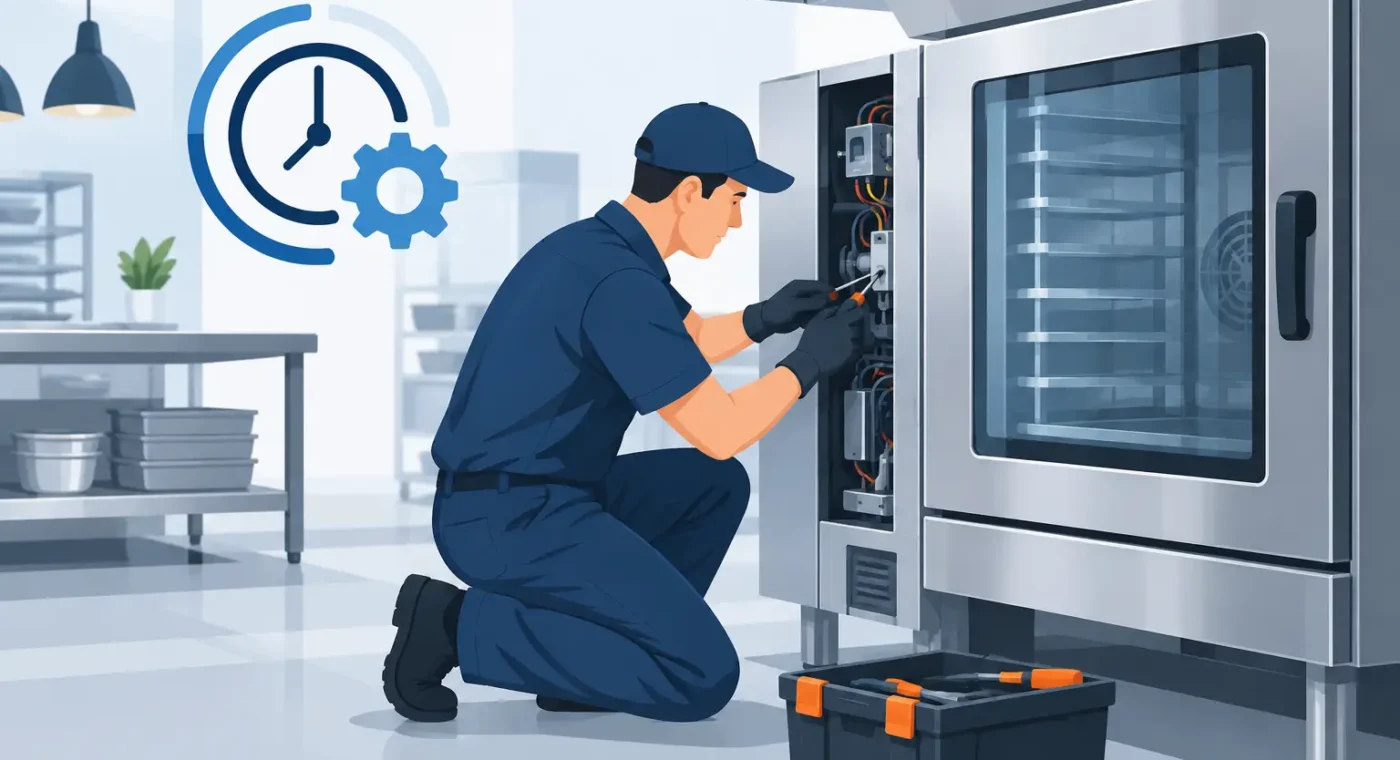
A commercial oven that will not heat, holds the wrong temperature, or shuts down during service is more than an equipment issue. It can delay tickets, compromise food quality, frustrate staff, and cost a business an entire shift of revenue. Fast, professional commercial oven repair helps protect your kitchen’s output while addressing the safety risks that come with high-voltage electrical components, gas connections, and extreme heat.
For restaurant owners, caterers, bakeries, property managers, and commercial kitchen operators, the priority is simple: get a clear diagnosis, understand the repair options, and restore reliable operation without unnecessary delays.
When Commercial Oven Repair Cannot Wait
Some oven problems are inconvenient. Others require immediate action. If an oven is producing smoke, sparking, tripping a breaker, giving off a gas odor, or showing signs of overheating, stop using it. Turn off the equipment if it is safe to do so, keep staff away from the unit, and contact a qualified technician. A gas odor should always be treated as urgent. Do not attempt to relight the oven, operate switches nearby, or search for the source yourself.
Other issues may not pose an immediate emergency, but they still deserve prompt service. An oven that takes too long to preheat, bakes unevenly, or cannot maintain a set temperature can create waste long before it fails completely. In a busy kitchen, inconsistent heat means undercooked products, overcooked batches, repeated remakes, and a harder job for every person on the line.
A repair call is also warranted when error codes keep returning, controls become unresponsive, doors no longer seal correctly, or fans make unusual noises. These symptoms often point to a component that is failing under load. Waiting until the oven stops during peak service usually turns a manageable repair into a larger operational problem.
Common Problems Behind Oven Downtime
Commercial ovens are built for demanding use, but constant heat cycles, grease exposure, steam, and high-volume operation eventually affect critical parts. The exact cause depends on whether the unit is electric, gas, convection, combi, deck, or conveyor-style, but several issues occur across many equipment types.
Temperature complaints are among the most common. A failed temperature sensor, thermostat, heating element, ignition component, gas valve, control board, or relay can prevent the oven from reaching or maintaining the selected setting. The symptom may look simple, but the diagnosis should not be guessed. Replacing the wrong part wastes time and money, especially when an electrical supply issue or damaged wiring is the real cause.
Uneven cooking can come from weak heating elements, restricted airflow, a worn convection fan motor, damaged door gaskets, or calibration problems. For a bakery, pizza operation, or restaurant relying on consistent batch results, a few degrees of variation can affect product quality and customer satisfaction.
Door problems deserve more attention than they often receive. A door that does not close tightly releases heat, forces the oven to work harder, and can make temperature recovery slower during a rush. Broken hinges, worn gaskets, damaged latches, and misalignment may seem minor, yet they can raise energy use and shorten the life of other components.
Electrical issues can show up as intermittent shutdowns, blown fuses, breaker trips, display failures, or controls that reset without warning. These faults should be handled by a trained professional who can safely test the equipment and its supply connection. Commercial kitchen equipment is not the place for trial-and-error repairs.
Why Accurate Diagnosis Saves More Than Time
The fastest repair is not always the one that starts with a replacement part. It starts with determining why the problem occurred. A heating element may have failed because of age, but it could also be damaged by a control issue that keeps it energized too long. A tripped breaker may point to an overloaded circuit, compromised wiring, or a failing component inside the oven.
A proper service visit should include a review of the reported issue, safe inspection of relevant electrical or gas components, functional testing, and a clear explanation of what needs to be repaired. The technician should also identify whether the repair addresses the root cause or whether the appliance is showing broader signs of decline.
This matters when deciding between repair and replacement. If a unit has a single failed component and is otherwise dependable, repair is often the practical choice. If it has recurring control failures, extensive corrosion, unavailable parts, poor energy performance, or a repair cost that approaches replacement value, investing in new equipment may make better business sense. The right decision depends on the oven’s age, condition, role in your operation, and how much downtime your kitchen can absorb.
What Professional Commercial Oven Repair Should Include
Reliable service is about more than getting an oven to turn back on. It should give you confidence that your kitchen can return to normal operation safely. A professional repair process typically begins with listening to the symptoms your team has observed, such as inconsistent temperatures, error codes, delayed ignition, or unusual sounds.
From there, the technician evaluates the oven’s condition and performs the necessary tests to isolate the fault. Once the issue is identified, you should receive straightforward information about the recommended repair, expected parts needs, and pricing before work moves forward. Clear communication is especially valuable for property managers and owners who need to approve work quickly while keeping tenants, staff, or customers informed.
After the repair, the oven should be tested for proper operation. For temperature-related concerns, that means confirming the unit heats and responds as expected, rather than assuming the problem is resolved because the display powers on. Good service also includes practical guidance on preventing repeat issues when there is a clear maintenance or usage factor involved.
EAAIRS Services and Repair Ltd. provides commercial kitchen equipment support with a focus on accurate diagnosis, transparent pricing, and responsive service. When a kitchen issue affects operations, having one dependable technical service partner can reduce the stress of coordinating multiple contractors.
Steps Your Team Can Take Before the Technician Arrives
Staff should never disassemble commercial oven panels or attempt electrical or gas repairs. However, a few safe observations can help speed up diagnosis. Record any error code on the display, note when the issue began, and explain whether the problem affects all cooking modes or only certain settings. If the oven heats inconsistently, describe where the problem appears, such as the top rack, back corner, or one side of the cavity.
It is also helpful to identify the oven’s make, model, and serial number if they are accessible. Keep the area around the equipment clear, and let the technician know about recent breaker trips, power interruptions, cleaning activity, or changes in kitchen operations. These details can reveal patterns that are not obvious from the equipment alone.
If the oven is gas-fired and there is no active gas odor, avoid repeated attempts to ignite it. Repeated resets can make the situation harder to assess and may create additional wear on ignition components. Let a qualified technician determine whether the issue is related to ignition, gas flow, ventilation, controls, or another system.
Maintenance That Helps Prevent a Service Interruption
Preventive maintenance will not eliminate every breakdown, but it can reduce avoidable repairs. The goal is to catch wear before it becomes a mid-service failure. Kitchen teams can support equipment reliability by keeping the oven clean according to manufacturer guidance, removing food debris, and watching for changes in performance.
Pay close attention to door gaskets, hinges, fan noise, preheat times, and temperature consistency. These are often early signs of developing trouble. A kitchen that suddenly needs longer to reach temperature or produces uneven results is telling you something. Addressing it early is usually less disruptive than waiting for a complete shutdown.
For high-use equipment, scheduled inspections can be a smart operational decision. The right frequency depends on how heavily the oven is used, its age, the type of food being prepared, and the demands of the business. A café using an oven for limited daily baking has different needs than a high-volume restaurant running equipment from morning prep through late-night service.
Keep the Kitchen Moving With the Right Response
When an oven fails, the pressure to get it running can lead to rushed decisions. The better approach is quick, safe action: remove unsafe equipment from service, gather useful details, and call a professional who can diagnose the problem correctly. That protects your staff, your food quality, and the schedule your customers count on.
A dependable repair partner does more than fix a failed part. They help you make a clear decision, minimize disruption, and get your kitchen back to the work it does best.