A good induction cooktop can boil water in minutes, hold a delicate sauce at a low simmer, and leave the surrounding surface much cooler than a traditional electric range. But an induction cooktop review should look beyond speed and sleek glass. The right choice depends on your cookware, kitchen electrical capacity, cooking habits, installation conditions, and expectations for service over time.
For homeowners, landlords, and commercial operators, induction can be an excellent upgrade. It is also an appliance that rewards proper planning. A cooktop that is powerful on paper can become frustrating if it is installed on an undersized circuit, paired with incompatible pans, or selected without considering ventilation and repair access.
How Induction Cooking Performs in Real Kitchens
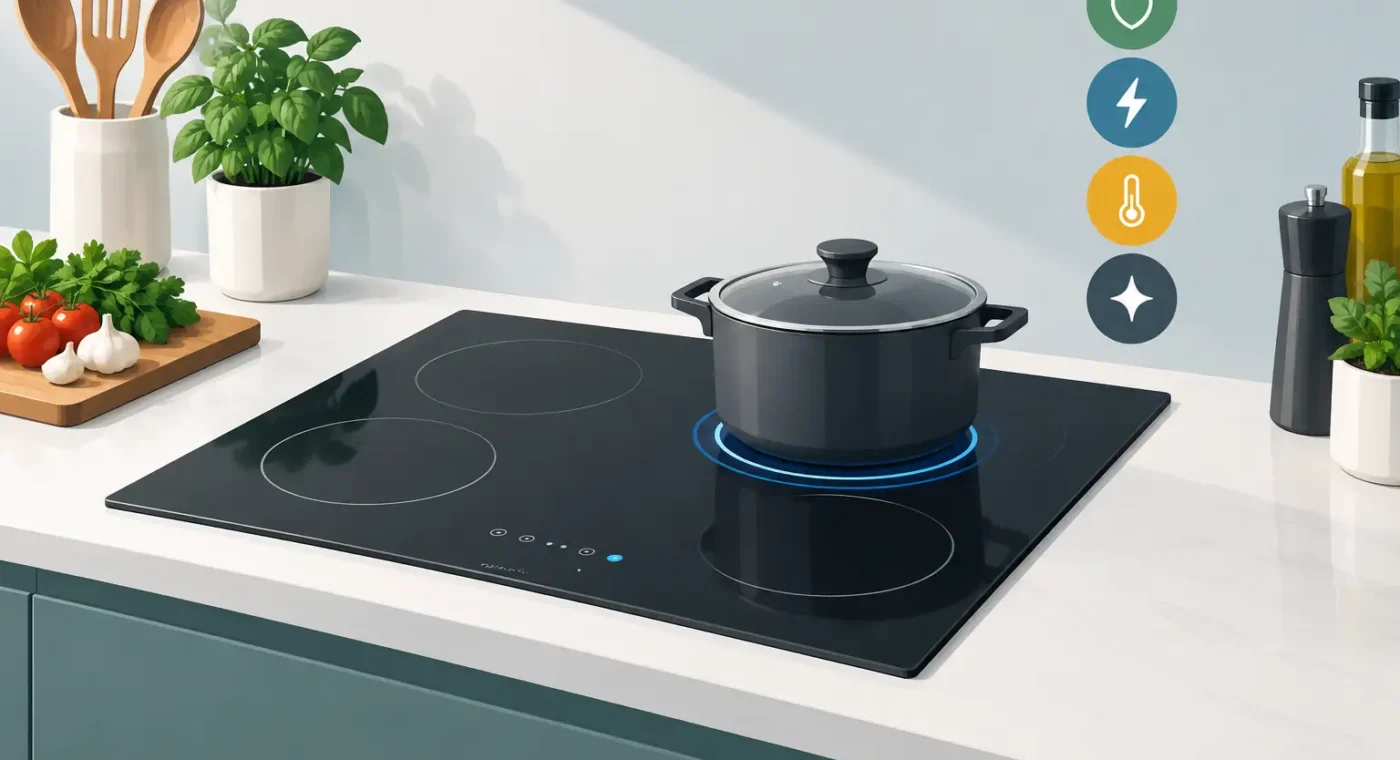
Induction cooktops use electromagnetic energy to heat compatible cookware directly. The pan gets hot, rather than a burner first heating the glass and then transferring heat into the pan. That difference is why induction is known for fast response and efficient cooking.
In daily use, the biggest advantage is control. Turn the power down and the pan responds quickly. Increase it and you can bring a large pot to a boil with less waiting. This is especially helpful for busy households and commercial kitchens where timing affects every meal.
The cooktop surface still becomes warm from contact with a hot pan, so it is not risk-free. However, spilled food is less likely to bake onto the glass than it is on a radiant electric cooktop. Cleanup is generally easier when spills are handled after the surface cools.
There are trade-offs. Some users notice a faint hum, fan noise, or clicking as the cooktop adjusts power. Large burners running at high output may make these sounds more noticeable. They are usually normal operating sounds, but a loud, persistent, or new noise deserves professional diagnosis.
Induction Cooktop Review: The Features Worth Paying For
Not every induction model offers the same cooking experience. Price matters, but the details behind the price matter more. Focus first on the features you will use every week.
Power output affects boiling speed and high-heat cooking. Look for a high-output boost setting if you regularly cook pasta, sear meat, or prepare large pots. At the same time, strong low-temperature performance is just as valuable for melting chocolate, holding sauces, and keeping food warm without scorching.
Flexible cooking zones are helpful for griddles, oversized pans, and commercial-style cookware. Some cooktops can connect two zones into one larger area. This convenience is worth considering if your cooking routine calls for rectangular pans or large roasting vessels. For a smaller kitchen with standard pots and pans, individual zones may be all you need.
Controls should be easy to see, easy to clean, and responsive with dry fingers. Touch controls create a smooth appearance, but they can be less convenient when hands are wet or when a spill covers the control area. Some owners prefer models with direct power-level controls instead of repeatedly tapping up and down.
Safety features are another reason many customers choose induction. Pan detection, control locks, residual-heat indicators, automatic shutoff, and overheating protection can reduce common kitchen risks. These features support safer operation, but they do not replace attentive cooking or proper electrical installation.
Check Your Cookware Before You Buy
Induction requires magnetic cookware. A simple magnet test is useful: if a magnet sticks firmly to the bottom of the pan, it will usually work on induction. Cast iron, many stainless steel pans, and enameled cast iron are often compatible. Aluminum, copper, glass, and some stainless steel cookware will not heat unless they have an induction-ready magnetic base.
Flat-bottom pans perform best. A warped pan may heat unevenly, make noise, or fail to maintain good contact with the cooking zone. Very small cookware can also be an issue if it does not meet the cooktop’s minimum pan size.
Replacing cookware can add meaningful cost to an induction project. Before choosing a cooktop, test the pans you use most often. If your favorite cookware is not compatible, factor replacements into your total budget rather than treating them as an unexpected expense after installation.
Electrical Requirements Can Decide the Project
This is where many online reviews leave out the most important practical detail. An induction cooktop is a high-demand electrical appliance, and the installation must match the manufacturer’s specifications exactly.
Most full-size built-in induction cooktops require a dedicated 240-volt circuit. The required amperage varies by model, often falling in the 30- to 50-amp range, though larger units may require more. The cooktop’s wattage, circuit breaker, wire size, disconnect requirements, and local electrical code all need to be evaluated before installation.
A home with an older electrical panel may need upgrades before adding induction. In a rental property or commercial space, load capacity and existing wiring should be reviewed before equipment is ordered. Trying to save money by using an existing circuit that is not rated for the appliance can create nuisance breaker trips, poor performance, equipment damage, or a serious safety hazard.
Professional installation is also about fit. The countertop cutout, clearance below the unit, ventilation space, and location of the junction box must follow the manufacturer’s instructions. A cooktop may look like a simple drop-in appliance, but cramped cabinetry and incorrect clearances can cause overheating and make future service more difficult.
Ventilation Still Matters
Induction does not create combustion gases at the cooking surface, which is a major benefit compared with gas. It still creates steam, grease, smoke, and food odors. A properly sized range hood or ventilation system remains important, particularly for frequent cooking, open-concept homes, rental units, and commercial kitchens.
Think about the foods you actually prepare. If you regularly sear, fry, or cook with high heat, a weak recirculating hood may not be enough. Ducted ventilation is often more effective at removing heat, moisture, and airborne grease. In commercial settings, ventilation requirements can be more extensive and should be confirmed before a new cooking appliance is installed.
Reliability, Repairs, and Ownership Costs
Induction cooktops have electronic controls, sensors, cooling fans, and power components that make them efficient and precise. Those same components mean diagnosis is not always a simple repair. Error codes, intermittent shutdowns, unresponsive controls, and uneven heating can stem from the cooktop itself, the cookware, the electrical supply, or heat buildup below the unit.
Choose a model from a manufacturer with dependable parts availability and service support in your area. A lower-priced cooktop is not automatically the better value if replacement parts are difficult to source or if the warranty process is limited. Property managers should pay particular attention to this point, since extended downtime can quickly become a tenant and scheduling problem.
Basic maintenance is straightforward. Clean the glass with products approved for ceramic cooktops, use a nonabrasive pad for cooked-on residue, and avoid sliding rough cast iron across the surface. Never place aluminum foil between the pan and cooktop. It can melt onto the glass and cause permanent damage.
If a cooktop repeatedly shuts off, trips a breaker, displays an error code, or has cracked glass, stop using it until it is inspected. Electrical appliances should never be repaired by guessing at parts or bypassing safety components.
Is Induction the Right Choice for You?
Induction is often the best fit for people who want fast cooking, precise heat control, easier cleanup, and a cooler kitchen work surface. It can be especially appealing in homes transitioning away from gas, multifamily properties where safety and efficiency matter, and commercial spaces that need consistent cooking performance.
It may not be the simplest option if your electrical system cannot support the required circuit without a major upgrade, if you rely on nonmagnetic specialty cookware, or if you prefer the visual flame and cooking feel of gas. The best decision is based on the complete installation, not just the appliance price tag.
Before purchasing, confirm the electrical requirements, measure the installation area, test your cookware, and consider ventilation as part of the project. If you need help assessing the circuit or installing a new unit safely, EAAIRS Services and Repair can provide a clear evaluation and professional service. A well-planned induction cooktop should make cooking easier from the first meal, not create a new set of problems after the installer leaves.