
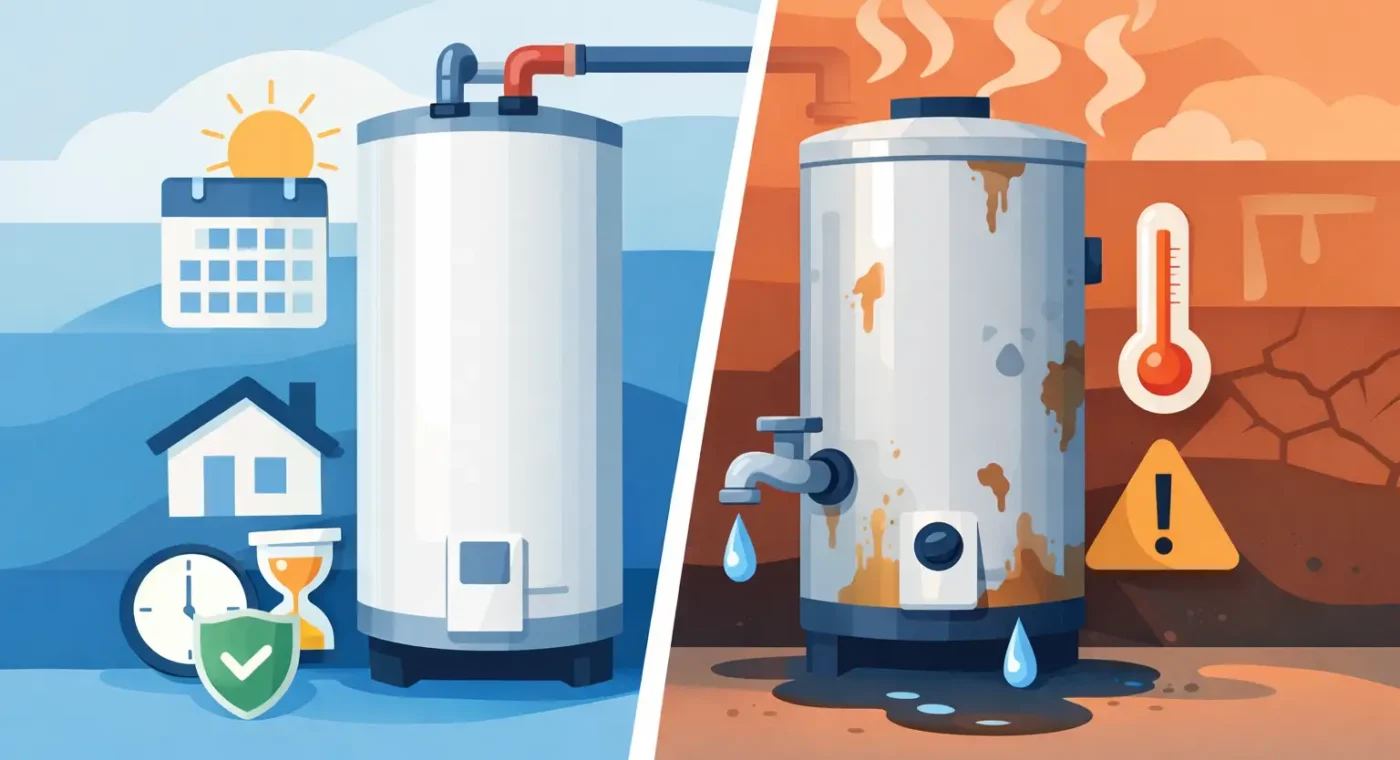
A hot shower that suddenly turns lukewarm is more than an inconvenience. For a homeowner, it can disrupt the morning routine. For a landlord, property manager, or business, a failed water heater can quickly become an urgent service call, possible water damage, and unhappy tenants or customers. Knowing how long do water heaters last helps you plan ahead rather than wait for a breakdown.
Most water heaters do not fail on a convenient schedule. They often show warning signs first, and a professional inspection can clarify whether a repair is the practical choice or whether replacement will save more money and disruption over time.
How Long Do Water Heaters Last?
A conventional tank water heater typically lasts 8 to 12 years. Some well-maintained units reach 15 years, while others fail earlier because of hard water, corrosion, poor installation, or heavy daily use.
Tankless water heaters generally last longer, often 15 to 20 years. Their longer lifespan comes from their design: they heat water on demand instead of constantly storing and reheating a large supply. That does not mean they are maintenance-free. Mineral buildup, ignition issues, venting concerns, and worn components can still affect performance.
The age of the unit matters, but it is not the only decision point. A seven-year-old heater with active leaks may need replacement sooner than a 12-year-old model that has been serviced consistently and is still operating safely. Usage also changes the equation. A large family, multi-unit property, restaurant, salon, or commercial kitchen may put far more demand on a system than a one- or two-person home.
Find Your Water Heater’s Age
Start with the manufacturer label, usually found near the top or side of the unit. It contains a serial number that often includes the production date. The format varies by manufacturer, so a technician can help confirm the age if the label is difficult to read.
If your tank heater is approaching 10 years old, it is wise to schedule an assessment even if hot water is still available. This gives you time to compare repair and replacement options without the pressure of a flooded utility room or a no-hot-water emergency.
What Determines How Long a Water Heater Lasts?
Water quality is one of the biggest factors. Hard water contains minerals that settle at the bottom of a tank as sediment. Over time, that layer forces the system to work harder, reduces heating efficiency, creates popping or rumbling noises, and can contribute to tank damage.
The anode rod also plays a major role in tank water heater life. This replaceable metal rod attracts corrosive elements in the water so they attack the rod instead of the tank lining. Once the rod is depleted, corrosion can begin inside the tank. Replacing an anode rod at the right time may extend the useful life of the equipment.
Installation quality matters just as much. Incorrect electrical connections, unsafe gas piping, poor venting, improper pressure settings, or a poorly sized unit can lead to performance problems and safety risks. A water heater should be selected and installed for the building’s actual hot-water demand, fuel source, and available space – not simply based on the lowest upfront price.
Routine maintenance helps, but it has limits. Flushing a tank, inspecting connections, testing safety components, and checking the anode rod can reduce avoidable wear. However, maintenance cannot reverse extensive internal corrosion or repair a deteriorating tank shell.
Warning Signs Your Water Heater May Be Near the End
A water heater rarely announces its retirement with one obvious symptom. Pay attention to changes in performance, sound, water quality, and the area around the unit.
Rust-colored water can point to corrosion inside the tank or in the plumbing. If rust appears only when hot water is running, the water heater deserves prompt attention. A metallic odor or unusual taste may also signal that the system needs inspection.
Leaks are another serious warning sign. Condensation around a unit can be normal in some conditions, but pooled water, dripping from the tank body, or moisture around fittings should not be ignored. A leaking temperature and pressure relief valve, connection, or drain valve may be repairable. A leak from the tank itself usually means replacement is the safer, more reliable solution.
Listen for new noises. Popping, cracking, banging, or rumbling can occur when sediment traps water beneath it and the burner or element heats the tank. The unit may still produce hot water, but it is working less efficiently and may be under added stress.
Other signs include inconsistent water temperature, hot water that runs out sooner than it used to, longer recovery times, a pilot light that will not stay lit on a gas model, frequent breaker trips on an electric model, or rising energy bills without another clear cause. These symptoms do not automatically mean the whole heater has failed. Accurate diagnosis matters because a thermostat, heating element, valve, burner component, or electrical issue may be repairable.
Repair or Replace? Make the Practical Call
For newer units, a targeted repair is often the most cost-effective answer. Replacing a heating element, thermostat, thermocouple, igniter, pressure relief valve, or corroded connection can restore reliable operation when the tank itself is in good condition.
Replacement becomes more sensible when a tank heater is near or beyond its expected service life, has internal tank corrosion, leaks from the tank body, or needs repeated repairs. Spending heavily on an aging unit can create a cycle of service calls while leaving you exposed to a larger failure.
For rental properties and commercial locations, planned replacement can be especially valuable. Scheduling work during low-occupancy periods or off-hours is usually easier than managing an emergency loss of hot water. It also gives you the opportunity to choose a properly sized, more efficient model that supports the building’s real demand.
Tankless replacement can be a strong option for some properties, especially where space is limited or hot-water use is spread throughout the day. Still, it is not automatically the right fit for every building. Upfront installation costs, electrical capacity, gas line sizing, venting requirements, and simultaneous demand all need to be evaluated before choosing a system.
Maintenance That Helps Protect Your Investment
A simple annual inspection can catch small problems before they interrupt service. For tank models, professional maintenance may include checking for leaks and corrosion, testing the temperature and pressure relief valve, evaluating the anode rod, inspecting gas or electrical components, and flushing sediment when appropriate.
Tankless units benefit from periodic descaling, particularly in areas with hard water. Their filters, burners, venting, and error codes should also be reviewed. Commercial equipment may need more frequent attention because high-volume use accelerates wear.
Do not attempt to bypass a safety valve, ignore a gas smell, or continue operating an electric unit that trips breakers. Shut off the appropriate power, gas, or water supply if it is safe to do so, and arrange professional service. Fast action can prevent water damage, equipment loss, and dangerous conditions.
Get Help Before a Small Problem Becomes an Emergency
If your water heater is aging, noisy, leaking, or no longer keeping up, a clear diagnosis is the next best step. EAAIRS Services and Repair Ltd. can assess the unit, explain the condition in plain language, and help you compare repair and replacement options with transparent pricing and dependable service.
The best time to address a water heater concern is while you still have options. A quick inspection today can help protect your comfort, your property, and your schedule tomorrow.