
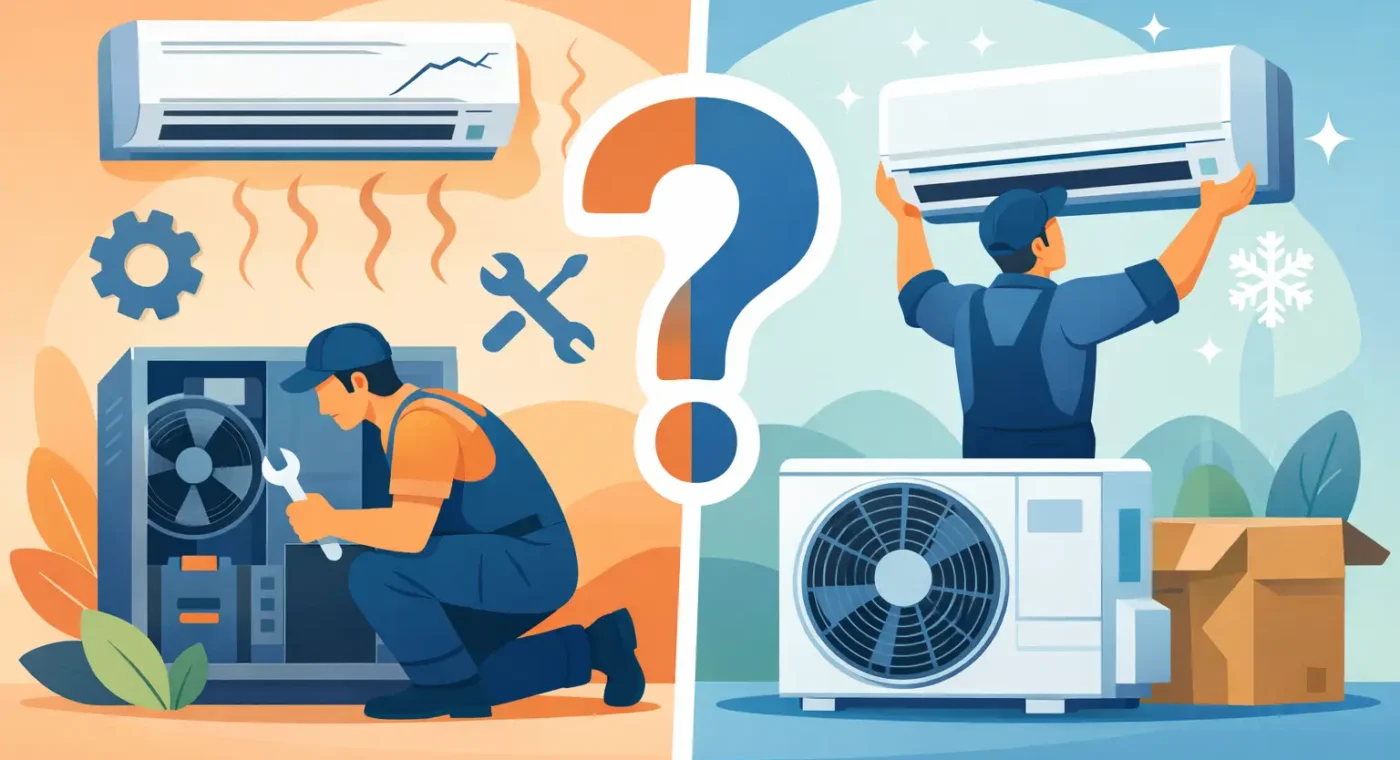
A failing AC rarely quits at a convenient time. It starts with weak airflow, longer cooling cycles, rising utility bills, or a room that never quite gets comfortable. When that happens, the big question is whether to repair or replace air conditioner equipment before the problem gets more expensive.
For homeowners, landlords, and business operators, this is not just a comfort issue. It affects energy costs, tenant satisfaction, equipment lifespan, and how quickly normal routines can get back on track. The right answer depends on the age of the system, the type of repair needed, how often service has been required, and whether the unit is still doing its job efficiently.
How to decide whether to repair or replace air conditioner systems
A good decision starts with diagnosis, not guesswork. Many AC problems look worse than they are. A failed capacitor, clogged drain line, dirty coil, faulty contactor, or thermostat issue can often be repaired quickly and at a reasonable cost. In those cases, replacing the whole system would be unnecessary.
At the same time, there are situations where another repair only delays a bigger expense. If a unit is old, uses outdated refrigerant, breaks down repeatedly, or struggles to cool even after service, replacement can be the more practical and cost-effective move.
The most useful way to think about it is simple. Repair makes sense when the system has solid years left and the problem is isolated. Replacement makes sense when reliability, efficiency, and repair costs have all started moving in the wrong direction.
Age matters more than most people think
Most central air conditioning systems last around 10 to 15 years, depending on installation quality, maintenance history, usage, and climate. Some units last longer, but age still matters because internal wear adds up even when the system appears to be running.
If your air conditioner is under 10 years old and has not needed frequent repairs, fixing it is often the right call. A single electrical repair or component replacement on a relatively modern unit is usually worth it.
If the unit is pushing past 12 to 15 years, the conversation changes. Efficiency standards have improved, parts can be harder to source, and older equipment often needs more than one repair as components age together. Even if you can repair it today, that does not always mean it is the best long-term decision.
This is especially important for property managers and commercial operators. Downtime has a cost beyond the repair invoice. If an older system fails during peak demand, the disruption can affect tenants, staff, customers, and inventory.
When repair is usually the smarter option
Repair is often the better choice when the issue is specific, the cost is manageable, and the system has otherwise been dependable. That might include a failed blower motor, bad capacitor, thermostat malfunction, frozen evaporator coil caused by airflow restrictions, or electrical connection issues.
It also makes sense to repair when the unit still cools effectively after service and your energy bills have stayed relatively stable. If this is the first major problem in years, replacing the entire system may be more expense than the situation justifies.
Another factor is maintenance history. A system that has been cleaned, inspected, and serviced regularly tends to have more predictable performance after a repair. A neglected system is different. Even if one issue is fixed, other problems may follow soon after.
A professional inspection should also look at safety, refrigerant pressures, electrical condition, drainage, and coil health. Proper diagnosis matters because replacing parts without identifying the root cause can turn a minor problem into repeat service calls.
When replacement is the better investment
Sometimes the signs are clear. If your AC needs frequent repairs, struggles to maintain set temperature, runs constantly, or causes utility bills to climb month after month, replacement may save money over time.
Refrigerant issues are another major factor. If an older system uses R-22 refrigerant, repairs can become far more expensive because that refrigerant has been phased out. A leak repair plus refrigerant recharge on an aging unit may cost enough to make replacement the more sensible path.
Compressor failure is another tipping point. Compressors are one of the most expensive AC components to replace. If the unit is already older, investing heavily in compressor repair often does not deliver good value.
Replacement also becomes attractive when comfort problems go beyond a simple breakdown. Hot spots, humidity issues, short cycling, weak airflow, and constant runtime can point to a system that is no longer sized or performing correctly for the space. In those cases, a new system may solve more than one issue at once.
A practical rule for repair costs
There is no single formula that fits every property, but one common benchmark helps. If a repair approaches 30 to 50 percent of the cost of a new system, replacement deserves serious consideration, especially if the unit is older.
That does not mean every expensive repair should automatically lead to replacement. A newer high-quality system with one major failure may still be worth fixing. On the other hand, even a moderate repair bill can be hard to justify on a unit near the end of its service life.
This is where transparent pricing matters. Customers should be able to compare the immediate repair cost with the expected lifespan remaining, the likelihood of additional repairs, and the energy savings a newer system may provide. The best service advice is not about pushing a sale. It is about giving a clear picture of what each option really costs.
Energy efficiency changes the math
Older air conditioners can still run, but that does not mean they run efficiently. As systems age, wear on motors, coils, and compressors can reduce performance even when nothing appears completely broken.
Newer equipment is generally better at cooling with less energy. If your current unit has become expensive to operate, replacement can lower monthly utility costs and improve comfort at the same time. For businesses and larger homes, that difference can be significant during peak summer months.
Efficiency gains matter most when the old system is oversized, undersized, poorly maintained, or nearing the end of its life. If the existing unit is only a few years old, energy savings alone may not justify replacement. But when efficiency problems are paired with repair needs, the numbers often shift quickly.
Repair or replace air conditioner problems in rental and commercial properties
For landlords and property managers, the decision has another layer. Reliability is often more important than squeezing every last month out of a unit. A repaired system that fails again during a heat wave can mean unhappy tenants, emergency service costs, and lost time coordinating another visit.
For commercial properties, AC problems can affect customer experience, employee productivity, and equipment conditions. Restaurants, offices, retail spaces, and managed properties usually benefit from making decisions based on uptime, not just invoice price.
That is why fast diagnosis and honest recommendations matter. A dependable contractor should explain what failed, what can be repaired now, what may fail next, and whether replacement will reduce future disruption. EAAIRS Services and Repair Ltd. approaches AC service with that same focus on speed, clarity, and getting properties back to normal without unnecessary delays.
What to ask before making the call
Before approving either option, ask a few direct questions. How old is the system? What exactly failed? Is this likely to be an isolated repair or the start of a pattern? Will the repair restore full performance, or just keep the unit running a little longer? Are parts readily available? And how does the repair cost compare with replacement value?
The answers should be straightforward. If they are vague, you are not getting the level of diagnosis needed to make a confident decision.
A trustworthy technician should also consider the full system, not just the broken part. Duct condition, thermostat performance, airflow restrictions, electrical supply, and maintenance history can all influence whether repair or replacement makes the most sense.
The best choice is the one that lowers risk
The question is not simply whether an air conditioner can be repaired. Most can, at least once. The better question is whether the repair gives you reliable, cost-effective cooling without setting you up for another breakdown in the near future.
If your system is newer, the repair is limited, and performance has been solid, fixing it is often the right move. If the unit is older, inefficient, expensive to repair, or failing repeatedly, replacement is usually the safer investment.
When the temperature is rising and your schedule is already full, the last thing you need is uncertainty. A clear diagnosis, fair pricing, and honest guidance can turn a stressful AC problem into a practical decision you feel good about.