
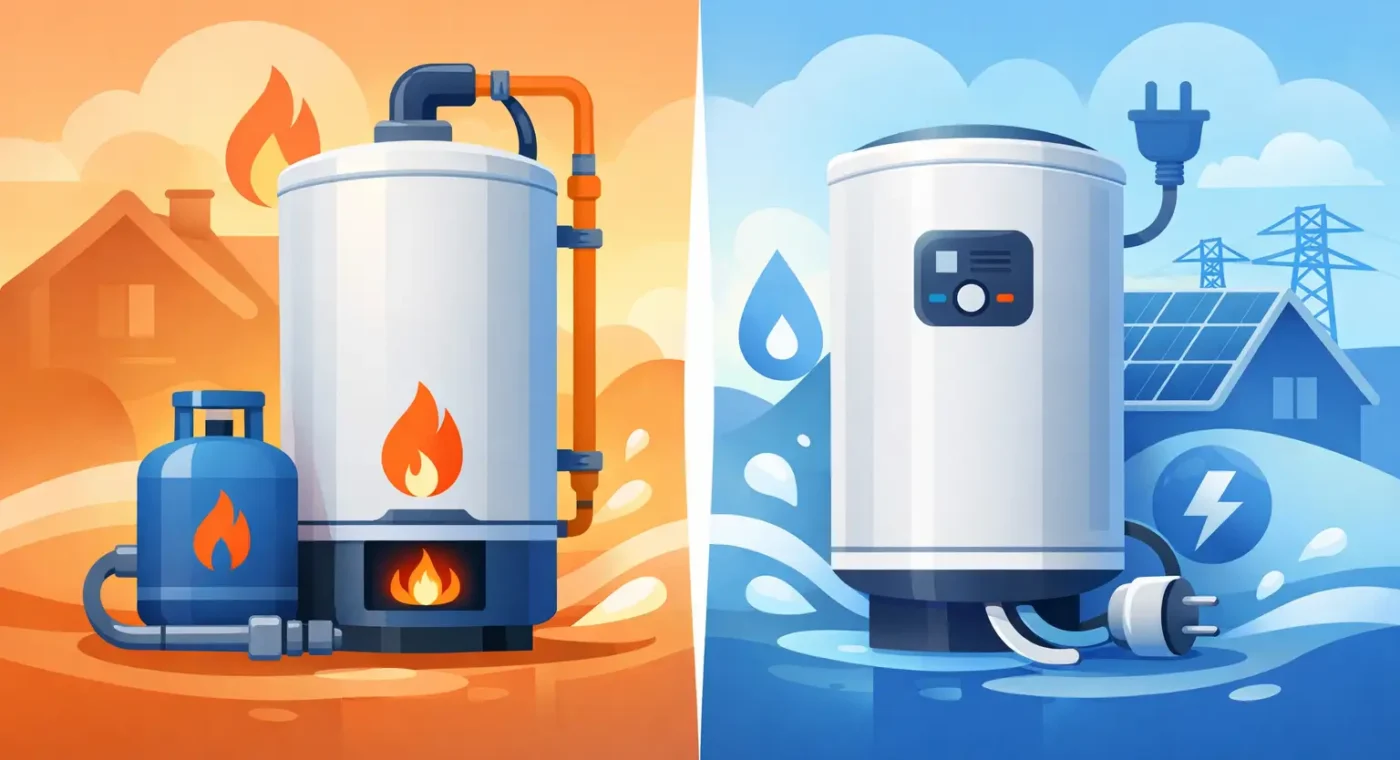
A water heater rarely gets much attention until the shower turns cold, a tenant reports no hot water, or a business cannot keep up with daily demand. When replacement time comes, the choice between gas vs electric water heaters affects more than the purchase price. It can change your monthly utility costs, installation timeline, available hot-water capacity, and the electrical or gas work your property needs.
The right answer depends on how much hot water you use, what utilities are already available, and whether you are planning for one home, multiple units, or a commercial operation. A professional assessment helps prevent a common and expensive mistake: installing a unit that is technically compatible but undersized, costly to operate, or difficult to service later.
Gas vs Electric Water Heaters: The Core Difference
Both gas and electric storage water heaters hold and heat a supply of water in a tank. The key difference is the heat source. Gas models use a burner fueled by natural gas or propane. Electric models use heating elements powered by your electrical system.
Gas heaters generally warm water faster and recover more quickly after a large draw, such as several consecutive showers. Electric heaters are often simpler to install where adequate electrical capacity is already available, and they do not require a combustion vent. Neither option is automatically better. The best fit comes down to the property, demand, local utility rates, and installation conditions.
Recovery rate and household demand
Recovery rate is the amount of hot water a heater can restore in a set period, usually one hour. Gas units typically have a higher recovery rate than standard electric tank units. That makes them a practical choice for larger households, homes with multiple bathrooms, rental properties with high turnover demands, and businesses that use hot water throughout the day.
For example, a family that runs the dishwasher while two people shower may notice less waiting time with a properly sized gas unit. A restaurant, salon, laundry area, or commercial kitchen may also benefit from faster recovery, depending on its equipment and operating schedule.
Electric water heaters can still serve a household well when usage is moderate and the tank is sized correctly. A two-person home with predictable routines may not need the faster recovery that gas provides. However, simply choosing a larger tank is not always the answer. More storage can mean more standby energy loss and greater space requirements.
Upfront Cost and Installation Requirements
The price of the heater is only one part of the investment. Installation requirements can shift the total cost significantly.
Electric tank water heaters often cost less to purchase and may be more straightforward to install when the home already has the correct dedicated circuit, voltage, and panel capacity. They do not need a gas line, vent pipe, or combustion air considerations. In some properties, that makes electric replacement the lower-cost route.
Gas water heaters may cost more to install because they need a properly sized gas supply, safe venting, and compliance with local fuel-gas and building requirements. If you are replacing an existing gas heater in the same location, the installation may be relatively direct. If you are converting from electric to gas, the project can involve new gas piping, venting changes, permits, and possible layout adjustments.
The reverse conversion also deserves a close look. Switching from gas to electric may require a new 240-volt circuit or an electrical panel upgrade. Older homes are especially likely to need an electrical evaluation before a high-demand appliance is added. A qualified technician should verify capacity instead of assuming an open breaker space is enough.
Operating Costs: Efficiency Is Not the Whole Story
Electric water heaters are highly efficient at converting electricity into heat at the unit. Almost all the electricity they consume becomes heat in the tank. But electricity can cost more per unit of energy than natural gas, depending on your local rates.
Gas water heaters lose some heat through combustion and venting, so their equipment efficiency may appear lower. Yet natural gas is often less expensive than electricity in many areas, which can make a gas unit cheaper to operate over time. Propane is different and can be more costly, so homeowners using propane should compare local fuel prices carefully.
This is why nameplate efficiency alone does not tell the full story. Ask for an estimate based on your actual utility rates, household size, expected usage, and the type of unit being considered. For landlords and commercial operators, consider the cost across all occupied units or daily operating hours, not just the cost of one appliance.
There is also a maintenance angle. Sediment buildup can reduce efficiency in either fuel type, especially in areas with hard water. Periodic flushing, anode rod inspections, and early repairs help keep a water heater operating reliably and can delay replacement.
Space, Venting, and Safety Considerations
Electric water heaters offer flexibility because they do not create combustion gases. They can work well in utility closets, basements, garages, and locations where vent routing would be difficult. They still need proper clearance, a safe electrical connection, a drain pan where appropriate, and a correctly installed temperature and pressure relief valve.
Gas water heaters need more planning. Conventional atmospheric-vent units require appropriate venting to remove combustion byproducts safely. The installation area must also meet clearance and combustion-air requirements. Improper venting can create serious safety risks, including carbon monoxide exposure.
Newer gas options may use powered venting or direct venting, which can expand placement options but add equipment and installation cost. These systems need to be designed and installed correctly, not improvised around an inconvenient room layout.
For either type, safety features and installation details matter as much as the brand name. The unit must be properly secured where required, connected to approved drain and relief piping, and installed in line with local code. For commercial properties, capacity, clearance, and code obligations can be more complex, particularly when the water heater supports employee areas, restrooms, sanitation, or food-service operations.
Reliability During Utility Interruptions
A conventional gas water heater can often continue producing hot water during a power outage if it uses a standing pilot and does not rely on powered venting or electronic ignition. That can be useful in areas where outages occur regularly. Many modern gas models, however, use electrical components and will not operate normally without power.
Electric water heaters cannot heat water during an outage. If the tank was already hot, there may be some stored hot water for a limited time, but recovery stops until power is restored.
This does not mean gas is automatically the more reliable choice. Gas service can be interrupted, and any appliance can fail without maintenance. Reliability improves when the unit is appropriately sized, professionally installed, and inspected before minor issues become an emergency leak or complete loss of hot water.
When an Electric Water Heater Makes Sense
An electric unit is often a strong option for smaller households, condos, properties without gas service, and replacement projects where the electrical system is already ready for the load. It can also make sense when venting a gas appliance would be expensive or impractical.
For property managers, electric water heaters may simplify installations across buildings that are all-electric. There is no gas combustion system to vent or gas line to maintain. The trade-off is slower recovery in many standard tank models and potentially higher operating costs, depending on local rates.
When a Gas Water Heater Is the Better Fit
Gas is commonly the better fit for busy homes and businesses with frequent, high-volume hot-water use. Faster recovery can reduce complaints about cold showers and keep operations moving when demand spikes.
It is also worth considering when the property already has a safe, code-compliant gas connection and venting system. In that situation, replacing an older gas unit with a comparable modern model may be more practical than converting fuels. Still, the existing vent and gas line should be inspected. Older infrastructure is not automatically suitable for every new appliance.
Do Not Choose by Fuel Type Alone
The most dependable water heater is one that matches your actual demand. Tank size, first-hour rating, recovery rate, available utilities, installation location, water quality, and budget all deserve attention. A low-cost heater that cannot meet peak demand becomes frustrating quickly. A high-capacity system that far exceeds your needs can waste energy and money for years.
Before replacement, document how the current unit performs. Note the number of occupants or daily users, bathrooms, appliances that use hot water, and times when demand peaks. If the current heater leaks, produces rusty water, makes rumbling sounds, trips breakers, has pilot issues, or delivers inconsistent temperatures, arrange a prompt inspection rather than waiting for total failure.
EAAIRS Services and Repair Ltd. can evaluate the existing water heater along with the electrical, venting, and appliance requirements that influence a safe replacement. Clear recommendations and an accurate estimate make it easier to choose a system that restores hot water without creating another property problem.
If hot water is already unreliable, act before the unit fails at the worst possible time. A properly planned replacement protects comfort at home, helps tenants stay satisfied, and keeps essential business operations from losing momentum.