
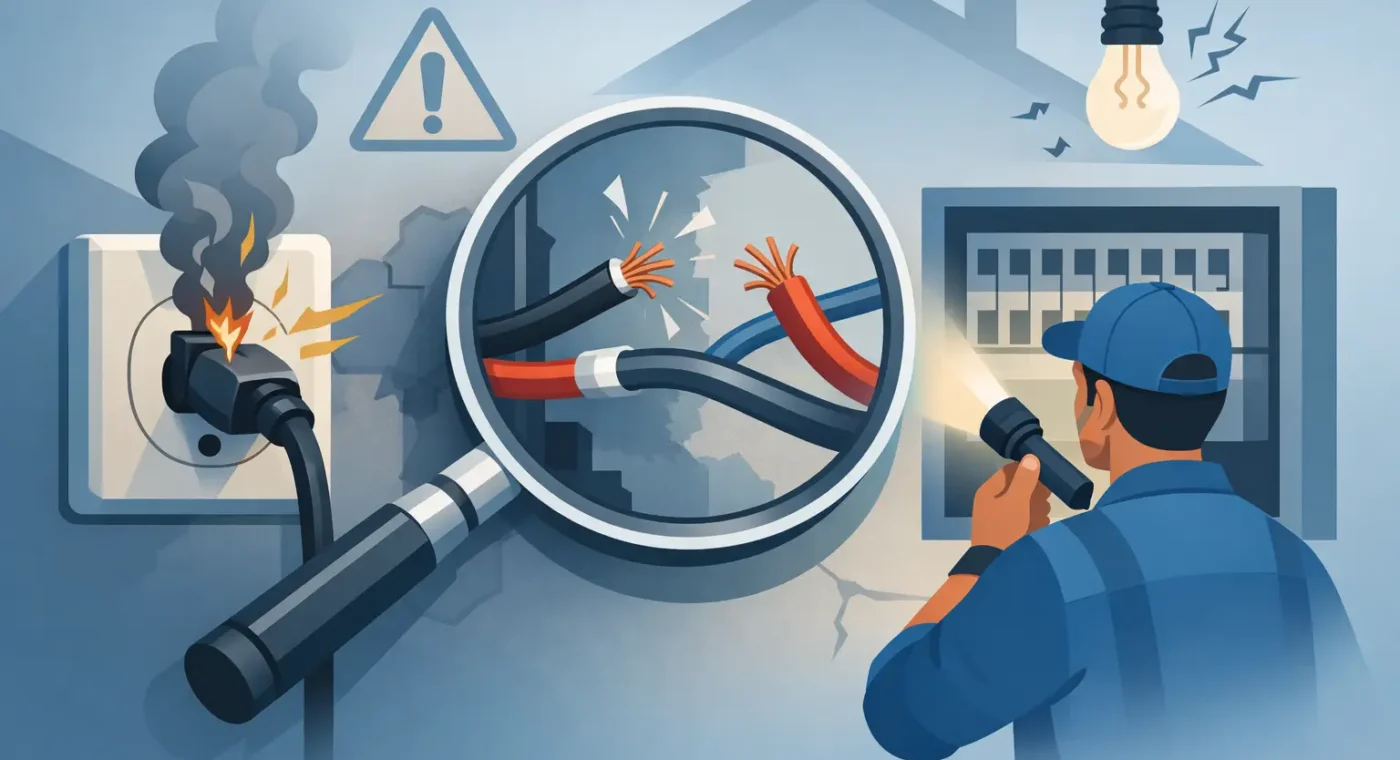
A breaker that trips once might be a fluke. A breaker that keeps tripping after you reset it is your electrical system asking for attention.
If you are wondering how to spot faulty wiring, the key is to pay attention to patterns, not just one-off annoyances. Flickering lights, warm outlets, a burning smell, or buzzing behind the wall can all point to wiring problems that should be checked quickly. For homeowners, landlords, property managers, and business owners, catching those warning signs early can prevent equipment damage, lost time, and serious safety risks.
Why faulty wiring is easy to miss
Wiring problems do not always announce themselves with a dramatic outage. More often, they show up as small issues people learn to work around. Maybe one outlet only works if the plug sits a certain way. Maybe the lights dim every time the microwave starts. Maybe a tenant mentions a strange smell near a switch plate, but everything still turns on.
That is exactly what makes faulty wiring risky. The system may still appear functional while connections are loose, insulation is damaged, or circuits are overloaded. In homes, that can put appliances and people at risk. In commercial spaces, it can mean downtime, damaged equipment, and disruption to daily operations.
How to spot faulty wiring: the most common warning signs
The clearest signs are usually the ones you can see, hear, or smell without opening anything up.
Frequent breaker trips
Circuit breakers are supposed to trip when they detect a problem. If one trips occasionally during an obvious overload, that is one thing. If it trips regularly with normal use, there may be a deeper issue such as damaged wiring, a short circuit, or an overloaded branch circuit.
The important detail is consistency. If the same breaker keeps shutting off a bedroom, kitchen area, office, or appliance line, do not treat it as a nuisance. Treat it as a signal.
Flickering or dimming lights
A single bulb that flickers may simply be loose or failing. Multiple lights flickering, especially in different rooms, can suggest unstable voltage, poor connections, or wiring deterioration.
Pay attention to when it happens. If lights dim when an air conditioner starts, a refrigerator cycles on, or kitchen equipment powers up, the circuit may be under strain. That does not always mean the whole property needs rewiring, but it does mean the system should be evaluated.
Warm outlets or switch plates
Outlets and switches should not feel hot. Slight warmth around a dimmer switch can be normal in some cases, but noticeable heat from a standard outlet or wall plate is not.
Heat often points to resistance in the connection. That can happen when wires are loose, terminals are worn, or the circuit is carrying more load than it should. If you feel warmth, stop using that outlet until it has been inspected.
Burning or fishy odors
One of the most serious red flags is a burning smell near an outlet, panel, appliance connection, or wall cavity. Some people describe it as a sharp plastic smell. Others notice an odor like something metallic or fishy.
That smell can come from overheating insulation or electrical components. If it is persistent, turn off power to the affected area if it is safe to do so and call for service right away. Waiting is not worth the risk.
Buzzing, crackling, or humming sounds
Electricity should be mostly silent. A faint transformer hum from certain equipment may be normal, but buzzing from switches, outlets, breaker panels, or inside walls is not something to ignore.
These noises can point to arcing, loose connections, or failing components. Even if the lights and outlets still work, the sound tells you something is unstable.
Sparks when plugging something in
A tiny, brief spark can happen occasionally when plugging in a device that immediately draws power. Larger sparks, repeated sparking, or visible flashes are different.
If an outlet spits sparks often, has scorch marks, or makes a popping sound, stop using it. That outlet may have damaged contacts, poor wiring, or a short developing behind the wall.
Discolored outlets or black marks
Scorch marks, brown discoloration, melted plastic, or signs of soot around outlets and switches usually mean overheating has already occurred. This is not an early warning sign. It is a sign that the problem has progressed.
At that point, do not keep testing it to see if it still works. Shut off the circuit and have it checked by a licensed electrician.
Signs faulty wiring may be affecting appliances and equipment
Wiring issues do not only show up at the wall. Sometimes the first clue is how your equipment behaves.
Appliances that lose power unexpectedly, electronics that restart on their own, or commercial equipment that runs inconsistently may be reacting to poor electrical supply. You may also notice chargers running hot, motors struggling to start, or smart devices disconnecting without a clear reason.
This is where diagnosis matters. The problem could be the appliance, the outlet, the circuit, or a combination of issues. A professional inspection helps separate a wiring fault from an equipment failure so you do not waste time replacing the wrong thing.
Older properties need closer attention
If your home or building is older, the chance of wiring problems goes up. Age alone does not guarantee danger, but materials wear down, past repairs may not have been done correctly, and power demands change over time.
Many older properties were not designed for modern electrical loads. Window AC units, microwaves, server equipment, commercial refrigeration, and multiple charging stations put more strain on circuits than older systems were built to handle.
Renovations can add another layer. If additions, remodeled kitchens, tenant improvements, or equipment upgrades were made over the years, the wiring may be a mix of old and new work. That does not automatically mean it is unsafe, but it makes inspection more valuable.
What not to do when you suspect faulty wiring
If you think there may be a wiring problem, avoid trying to prove it by repeated use. Do not keep resetting a tripped breaker to see if it holds. Do not keep plugging devices into a suspect outlet. Do not ignore a smell because it fades after a few minutes.
It is also wise not to remove outlets, switches, or panel covers unless you are trained and licensed to do that work. Electrical issues can escalate quickly, and what looks simple from the outside may involve damaged conductors, arcing, or unsafe connections behind the wall.
When to call for professional help
Some signs call for immediate service. Burning odors, smoking outlets, visible sparks, repeated breaker trips, or any sign of melted plastic should be handled as urgent.
Other issues may feel less dramatic but still deserve prompt attention, especially if they keep happening. A licensed electrician can test circuits, inspect the panel, identify overloaded or deteriorating wiring, and recommend the right fix instead of a temporary workaround.
That matters because the right repair depends on the cause. Sometimes it is a failing outlet. Sometimes it is a loose connection in a junction box. In other cases, the circuit needs to be redistributed, updated, or repaired at the panel. Good service starts with accurate diagnosis.
For property managers and commercial operators, speed matters just as much as accuracy. Electrical issues can affect tenants, staff, refrigeration, point-of-sale systems, and core operations. Working with a team that responds quickly and handles repair professionally can reduce disruption and help you get back to normal faster.
How to spot faulty wiring before it becomes an emergency
The best approach is to notice the small changes early. If an outlet starts feeling warm, if a breaker begins tripping more often, or if lights behave differently than they used to, do not wait for a full outage or obvious failure.
Routine attention goes a long way. Ask tenants and staff to report unusual smells, sounds, or power issues instead of working around them. If you manage multiple units or a commercial property, electrical checks should be part of your maintenance mindset, especially after equipment upgrades or renovation work.
At EAAIRS Services and Repair Ltd., we see many wiring problems after they have already disrupted comfort or operations. The better time to address them is when the warning signs first appear and the repair is still straightforward.
If something in your electrical system feels off, trust that instinct. A fast inspection today is often the simplest way to avoid a larger repair tomorrow.