A breaker that trips once after a storm or during heavy appliance use may not signal a major problem. But when the same outlet sparks, lights flicker, or a panel keeps shutting down, your electrical system is asking for attention. Knowing the best signs of faulty wiring can help homeowners, landlords, property managers, and business owners act before a small electrical issue becomes a fire risk, equipment failure, or costly interruption.
Electrical problems are not always visible. Wiring runs behind walls, above ceilings, and beneath floors, so the warning signs often show up through the devices and circuits you use every day. The right response depends on the symptom, the age of the property, and what is connected to the circuit. When safety is in question, a licensed electrician should diagnose the issue rather than relying on a temporary workaround.
1. Breakers Trip Repeatedly
A circuit breaker is designed to cut power when a circuit is overloaded, shorted, or otherwise unsafe. An occasional trip can happen when too many high-demand devices run on one circuit. Space heaters, microwaves, hair dryers, air conditioners, commercial kitchen equipment, and power tools can all draw significant power.
Repeated trips are different. If a breaker shuts off even after you reduce the load, or if it trips whenever you use a particular outlet or appliance, there may be damaged wiring, a loose connection, a failing breaker, or a fault in the equipment itself. Do not keep resetting the breaker to restore power. That can allow an unsafe condition to continue unnoticed.
2. Lights Flicker, Dim, or Surge
A light that flickers because of a loose bulb is usually a simple fix. Flickering throughout one room, dimming when appliances turn on, or lights that suddenly become unusually bright can point to an electrical problem.
These symptoms may come from a loose connection at an outlet, switch, fixture, panel, or service connection. They can also indicate that a circuit is overloaded. In a commercial setting, inconsistent lighting can affect employee safety, customer experience, and sensitive equipment. If multiple lights are behaving unpredictably, turn off affected equipment when possible and arrange a professional inspection promptly.
3. Outlets or Switches Feel Warm
Outlets, wall switches, and cover plates should not feel hot during ordinary use. A slightly warm dimmer switch may be normal depending on the bulb type and load, but noticeable heat, discoloration, or a burning smell is not.
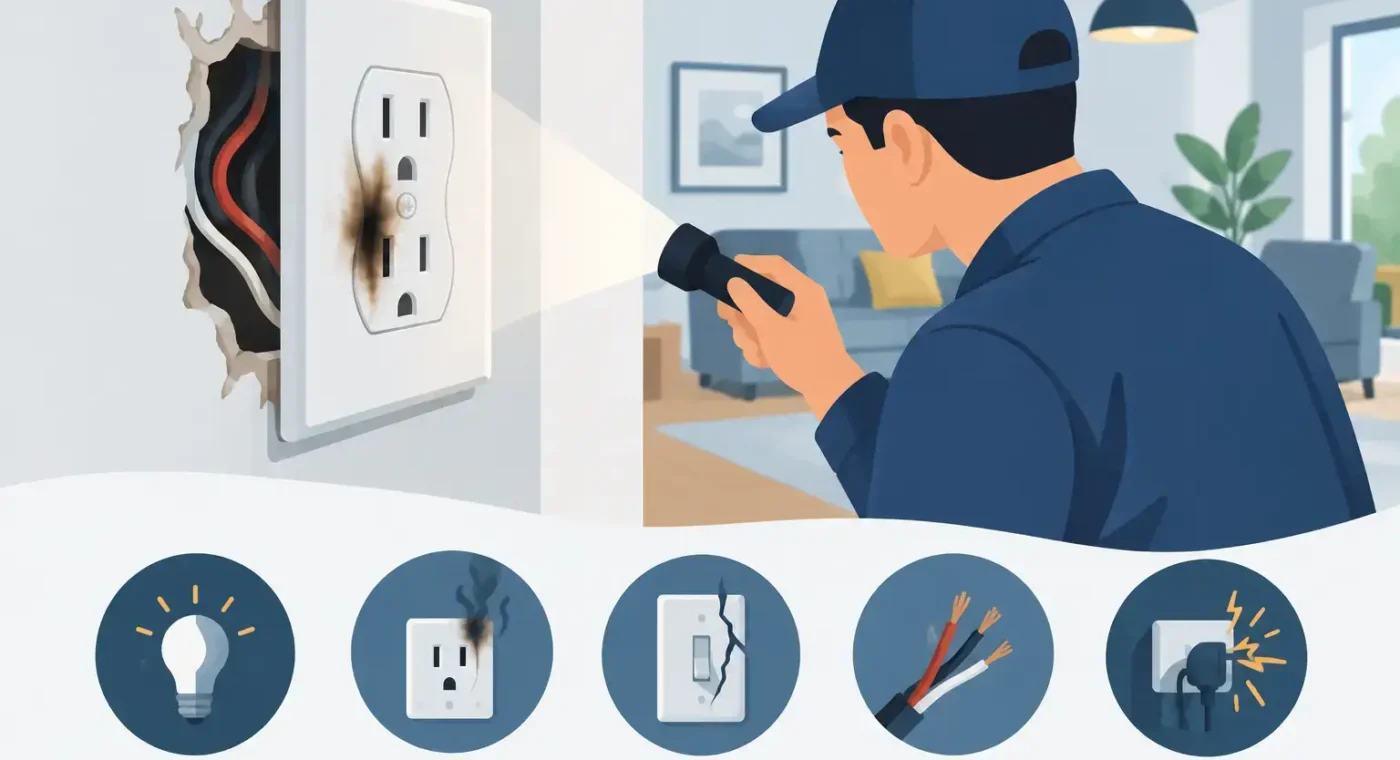
Heat can develop when a wire connection becomes loose, when an outlet is worn out, or when the wiring is not properly matched to the electrical load. This is one of the best signs of faulty wiring because it can indicate resistance and arcing inside the wall. Stop using the outlet or switch immediately. If it is safe to do so, switch off the associated breaker and call an electrician.
4. You Notice Burning Odors or Scorch Marks
A burning-plastic smell near an outlet, electrical panel, appliance cord, or light fixture deserves urgent attention. The odor may come and go at first, particularly if a loose connection heats only while a certain circuit is in use. Brown or black marks around receptacles and switches are another clear warning.
Do not paint over discoloration, replace only the cover plate, or assume the issue has passed because the smell disappears. Electrical arcing can occur behind the wall where it cannot be seen. Shut off power to the affected area if you can do so safely, avoid touching damaged components, and seek immediate professional service. If you see smoke, flames, or active sparking, leave the area and contact emergency services.
5. Outlets Spark or Make Buzzing Sounds
A tiny, brief spark when plugging in a device can sometimes occur as electrical current begins flowing. A large, repeated, yellow or white spark is not normal. Neither are buzzing, crackling, popping, or sizzling sounds from an outlet, switch, light fixture, or electrical panel.
Sounds like these can indicate loose wiring, moisture, damaged components, or arcing. They should never be ignored, especially in kitchens, laundry rooms, bathrooms, mechanical rooms, or commercial workspaces where water and heavy electrical loads may be present. Unplug the device if it is safe to do so, stop using the circuit, and have the source checked.
6. Plugs Do Not Fit Securely
An outlet that will not hold a plug securely is more than an inconvenience. Worn receptacles can create poor contact between the plug and outlet, which may generate heat and damage the device or outlet over time.
Do not try to hold a loose plug in place, bend the plug prongs, or use tape as a fix. Replace damaged cords when necessary, but remember that the outlet itself may need replacement. A professional can also check whether the box, wiring connections, and grounding are in proper condition.
7. You Rely on Extension Cords and Power Strips
Extension cords are useful for temporary needs, not permanent power distribution. If a room depends on extension cords because there are not enough outlets, the electrical system may not be designed for the way the space is being used.
This is especially common in older homes, rental properties, offices, retail spaces, and commercial kitchens where electrical demands have changed over time. Daisy-chaining power strips or running cords under rugs increases the risk of overheating and damage. Adding properly installed outlets or dedicated circuits is safer, cleaner, and more reliable than continuing to stretch existing circuits beyond their intended use.
8. You Get Shocks or Tingling From Appliances
A mild tingle from an appliance, faucet, metal fixture, or outlet should never be considered normal. It may signal poor grounding, damaged wiring, appliance failure, or moisture affecting an electrical component.
Turn off and unplug the appliance if you can safely reach the plug without touching wet surfaces or exposed metal. Avoid using the equipment until it has been inspected. In homes and businesses, this concern is particularly serious near sinks, dishwashers, laundry equipment, water heaters, and exterior outlets, where moisture raises the risk of electrical shock.
9. The Electrical Panel Shows Warning Signs
Your electrical panel is the control center for the property, but it should not buzz, smell hot, show corrosion, or have breakers that feel loose. Labels that are missing or inaccurate can also create safety issues during an emergency or repair.
Older panels may not have the capacity for modern electrical loads. That does not automatically mean a full upgrade is needed, but it does mean the panel should be evaluated if breakers trip regularly, renovations have added equipment, or major appliances have been installed. A qualified electrician can determine whether the problem is a single circuit, a panel component, inadequate capacity, or a broader wiring concern.
10. Problems Started After Renovation, Water Damage, or Rodent Activity
Electrical issues often appear after a change in the property. A wall repair, kitchen remodel, appliance installation, roof leak, flooding event, or pest problem can damage wiring or connections without creating an immediate outage.
Water can corrode electrical components, while rodents may chew through insulation. Renovation work can also expose older wiring methods or reveal circuits that were already overloaded. If symptoms began after construction or water intrusion, do not wait for the problem to become more obvious. Early diagnosis can limit disruption and prevent damage to walls, equipment, and electrical systems.
What to Do When You Suspect Faulty Wiring
The safest next step is usually to stop using the affected outlet, fixture, appliance, or circuit. If there is heat, smoke, a burning odor, or visible damage, switch off power at the breaker only if it is safe to do so. Keep people away from the area and do not attempt to open electrical boxes or work inside a panel.
For less urgent symptoms, make a note of what happened, including which breaker tripped, what equipment was running, and whether the issue occurs at a certain time. That information helps a technician diagnose the cause efficiently. A professional inspection can identify whether the fault is in the wiring, panel, outlet, fixture, appliance, or electrical load.
For homeowners and businesses, fast electrical service protects more than convenience. It helps prevent downtime, equipment damage, tenant complaints, and avoidable safety hazards. EAAIRS Services and Repair Ltd. provides dependable electrical diagnosis and repair with clear communication, licensed technicians, and support when urgent problems cannot wait.
If something in your property feels, smells, sounds, or performs differently around electricity, trust that warning sign. Acting early is often the simplest way to restore safety and avoid a much larger repair later.