
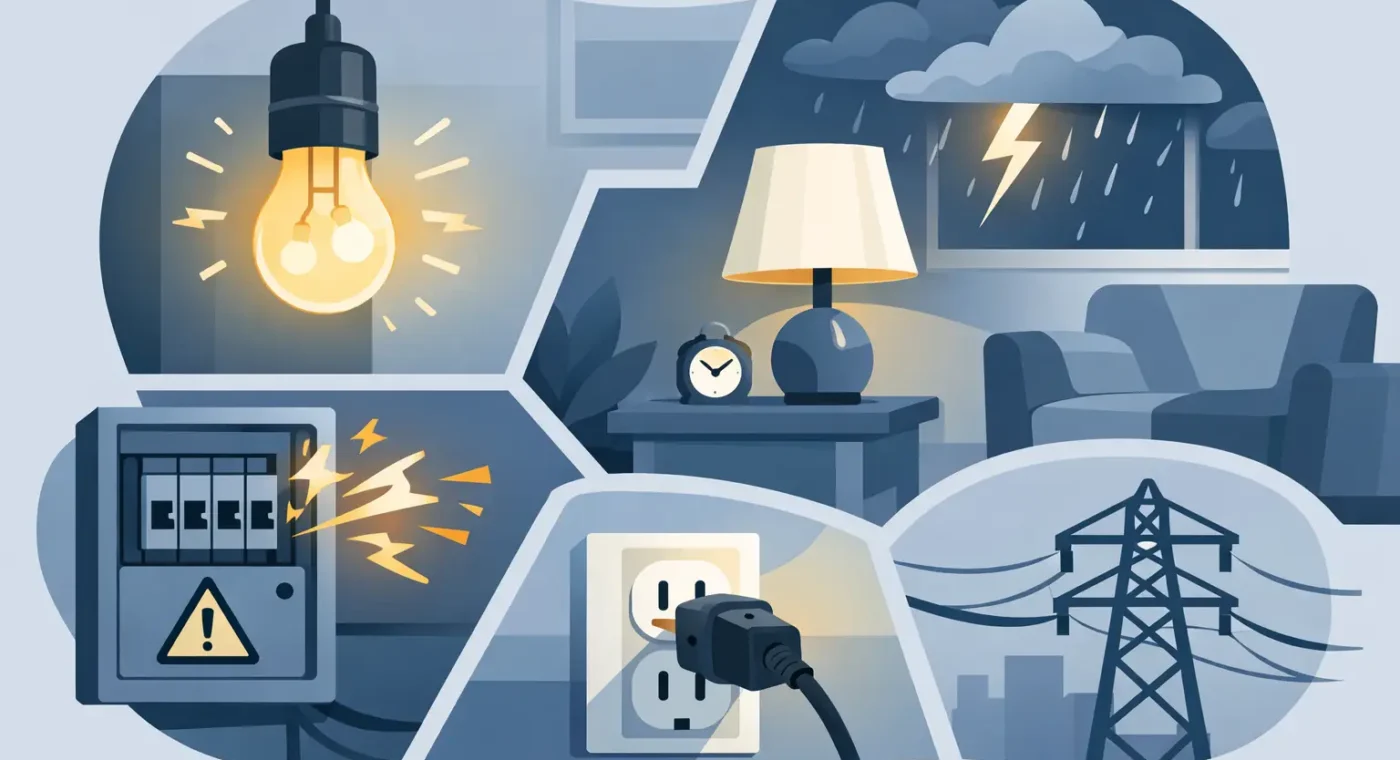
A light that flickers once might seem minor. A light that keeps flickering, dims without warning, or starts affecting multiple rooms is your electrical system telling you something is off. If you are asking what causes lights to flicker, the answer can range from a loose bulb to a more serious wiring or service issue that should be checked right away.
The tricky part is that flickering lights do not all mean the same thing. Some causes are simple and low risk. Others point to overheating connections, overloaded circuits, voltage fluctuations, or utility problems that can put your home or business at risk. Knowing the difference helps you act quickly and avoid unnecessary damage, downtime, or safety hazards.
What causes lights to flicker most often?
In many properties, the most common cause is also the simplest: a bulb is not seated properly or is starting to fail. LED bulbs can flicker when they are incompatible with the fixture or dimmer switch, while older incandescent or fluorescent bulbs may flicker at the end of their lifespan. If the problem is isolated to one fixture, start there.
That said, a single flickering light can also point to a loose connection inside the fixture, a bad switch, or a wiring issue in the electrical box. These problems are more serious than a failing bulb because loose electrical connections can generate heat. If replacing the bulb does not solve it, the fixture itself may need professional inspection.
When several lights flicker at once, the cause is usually farther upstream. That may include a circuit issue, a problem at the electrical panel, a loose service connection, or fluctuations coming from the utility side. The more widespread the problem, the less likely it is to be just a bulb.
When flickering is normal and when it is not
Not every flicker means danger. It is normal for lights to dim very briefly when a high-powered appliance turns on. Air conditioners, refrigerators, microwaves, and commercial equipment can create a short startup draw. If the dimming is slight and lasts only a moment, that can be expected.
What is not normal is repeated flickering, lights that pulse for no clear reason, brightness changes that happen throughout the day, or lights that noticeably dim when equipment runs on a regular basis. If the issue is getting worse, affecting more than one area, or happening alongside buzzing outlets, warm switches, or tripped breakers, it should be treated as a repair issue rather than a nuisance.
Bulb and fixture problems
The fastest place to check is always the bulb. A loose bulb can interrupt contact and create flickering. A bulb that is the wrong wattage or type for the fixture can also behave unpredictably. With LEDs, compatibility matters more than many people realize. A non-dimmable LED in a dimmer-controlled fixture, or an LED paired with an older dimmer not designed for it, often causes visible flicker.
Fluorescent fixtures have their own quirks. They may flicker because of temperature, an aging ballast, or old tubes. In garages, utility rooms, and commercial spaces, this is a common service call because the fixture appears to be failing when the real problem is one component inside it.
If one light flickers and nearby lights are stable, the issue is likely local to that bulb, switch, or fixture. That is good news in the sense that the repair may be limited. It still deserves attention if changing the bulb does not fix it.
Loose wiring and bad connections
This is where flickering moves from inconvenient to potentially unsafe. Loose wiring can interrupt current flow and cause lights to flicker on and off. More importantly, it can create heat and arcing behind walls, inside switches, or at the panel. That is why persistent flickering should never be ignored.
A loose connection might exist at the light fixture, at the switch, in a junction box, or at the breaker. In older homes and heavily used commercial spaces, wear and vibration can gradually loosen connections over time. Renovation work, aging components, and previous poor-quality repairs can also contribute.
Warning signs include flickering combined with a burning smell, crackling sounds, warm cover plates, or breakers that trip without a clear reason. If any of those are present, shut off the affected circuit if it is safe to do so and arrange for service promptly.
Overloaded circuits and voltage fluctuations
Sometimes the answer to what causes lights to flicker has less to do with the light itself and more to do with what else is running. When a circuit is carrying too much demand, lights can dim or flicker as appliances cycle on. This is especially common in kitchens, laundry areas, workshops, and commercial spaces with multiple pieces of equipment sharing a circuit.
A brief dip when a major appliance starts is one thing. Regular flickering, especially if paired with breaker trips or hot outlets, suggests the circuit may be overloaded or poorly distributed. In some cases, the property simply needs better load balancing or dedicated circuits for heavier equipment.
Voltage fluctuations can also come from larger system issues. If lights get brighter and dimmer unpredictably, the cause may be a neutral problem, a service connection issue, or a utility supply problem. Those situations require proper diagnosis because the fix depends on where the fluctuation is coming from.
Dimmer switches and LED compatibility
A lot of modern flicker complaints start after a lighting upgrade. LEDs are efficient and long-lasting, but they are less forgiving when paired with outdated dimmers or mismatched controls. If the flicker began after replacing bulbs or installing a new fixture, compatibility is one of the first things to check.
Older dimmer switches were often designed for incandescent loads and may not regulate LEDs properly. The result can be strobing, low-end flicker, or unstable brightness. Sometimes the solution is as simple as using a compatible dimmable LED. Other times, the dimmer itself needs replacement.
This is a good example of why accurate diagnosis matters. Swapping bulbs repeatedly does not help if the switch is the real issue.
Panel and service connection issues
If lights flicker across several rooms, or throughout the entire building, the problem may be at the electrical panel or service entrance. Loose breakers, failing breakers, corroded connections, and neutral issues can all affect lighting performance. These are not DIY checks for most property owners because the risk level is higher once the panel is involved.
A failing service connection can also cause bigger symptoms than flickering alone. You may notice appliances behaving oddly, lights changing intensity when major equipment runs, or partial power issues in certain areas. In businesses, this can disrupt operations and damage sensitive equipment if left unresolved.
For homeowners, landlords, and property managers, this is where a fast response matters. The longer a connection issue continues, the more likely it is to cause equipment stress or become a safety concern.
Could the utility company be the cause?
Yes. If your neighbors are seeing similar issues, or if the flickering affects the whole property and no internal fault is found, the problem may be on the utility side. Weather, damaged lines, transformer issues, or unstable supply can cause intermittent flickering.
The challenge is that utility-related symptoms can look very similar to panel or service problems inside the building. That is why it helps to have a licensed technician identify whether the issue is internal or external before time is wasted in the wrong direction.
When to call for professional electrical service
If the flickering is limited to one bulb and replacing it solves the issue, you may be done. If not, or if multiple lights are involved, it is time to take it seriously. Professional service is the right move when flickering keeps returning, spreads to more areas, happens with buzzing or heat, or affects appliances and equipment.
For commercial properties, the threshold should be even lower. Restaurants, retail spaces, offices, and rental properties rely on safe, consistent power. Waiting too long can turn a manageable repair into a larger outage or a liability issue.
A proper diagnosis should focus on where the problem starts, not just where it shows up. That means checking the fixture, the switch, the branch circuit, the panel, and if necessary, the incoming service. Companies like EAAIRS Services and Repair Ltd. approach flickering light issues this way because fast answers only matter if they are accurate.
What causes lights to flicker and what should you do next?
Start simple, but do not stay there if the signs point to something bigger. A loose bulb is easy. A loose wire is not. The real value is knowing when a flicker is harmless and when it is a warning.
If your lights have started acting differently, trust that change. Electrical systems usually give small clues before they give big problems, and addressing them early is the safest and least disruptive move you can make.