
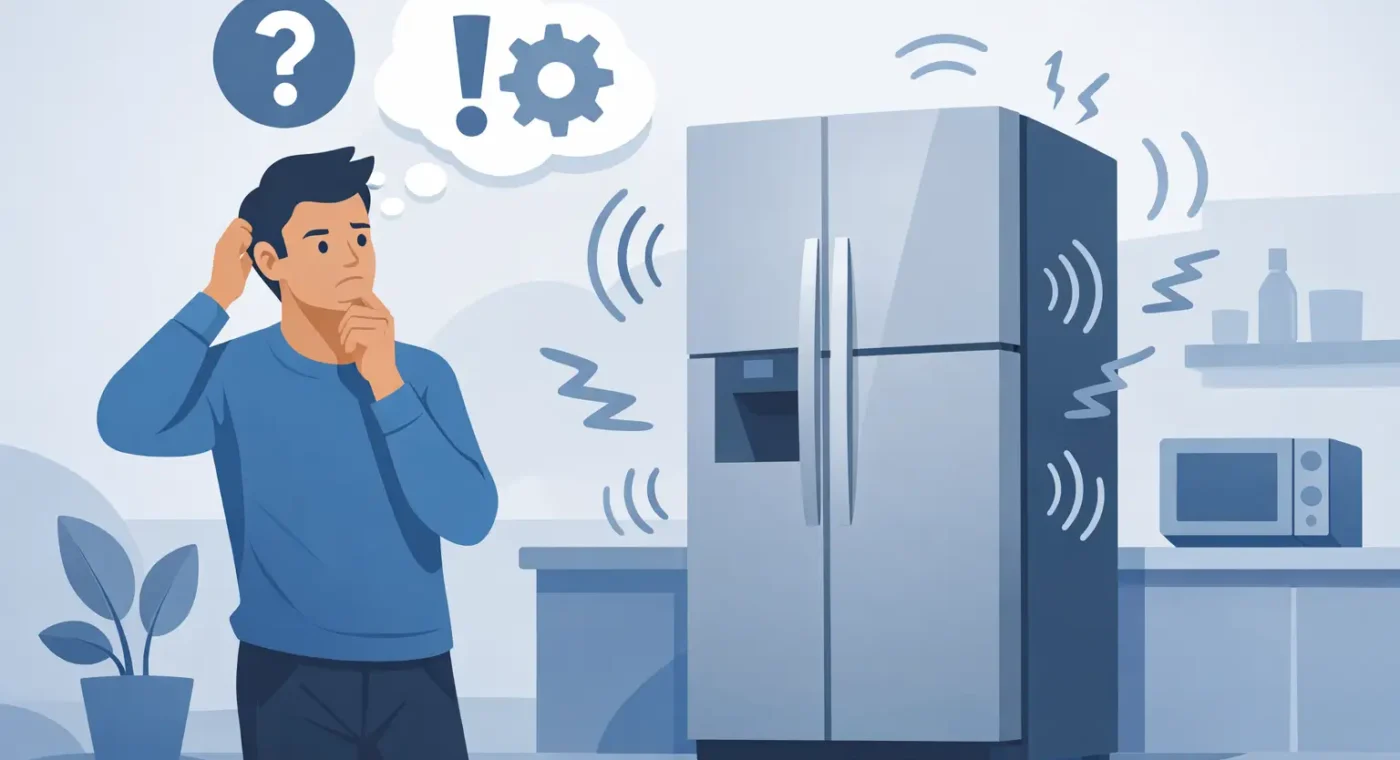
You notice it at night first – a buzz, a rattle, a sharp clicking sound from the kitchen that was not there before. A refrigerator making noise is not always a sign of failure, but it is often your appliance’s way of telling you something has changed. The key is knowing the difference between normal operating sounds and the kind of noise that points to a part wearing out, airflow being blocked, or a problem that could lead to a breakdown.
For homeowners, landlords, and business owners, that distinction matters. Waiting too long can turn a small repair into spoiled food, water leaks, or a complete loss of cooling. Acting too quickly on a harmless sound can also lead to unnecessary service calls. A clear diagnosis saves time, money, and stress.
When a refrigerator making noise is normal
Modern refrigerators are not silent. Even a healthy unit will make occasional sounds as it cycles on and off, moves refrigerant through the lines, or runs fans to maintain temperature. Humming from the compressor, soft fan noise, light clicking during a cycle change, and occasional popping as materials expand or contract can all be part of normal operation.
Newer models can actually sound busier than older ones. Many use high-efficiency compressors and variable-speed fans that run more often at lower power to keep temperatures steady. That means you may hear more frequent but less intense sounds throughout the day.
The real question is not whether your refrigerator makes any sound. It is whether the sound is new, unusually loud, persistent, or paired with other symptoms like poor cooling, frost buildup, leaking water, or a motor that seems to run constantly.
Common noises and what they usually mean
Buzzing or humming
A low hum is often normal, especially when the compressor is running. If the buzzing becomes louder than usual, the issue may be as simple as the refrigerator not sitting level on the floor. A unit that rocks slightly can vibrate against the surface below it or against nearby cabinetry.
Buzzing can also come from the ice maker water line, especially if the ice maker is turned on but no water supply is connected. In that case, the inlet valve may energize and create a repeated buzzing sound without producing ice.
If the humming is unusually loud and the refrigerator is also struggling to stay cold, the compressor or condenser fan motor may need attention. That is not a repair to delay, especially in a busy household or commercial setting where refrigeration is critical.
Rattling
Rattling is one of the most common complaints and often one of the easiest to fix. A drain pan, rear access cover, loose screw, or item stored on top of the refrigerator can create vibration. Sometimes the copper tubing behind the unit lightly taps the frame as the compressor runs.
If you hear rattling, gently pull the refrigerator away from the wall and check whether anything is touching the back panel. Make sure the appliance is level and stable. If the noise continues, the source may be an internal fan or mounting component that needs professional inspection.
Clicking
A single click now and then can be normal. Repeated clicking every few minutes is different. That can happen when the compressor tries to start but fails, then shuts off and tries again. In some cases, the start relay is the problem. In others, the compressor itself may be failing.
Clicking paired with warming temperatures is a stronger warning sign. If food is not staying cold or frozen, it is best to schedule service quickly rather than wait for the refrigerator to stop altogether.
Knocking or banging
A knocking sound can come from refrigerant moving through the sealed system, and occasional movement noise is not unusual. But loud banging is worth investigating. Fan blades can strike ice buildup, or loose internal parts can create impact sounds during operation.
If the noise starts after a move, installation, or floor shift, leveling may be the cause. If it develops gradually and becomes more frequent, a technician should inspect the fan assembly, mounting points, and compressor area.
Squealing or chirping
These higher-pitched sounds often point to a fan motor problem. Refrigerators commonly use an evaporator fan inside the freezer section and a condenser fan near the compressor. When bearings begin to wear or debris interferes with blade movement, the sound can change from a soft whir to a squeal, chirp, or scraping noise.
This type of issue can worsen fast. A struggling fan can reduce airflow, which affects cooling performance and may place extra strain on other components.
Gurgling or dripping
Gurgling can be normal as refrigerant circulates and defrost water drains. Dripping is also sometimes part of the defrost cycle. But if you hear water sounds along with visible pooling under the refrigerator, there may be a clogged or frozen drain line. That can lead to leaks inside the fresh food compartment or onto the floor.
What you can check before calling for service
There are a few practical steps you can take safely before booking a repair. Start by checking whether the refrigerator is level. An uneven appliance can amplify vibration and affect door sealing.
Next, look at the area around and behind the unit. If the refrigerator is pushed too tightly against the wall, normal vibration can turn into a constant rattle. Loose items on top of the unit, magnets, drip pans, or rear panels can also create noise.
Then check inside. Overpacked shelves can transfer vibration, and items touching the back interior wall may buzz when the unit cycles on. In the freezer, listen for signs that a fan blade may be hitting frost buildup.
If your model has an ice maker, confirm that the water supply is connected and functioning. If the ice maker is switched on without water, that alone may explain a recurring buzzing sound.
These checks help with simple causes, but they do not replace proper diagnosis when the noise is persistent or linked to cooling problems.
Signs the noise points to a repair issue
Some sounds should move you from watch-and-wait to scheduling service. If the refrigerator making noise is also not cooling properly, running nonstop, forming excess frost, leaking water, or tripping a breaker, there is likely more going on than ordinary operation.
Age also matters. A refrigerator that has been quiet for years and suddenly develops loud clicking, squealing, or rattling is more likely dealing with a worn part than a harmless normal sound. For landlords and property managers, this is especially important because a delayed repair can become a tenant complaint, a food loss issue, or an emergency call after hours.
For restaurants, break rooms, offices, and commercial kitchens, unusual refrigeration noise should be taken even more seriously. Equipment failure in a business setting can affect food safety, customer service, and daily operations. Fast diagnosis is usually the most cost-effective move.
Why accurate diagnosis matters
Refrigerator noises can overlap. A customer might describe a buzz that turns out to be a failing condenser fan. Another might report knocking that is really vibration from poor leveling. Replacing parts based on guesswork wastes money and delays the real fix.
That is why experienced technicians focus on the full picture: the exact sound, when it happens, how long it lasts, whether temperatures are stable, and whether any related symptoms are present. A proper inspection can separate minor adjustment issues from motor, relay, drain, or compressor problems.
This matters even more when the refrigerator is built in, part of a rental property, or used in a business where downtime has a direct cost. Fast, accurate diagnosis reduces disruption and helps you make the right call the first time.
When to call a professional for a refrigerator making noise
If basic checks do not solve the problem, or if the noise is loud, repetitive, or getting worse, professional service is the safer choice. The same applies if the refrigerator is warm, frosting over, leaking, or repeatedly clicking without starting.
A trained technician can identify whether the issue is a fan motor, compressor relay, ice maker valve, drain blockage, loose hardware, or something more serious in the cooling system. For customers who want a clear answer without trial and error, that kind of diagnosis is what restores confidence quickly.
At EAAIRS Services and Repair Ltd., the goal is simple: find the source of the problem, explain it clearly, and get your refrigerator back to reliable operation with as little disruption as possible. When an appliance starts making new noises, fast action is often the difference between a straightforward repair and a larger inconvenience.
If your refrigerator sounds different than it used to, trust that change for what it is – useful information. The sooner you respond to it, the easier it usually is to protect your food, your schedule, and your peace of mind.