
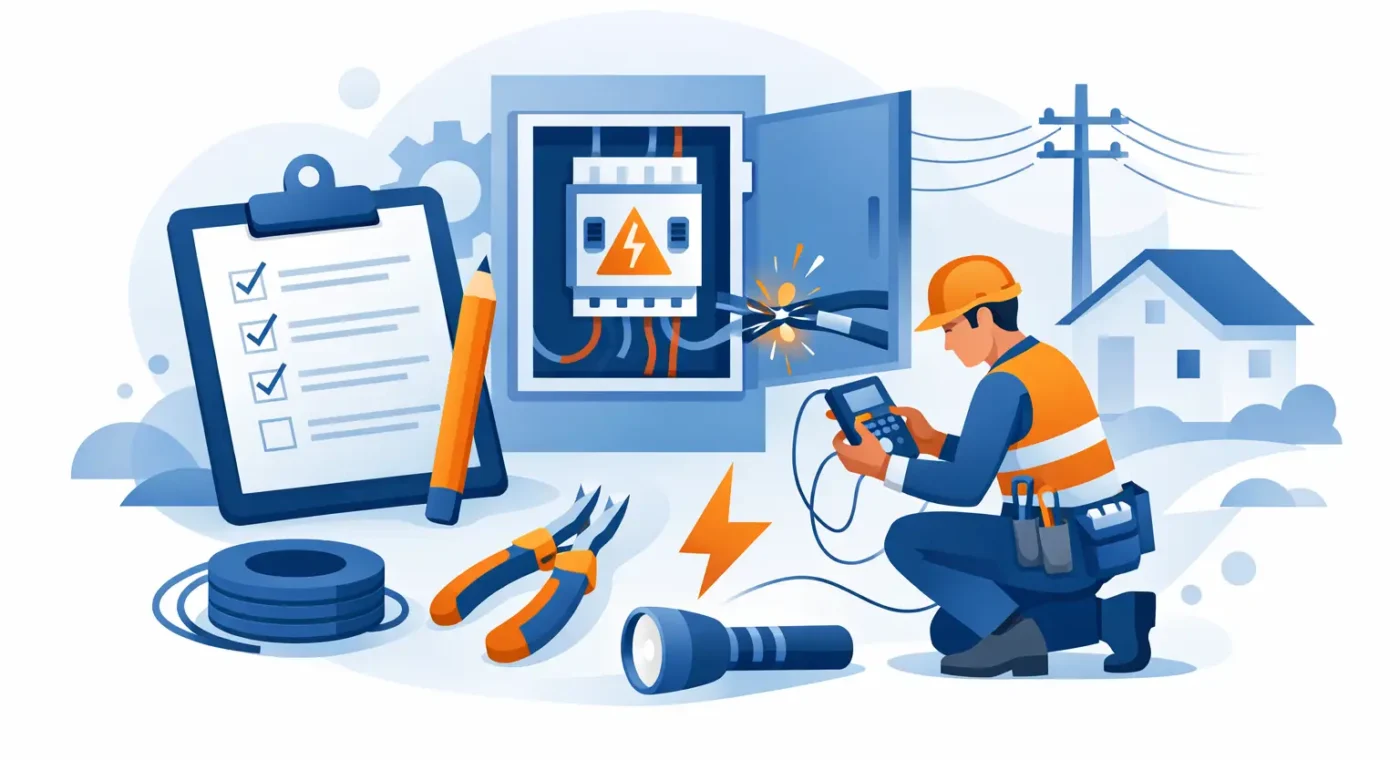
A burning smell near an outlet, lights that suddenly dim across one room, or a breaker that will not stay on can turn an ordinary day into a safety issue fast. An emergency electrical repair checklist helps you respond calmly, protect people on the property, and give a technician the information needed to restore power safely.
Electrical problems do not all carry the same level of risk. A dead outlet in a guest room is frustrating, but sparking at a panel, buzzing from a switch, or heat coming from a receptacle needs immediate attention. For homeowners, landlords, property managers, and business operators, the right first steps can reduce fire risk, prevent equipment damage, and shorten downtime.
When an electrical issue becomes an emergency
Not every electrical problem requires after-hours service, but some do. If you notice smoke, sparks, a burning or fishy odor, exposed wiring, repeated breaker trips, or partial power loss affecting essential systems, treat it as urgent. The same applies if electrical issues are affecting refrigeration, HVAC, water heating, security systems, or commercial kitchen equipment.
Water changes the situation quickly. If an outlet, appliance connection, electrical panel, or wiring has been exposed to flooding, roof leaks, burst pipes, or condensation, do not touch it until the area is evaluated. Electricity and moisture are a dangerous mix, and guessing wrong can put people at serious risk.
An emergency can also be operational, not just hazardous. In a restaurant, failed power to cooking or refrigeration equipment can disrupt service and inventory. In a rental property, a panel issue or unsafe outlet can affect habitability. Speed matters, but safety comes first.
Emergency electrical repair checklist: what to do first
Start with people, not equipment. If there is smoke, visible arcing, or active fire, evacuate the area and call emergency services first. Do not stay behind to investigate a panel or unplug devices if there is immediate danger.
If the situation is stable, cut power only if it is safe to do so. That usually means switching off the affected circuit at the breaker or shutting off the main power if you know where it is and can reach it without standing in water or approaching heat, sparks, or smoke. If the panel is hot, making noise, or showing signs of damage, leave it alone and wait for a licensed electrician.
Once the area is safe, unplug sensitive electronics and appliances on the affected circuit if you can do it safely. This helps protect them from further damage when power is restored or if voltage is unstable. In a business setting, that may include POS systems, refrigeration controls, office equipment, and specialty appliances.
Then document what happened. Note the time the issue started, what was running when it happened, whether there was a storm or power surge, and which rooms or systems are affected. If you smell burning, hear buzzing, or see discoloration on an outlet or switch plate, make a note of that too. These details help a technician diagnose the issue faster and reduce repeat visits.
What not to do during an electrical emergency
This is where many problems get worse. Do not keep resetting a breaker that trips repeatedly. A breaker trips for a reason, and forcing it back on over and over can increase heat and damage the circuit or connected devices.
Do not use extension cords as a long-term workaround for a failed outlet or dead circuit. That may seem harmless for a lamp or small appliance, but in emergencies people often overload cords with space heaters, refrigerators, microwaves, or commercial equipment. That creates a second hazard while the first one is still unresolved.
Do not open outlets, switches, junction boxes, or the electrical panel unless you are qualified to work on them. Even when power appears to be off, parts of the system may still be energized. A fast call to a professional is safer than a risky repair attempt.
Signs you need a licensed electrician immediately
Some symptoms leave little room for delay. Call right away if you have any of the following:
- Smoke, sparks, or scorch marks at outlets, switches, panels, or appliances
- A burning smell that does not fade quickly after shutting off power
- A breaker that trips instantly every time it is reset
- Buzzing, crackling, or humming from wiring, outlets, or the panel
- Electrical damage after water exposure, storm activity, or a power surge
- Partial power loss, especially if major appliances or life-safety systems are affected
- Flickering lights paired with warm outlets, dimming, or equipment malfunction
These symptoms usually point to a deeper problem, such as a short circuit, overloaded wiring, loose connections, damaged insulation, failed breakers, or moisture intrusion. The trade-off with waiting is simple: what starts as a repair can become a fire, equipment replacement, or a much larger outage.
A practical checklist for homes, rentals, and commercial spaces
The best emergency electrical repair checklist is simple enough to follow under stress. First, identify whether the problem is isolated or widespread. If the whole building is out, check whether neighboring properties also lost power. If they did, the issue may be utility-related. If only your property is affected, the problem is more likely inside the building.
Next, isolate the area. Keep children, tenants, staff, or customers away from the affected room, panel, appliance, or outlet. If the issue involves a commercial kitchen, storage room, or utility space, limit access until the system is inspected.
After that, protect critical operations. In a home, that might mean moving refrigerated medications or checking backup lighting. In a business, it could mean preserving inventory, shutting down vulnerable equipment properly, and notifying staff of any unusable areas.
Then prepare for service. Clear access to the electrical panel, affected outlets, and connected appliances. If you manage multiple units or a commercial property, have the unit number, panel labels, and maintenance history ready. The faster a technician can assess the issue, the faster the repair can move forward.
Why electrical emergencies are often misdiagnosed
Electrical issues can look simple from the outside. A dead outlet may actually be a failed GFCI upstream. Flickering lights may be caused by a loose neutral, not the light fixture. A breaker trip may point to a bad appliance, overloaded circuit, damaged wiring, or a breaker that itself has failed.
That is why a checklist matters. It separates observation from guesswork. Instead of trying random fixes, you focus on symptoms, timing, safety conditions, and affected equipment. That saves time and reduces the chance of turning a repair call into a larger restoration project.
For property managers and landlords, it also creates a clearer service record. A precise report helps with tenant communication, maintenance tracking, and follow-up decisions if replacement parts, code corrections, or broader upgrades are needed.
What to expect when you call for emergency service
A professional electrician will usually start by asking what happened, what you observed, and whether there are immediate hazards like smoke, water, or loss of critical systems. Clear answers help prioritize response and prepare for the right tools and parts.
On site, the technician should inspect the affected area, test the circuit or panel, identify the root cause, and explain what is safe to restore right away versus what may need a more complete repair. Some jobs are straightforward, like replacing a failed breaker, damaged outlet, or burned connection. Others depend on access, parts availability, code requirements, or hidden wire damage.
This is where experience matters. Fast service is valuable, but accurate diagnosis is what keeps the same issue from returning next week. A company like EAAIRS Services and Repair Ltd. can also be especially helpful when the electrical issue overlaps with appliances, HVAC equipment, or other essential systems that depend on a stable power supply.
Building a better response before the next outage
An emergency electrical repair checklist works best if you already know a few basics. Make sure your panel is labeled clearly, your tenants or staff know where it is, and someone can identify which circuits serve key equipment. Keep utility flashlights available, and have a plan for refrigeration, access control, and critical devices if power is interrupted.
If your property has older wiring, frequently tripping breakers, warm outlets, or a history of surge-related issues, do not wait for a late-night failure to take action. Preventive inspection is usually cheaper and less disruptive than emergency repair.
When electrical trouble shows up, the goal is not to troubleshoot like an electrician. The goal is to stay safe, limit damage, and call for the right help quickly. A calm response, a clear checklist, and a trusted service partner can make a stressful situation much easier to manage.