
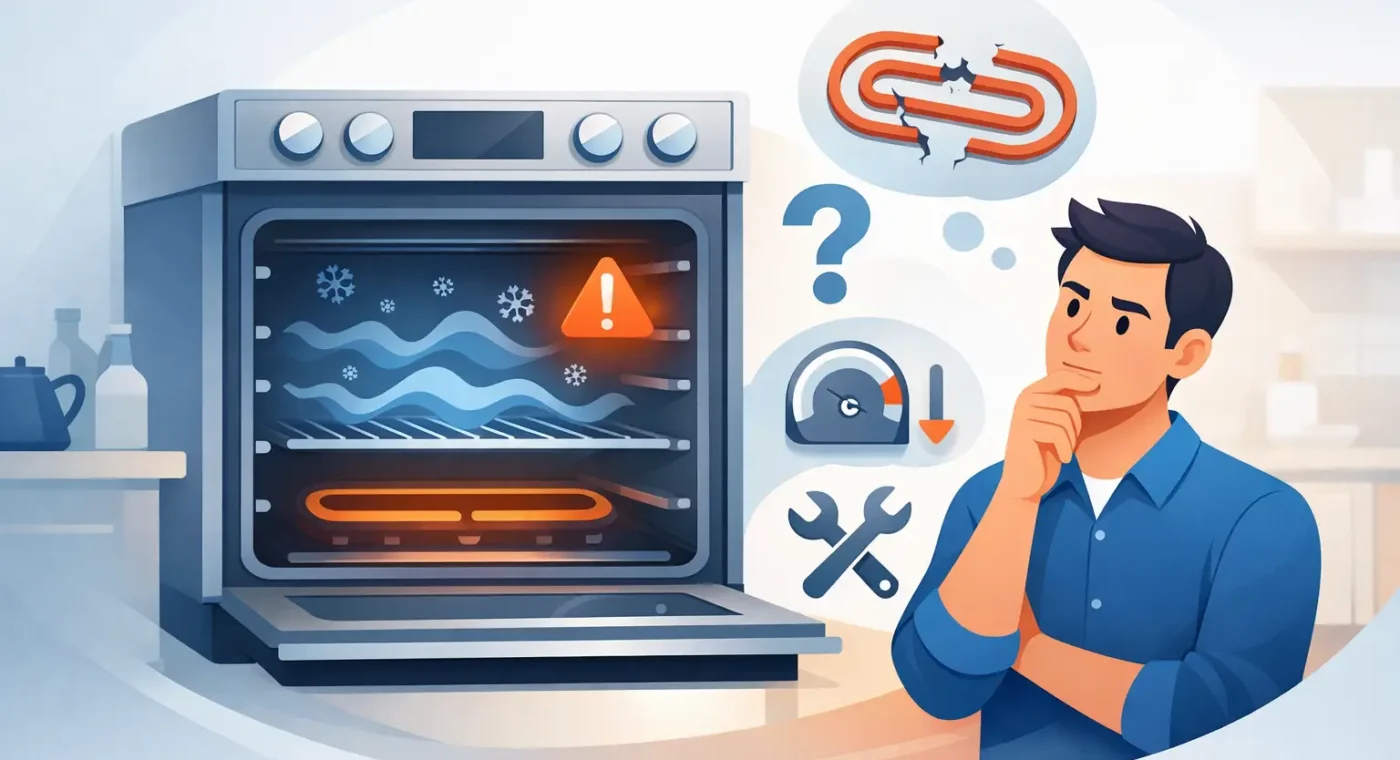
Dinner is prepped, the pan is ready, and then the oven stays cold. If you’re asking, “why is my oven not heating,” the problem usually comes down to power, a failed heating component, a bad igniter, or a control issue. Some causes are simple to spot. Others need proper testing to diagnose safely and accurately.
An oven that will not heat is more than an inconvenience. For homeowners, it throws off the day fast. For landlords and property managers, it becomes a tenant complaint that needs quick attention. For commercial operators, it can mean lost service time and added pressure on the kitchen. The key is knowing what you can check yourself and when it makes more sense to bring in a qualified technician.
Why is my oven not heating even though it turns on?
This is one of the most common scenarios. The display works, the oven light comes on, and the controls respond, but the cavity never gets hot enough to cook. That usually means the oven has some power, but not everything needed to produce heat.
On electric ovens, one of the heating elements may have failed, or the unit may be getting partial power. On gas ovens, the igniter may glow but still be too weak to open the gas valve. In other cases, the temperature sensor, control board, or thermostat is sending the wrong signal, so the oven never completes the heating cycle properly.
The exact cause depends on the oven type, its age, and how the failure presents itself. An oven that does not heat at all points to a different issue than one that heats slowly, stops midway, or never reaches the set temperature.
Start with the basics before assuming a major repair
A few simple checks can save time. Make sure the oven is actually set to bake or broil and that a delayed start feature was not activated by mistake. It sounds obvious, but control panels can be confusing, especially after a power outage or cleaning.
If you have an electric oven, check the breaker. These ovens usually need 240 volts, and if one side of the breaker trips, the clock and light may still work while the heating elements do not. Resetting the breaker once may restore operation. If it trips again, stop there. Repeated breaker trips can point to a wiring fault, a shorted element, or another electrical issue that should be handled by a professional.
If you have a gas oven, confirm the gas supply is on and that other gas appliances are working normally. A broader gas supply issue can affect the oven, but if the cooktop works and the oven does not, the problem is likely inside the appliance itself.
Common reasons an electric oven stops heating
Electric ovens rely on a few key components to create and regulate heat. When one fails, the oven may stop heating completely or perform inconsistently.
A burned-out bake element
The bake element is the lower heating element in most electric ovens. If it is cracked, blistered, separated, or visibly damaged, it has likely failed. This is one of the most common causes of an electric oven not heating during normal baking.
Sometimes the broil element still works, which can make the oven seem partly functional. That partial operation can be misleading. If the lower element is out, the oven may never preheat correctly or may cook food unevenly.
A failed broil element
The broil element is the upper heating element. While it is most associated with broiling, many ovens use both bake and broil elements during preheat. If the broil element fails, preheating may take much longer or temperature recovery may be poor.
This is a good example of why symptoms matter. If the oven heats a little but not enough, one element may still be working while the other is not.
A power supply problem
An electric range can appear alive while still lacking full voltage. That is because the controls often run on lower voltage while the heating system needs full 240-volt power. Loose wiring, a bad outlet, a damaged cord, or a breaker issue can all cause this condition.
Because this involves live electrical testing, it is not a safe DIY task for most property owners. Accurate diagnosis matters here. Replacing a good heating element will not fix a supply problem.
A bad temperature sensor or control board
The temperature sensor monitors oven heat and helps the control board regulate the cycle. If the sensor is out of range, the oven may underheat, overheat, or fail to heat properly at all.
A control board can also fail, especially after power surges, age-related wear, or moisture exposure. These failures are less obvious because there may be no visible damage. Proper testing is usually the only way to confirm the problem.
Common reasons a gas oven is not heating
Gas ovens work differently, but the failure patterns are just as common. In most cases, the issue comes down to ignition or gas flow.
A weak or failed igniter
This is one of the top reasons a gas oven will not heat. Many igniters still glow even when they are bad, which causes confusion. A glowing igniter is not automatically a good igniter. It has to draw enough current to open the gas valve fully.
If the igniter glows but the burner does not light, or it takes a long time to ignite, the igniter is often the culprit. This is a common wear item and one of the first things a technician checks.
A faulty gas safety valve
If the igniter is working properly but gas still does not flow to the burner, the safety valve may be failing. This part is designed to prevent unsafe gas release, so it should only be tested and replaced by someone trained to work on gas appliances.
Burner or ignition issues
Grease, food debris, or wear around the burner assembly can interfere with ignition. In some cases, the flame may start unevenly or not carry across the burner the way it should. Cleaning can help in minor cases, but if there is delayed ignition, gas odor, or popping sounds, service is the safer route.
When the oven heats, but not correctly
Sometimes the question is not just why is my oven not heating, but why is it heating so poorly. If your oven eventually gets warm but takes too long, cooks unevenly, or cannot hold temperature, the issue may be calibration, a weak element, a failing igniter, or a bad sensor.
Door seal problems can also play a role. A damaged gasket allows heat to escape, which forces the oven to work harder and can affect cooking times. This is not usually the only cause of a no-heat complaint, but it can make a borderline heating issue much worse.
A convection fan problem may also affect performance in ovens with convection settings. The oven may still produce heat, but airflow will be poor, leading to uneven cooking and slower results.
What you can safely check yourself
There are a few practical steps most people can take before booking service. Check the breaker, confirm the correct cooking mode, inspect visible elements for damage, and look for obvious signs like error codes, loose knobs, or a torn door gasket.
Beyond that, caution matters. Opening panels, testing live voltage, handling gas components, or replacing parts without confirming the diagnosis can turn a repairable problem into a larger one. It can also create a safety risk. That is especially true in rental properties and commercial kitchens, where downtime and liability both matter.
When it is time to call for professional oven repair
If the oven still will not heat after the basic checks, professional diagnosis is usually the fastest path forward. The right repair depends on the failed part, but also on the appliance’s wiring, controls, and overall condition. A good technician looks at the whole system instead of guessing based on one symptom.
This is where experience saves time and money. An oven may need a simple igniter or element replacement. It may also have a power supply issue, control fault, or multiple worn components. Fast, accurate testing helps avoid repeat service calls and unnecessary parts.
For property managers and business owners, that matters even more. A quick fix that misses the root cause often leads to another outage at the worst possible time. Reliable service should restore operation and reduce the chance of another interruption right away.
At EAAIRS Services and Repair Ltd., we see this issue often across both residential and commercial equipment. The brands and models vary, but the priority stays the same: identify the fault correctly, explain the repair clearly, and get your kitchen back to working order with as little disruption as possible.
If your oven is cold, slow to heat, or inconsistent, do not wait for the next meal or service rush to confirm the problem is getting worse. A prompt inspection can often catch a failing part before it turns into a bigger repair, and that kind of timing makes all the difference when comfort, schedules, and daily operations depend on a working oven.