
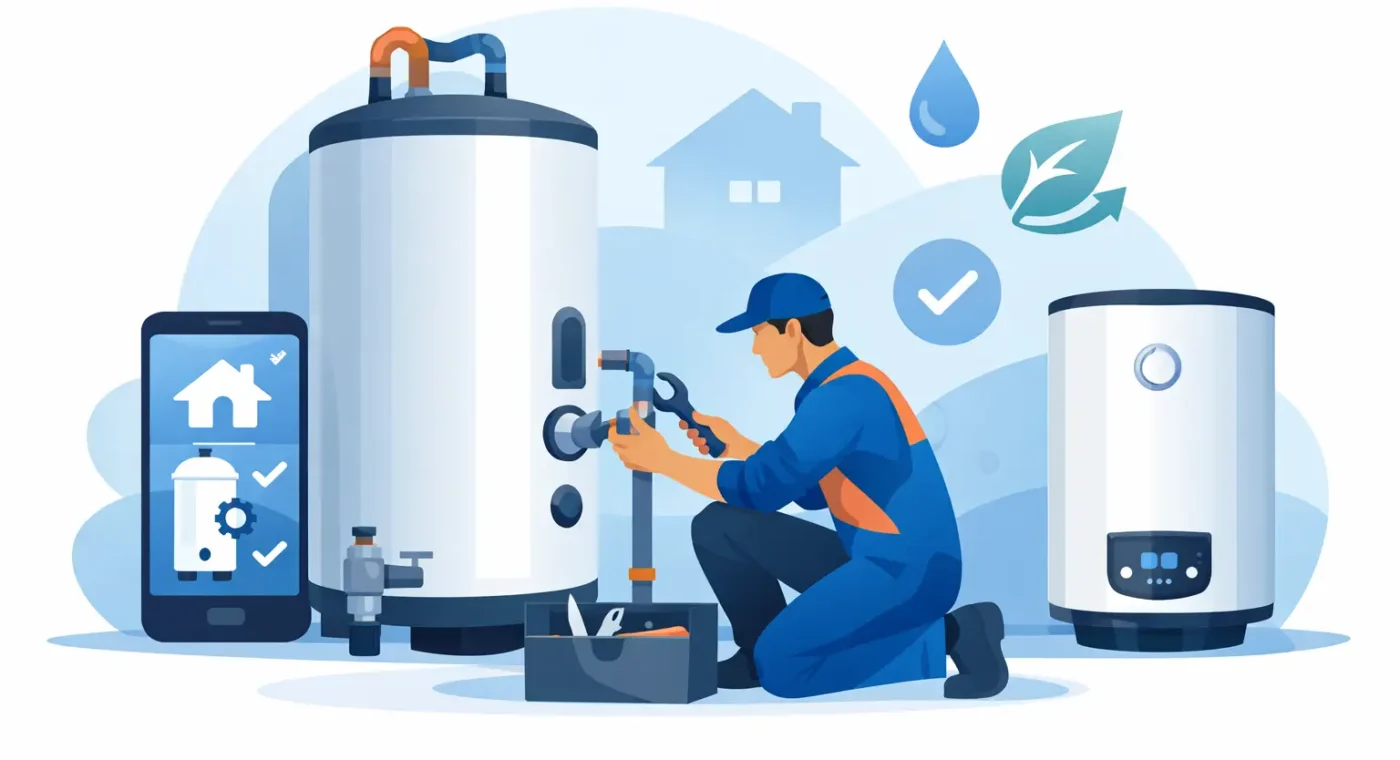
A cold shower is rarely the first sign that a water heater is nearing the end. More often, homeowners notice rusty hot water, a longer wait for heat, rising utility bills, or a small puddle near the tank. This water heater replacement guide helps you make a clear decision before a failing unit turns into water damage, lost comfort, or an emergency call.
Replacing a water heater is not simply a matter of buying the largest model available. The right choice depends on your household or building demand, available fuel source, installation space, venting, electrical capacity, and budget. A professional assessment can prevent costly mismatches and help restore dependable hot water with minimal disruption.
When Water Heater Replacement Makes More Sense Than Repair
Many water heater problems can be repaired. A failed heating element, thermostat, pressure relief valve, igniter, or thermocouple may be a practical repair when the tank itself is in good condition. But repairs have limits, especially on older equipment.
A conventional tank water heater typically lasts about 8 to 12 years, although water quality, maintenance history, and usage patterns can shorten or extend that range. If a unit is approaching that age and needs a major repair, replacement may offer better value than putting more money into equipment that is likely to fail again.
Replacement is often the safer choice when you see four common warning signs:
- Water leaking from the tank body or pooling underneath it
- Rust-colored water coming from hot-water fixtures
- Rumbling, popping, or banging caused by heavy sediment buildup
- Hot water that runs out quickly despite recent repairs
A leak at a fitting may be repairable. A leak from the tank itself usually is not. Once the inner tank has corroded, replacement should be scheduled promptly. Waiting can turn a manageable equipment issue into flooring, wall, or inventory damage – a particular concern for landlords, property managers, and commercial operators.
Water Heater Replacement Guide: Choose the Right Type
The best replacement is the one that meets real demand without wasting energy or forcing unnecessary changes to your property. The main options are tank water heaters, tankless water heaters, heat pump water heaters, and, in some locations, solar-assisted systems.
Conventional tank water heaters
Tank units store a supply of hot water for use throughout the day. They are familiar, generally less expensive to install than more advanced options, and available in electric, natural gas, propane, and oil configurations depending on the property.
For many homes, a properly sized tank system is a dependable and affordable choice. The trade-off is standby heat loss: the system uses energy to keep stored water hot even when no one is using it. Tank capacity also matters. A household with multiple bathrooms, a large soaking tub, or back-to-back showers may need more than a standard 40-gallon unit.
Tankless water heaters
Tankless systems heat water on demand rather than storing it. They can reduce standby energy loss, take up less space, and provide a continuous flow of hot water when they are properly sized.
However, tankless installation is not always a simple swap. Gas models may require larger gas lines, new venting, and electrical connections. Electric tankless systems can require significant electrical capacity. Their performance also depends on the incoming water temperature and the number of fixtures running at once. A unit that looks efficient on paper can disappoint if it is undersized for peak demand.
Heat pump water heaters
Heat pump water heaters move heat from the surrounding air into the water, making them highly efficient in the right environment. They work best in spaces with enough ambient warmth and airflow, such as garages, utility rooms, or basements with adequate clearance.
The upfront cost can be higher, and the unit may produce cool air and some operating noise. For homeowners focused on long-term energy savings, the trade-off can be worthwhile. A technician can confirm whether the installation space, drainage, and electrical supply are suitable.
Size for Peak Demand, Not Guesswork
A water heater should be sized around the busiest period of use, not just the number of people in a home. Morning routines can involve showers, laundry, dishwasher cycles, and handwashing within a short window. In a restaurant, salon, rental property, or commercial kitchen, hot-water demand can be even more concentrated.
For tank models, professionals look at the first-hour rating. This estimates how much hot water the unit can deliver in the first hour of heavy use. For tankless units, the key figure is flow rate, measured in gallons per minute, at the expected temperature rise.
Choosing a larger unit is not automatically better. An oversized tank costs more to buy and may waste energy. An oversized tankless system can require upgrades that provide little practical benefit. Accurate sizing begins with a conversation about fixtures, occupants, appliances, operating hours, and usage patterns.
Understand What Affects Replacement Cost
The price of a water heater replacement includes more than the equipment itself. The water heater type, fuel source, capacity, efficiency rating, location, permits, and required code updates all affect the final estimate.
A straightforward replacement in an accessible utility area is usually less complex than installing a new system in an attic, crawlspace, closet, or commercial mechanical room. Gas units may need venting work, combustion-air considerations, and gas-line modifications. Electric units may need dedicated circuits or panel upgrades. Tankless and heat pump systems can also require condensate drainage.
A transparent estimate should explain the scope of work rather than present one unexplained number. Ask whether it includes removal and disposal of the old unit, required fittings, safety components, permits where applicable, installation labor, testing, and cleanup. This helps you compare options fairly and avoid surprises after work begins.
Why Professional Installation Protects Your Property
Water heaters combine pressurized water, high temperatures, electricity, or combustible fuel. Installation mistakes can create real safety risks, including leaks, scalding, carbon monoxide exposure, electrical hazards, and equipment damage.
A qualified technician checks the full installation, not just the appliance. That includes shutoff valves, drain connections, pressure relief valve discharge piping, venting, gas connections, electrical wiring, expansion tanks where needed, and proper placement. They also test the system after installation and verify that hot water reaches fixtures as expected.
For property managers and business owners, professional installation also supports consistency across units and locations. Keeping service records, model information, and installation dates makes future maintenance and replacement planning easier. EAAIRS Services and Repair Ltd. can coordinate water heater work alongside electrical, appliance, and HVAC needs when multiple property systems require attention.
Prepare for Installation Day
A little preparation helps the appointment move faster. Clear a path to the water heater and remove stored items from the surrounding area. If the unit is in a closet, garage, basement, attic, or commercial utility space, technicians need safe working room for removal and installation.
Plan for a temporary interruption to hot water. In many standard replacements, service can be restored the same day, but timing depends on the equipment type, access, permits, and whether upgrades are required. If you manage tenants or a business, communicate the outage window early and schedule work during the least disruptive hours when possible.
After installation, ask how to operate the new unit, where the shutoff valves are located, and what maintenance it needs. Tank water heaters may benefit from periodic flushing in areas with sediment-heavy water. Tankless units often need descaling at intervals based on water hardness and usage. Regular service can help preserve efficiency and catch small issues before they interrupt hot water.
Do Not Wait for a Full Failure
If your water heater is old, noisy, rusty, leaking, or inconsistent, schedule an inspection while you still have choices. A planned replacement lets you compare systems, review pricing, and select an installation time that works for your household or operation. Acting before the tank fails gives you more control, less stress, and a better chance of keeping hot water available when it matters most.