
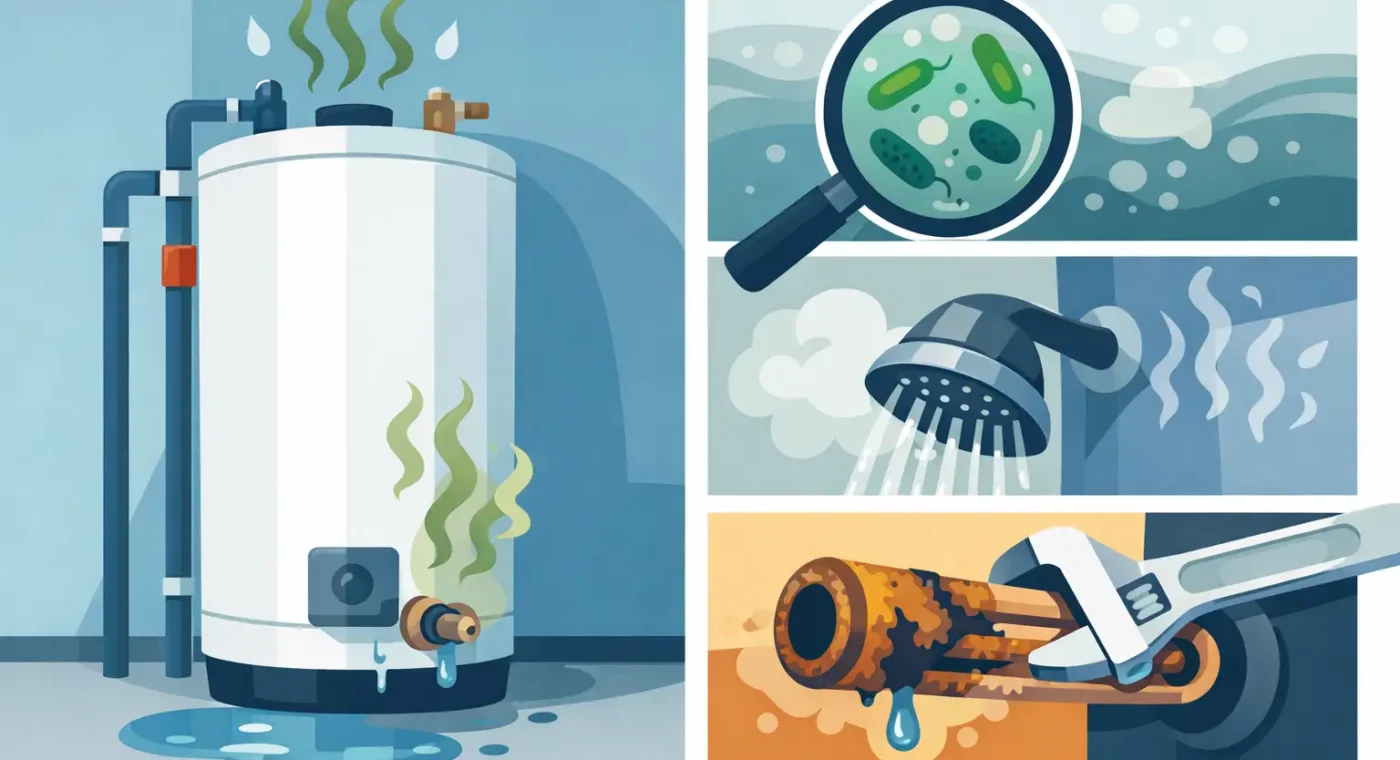
A sulfur-like odor from the hot water faucet can make a perfectly normal morning routine feel like an emergency. If you are asking, “why does my water heater smell,” the answer is often a fixable reaction inside the tank. But the source of the smell matters. Some odors point to water quality or routine maintenance, while others require immediate professional attention for safety.
The fastest way to narrow it down is to notice where and when you smell it. Does the odor appear only when you run hot water? Is it strongest near the water heater itself? Do cold-water faucets smell too? Those details help determine whether the issue is in the tank, your plumbing, the incoming water supply, or a gas or electrical component.
When a Water Heater Smell Is an Emergency
A rotten-egg odor in the water is usually different from the distinct odor of natural gas. If you smell gas near a gas water heater, do not try to diagnose it by relighting the pilot, flipping switches, or using a lighter. Leave the area, keep others away, and contact your gas utility or emergency services from a safe location. Once the immediate hazard is addressed, a qualified technician can inspect the appliance, gas connections, burner, venting, and controls.
A burning-plastic, hot-wire, or electrical smell also needs prompt attention. Turn off power to an electric water heater at the breaker if it is safe to do so. For a gas unit, turn off the gas supply only if you know how to operate the shutoff safely. Do not continue using the heater until it has been inspected. Electrical failures, overheated wiring, damaged controls, and combustion problems can worsen quickly.
A smoky or exhaust-like odor near a gas water heater may indicate a venting issue or incomplete combustion. Open windows if you can do so without putting yourself at risk, leave the area if anyone feels dizzy, nauseated, or has a headache, and arrange for urgent service. Carbon monoxide has no smell, so never rely on odor alone to judge whether combustion equipment is safe.
Why Does My Water Heater Smell Like Rotten Eggs?
The most common complaint is water that smells like sulfur or rotten eggs, especially when hot water runs. In many homes, naturally occurring bacteria react with sulfur compounds in the water and the heater’s anode rod. The anode rod is designed to protect the steel tank from corrosion, but in certain water conditions, it can contribute to hydrogen sulfide gas – the source of that unmistakable odor.
This does not automatically mean the water heater is failing. It does mean the tank, water chemistry, and anode rod should be evaluated. A technician may recommend flushing and disinfecting the tank, checking the anode rod, or replacing it with a compatible alternative. The right fix depends on the heater model and local water conditions. Simply replacing parts without identifying the cause can leave you with the same smell weeks later.
If the odor is present at both hot and cold faucets, the water heater may not be the primary source. The incoming water supply, a water softener, a well system, or bacteria in the plumbing can all be responsible. In that case, treating only the heater may reduce the smell temporarily without solving the underlying problem.
Stagnant Water Can Make Odors Worse
Water that sits in a tank or unused plumbing lines can develop a musty, stale, or sulfur-like smell. This is common in vacant homes, seasonal properties, guest suites, and commercial spaces with low water use. A heater that has been off for an extended period may also need a careful restart and inspection before regular use resumes.
Running water through rarely used fixtures can help in minor cases. However, if the smell returns quickly, the tank should be assessed for sediment, bacterial growth, and worn components. Property managers should take recurring odors seriously, since tenant complaints can signal a system-wide issue rather than an isolated faucet problem.
Other Water Heater Odors and What They May Mean
A metallic smell or taste can be caused by mineral-heavy water, corrosion, or aging plumbing. It may be more noticeable with hot water because heat can intensify odors and draw attention to water quality changes. If you also see rust-colored water, sediment, or reduced hot-water performance, schedule an inspection instead of assuming the issue is harmless.
A musty smell may come from drain lines or biofilm around a fixture rather than the heater. To test this, fill a clean glass with hot water and step away from the sink before smelling it. If the water in the glass smells normal but the odor is strong near the drain, the drain may need cleaning. If the glass itself smells bad, the issue is more likely in the water supply or heater.
A burnt-dust smell can occur when a unit is first used after sitting idle, but it should fade quickly. Persistent burning smells, melted insulation odors, or unusual noises are not normal. They warrant professional service, particularly on electric water heaters where heating elements and wiring are enclosed behind access panels.
How to Tell Whether the Tank Is the Source
Start by comparing hot and cold water from more than one faucet. If only hot water smells, the water heater is the likely source. If both hot and cold water smell throughout the property, look beyond the tank to the water supply, softener, filtration equipment, or plumbing.
Next, check whether the odor is strongest after the heater has been sitting unused or whether it occurs all day. A smell that intensifies after periods of low use often points to stagnant water or bacteria. A sudden odor accompanied by leaking, popping noises, discolored water, or unreliable heating may point to sediment buildup, corrosion, or component failure.
Avoid opening the tank, removing an anode rod, or draining a water heater unless you understand the process and the risks. Hot water, pressure, gas controls, electrical connections, and old shutoff valves can create complications. A poorly drained tank can also stir up sediment and affect performance.
What a Professional Water Heater Inspection Should Cover
A proper service visit is more than a quick flush. The technician should identify the odor source, inspect the tank exterior for corrosion or leaks, check temperature settings, assess sediment buildup, and evaluate the anode rod when appropriate. For gas units, burner operation, venting, and gas connections should also be checked. For electric units, the inspection may include heating elements, thermostats, wiring, and safety controls.
This approach matters because one symptom can have several causes. For example, flushing may help with sediment but not solve a sulfur odor caused by a deteriorated anode rod. Replacing an anode rod may reduce odor but will not correct a contaminated well supply. Accurate diagnosis keeps repairs focused, limits disruption, and helps avoid paying for work that does not address the real issue.
EAAIRS Services and Repair Ltd. can inspect residential and commercial water heaters, explain the findings clearly, and provide a straightforward repair or replacement recommendation before work begins. If a tank is nearing the end of its service life, replacement may be more practical than repeated repairs – especially where leaks, heavy corrosion, or poor hot-water recovery are already affecting the property.
Reducing Future Water Heater Odors
Regular maintenance is the best defense against recurring water heater smells. The schedule depends on water hardness, usage, and equipment type, but periodic flushing helps control sediment that can reduce efficiency and create conditions for odor problems. Checking the anode rod before it is fully depleted also protects the tank from premature corrosion.
Keep the temperature at a safe, appropriate setting based on the manufacturer’s guidance and your household or facility needs. Higher temperatures can reduce some bacterial activity, but excessively hot water creates a scalding risk and should never be used as a substitute for proper diagnosis. Homes with children, older adults, or vulnerable occupants should be especially cautious.
When hot water starts smelling wrong, treat it as useful information from your plumbing system. A timely inspection can often restore clean-smelling hot water before a minor maintenance issue becomes a disruption for your home, tenants, customers, or staff.