
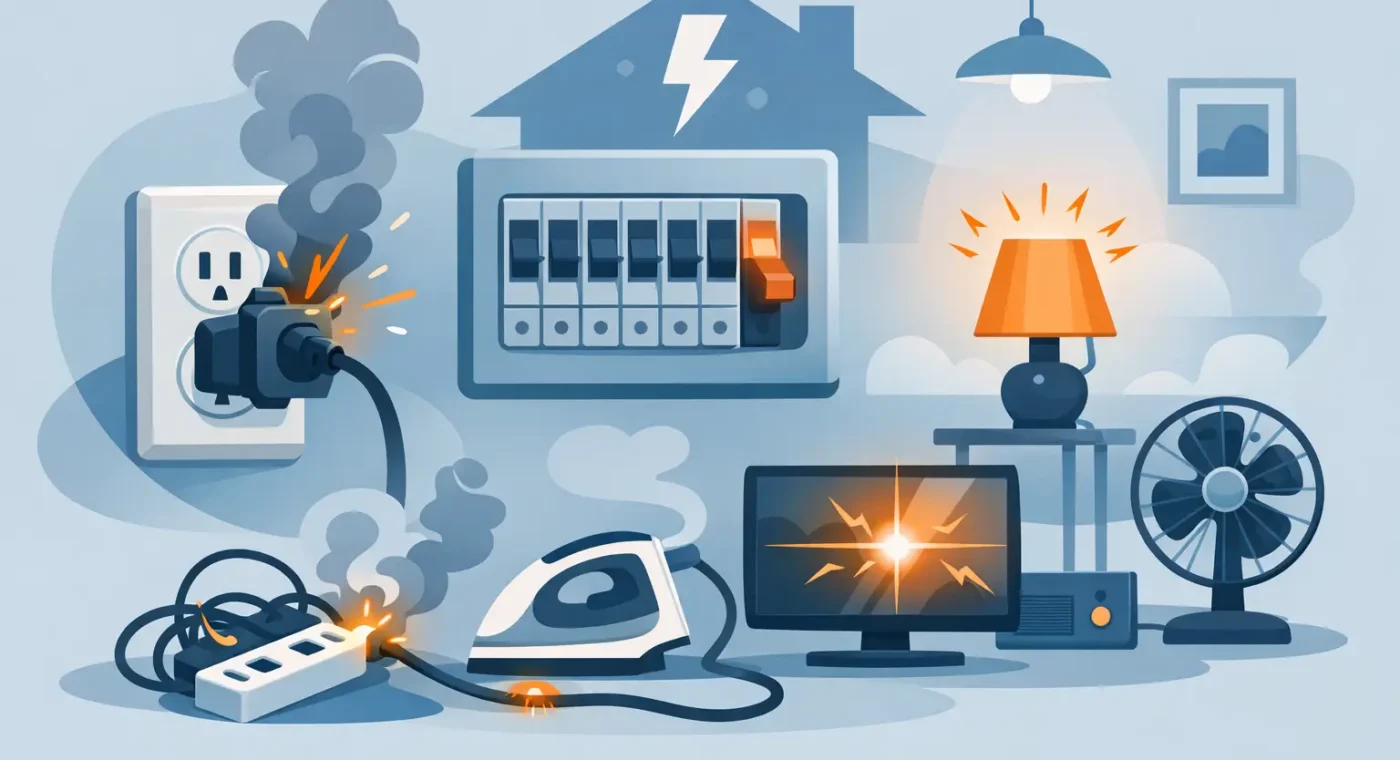
A breaker that trips when the microwave starts, lights that dim when the AC turns on, or an outlet that feels unusually warm are not small inconveniences to ignore. These are among the top signs of electrical overload, and they can point to a circuit that is being asked to carry more power than it can safely handle. For homeowners, landlords, and business operators, acting early can prevent damaged equipment, unexpected downtime, and serious electrical hazards.
Electrical overloads are common in properties where power needs have changed over time. A home office may now share a circuit with kitchen appliances. A rental unit may rely on extension cords because it lacks enough outlets. A commercial kitchen, salon, office, or retail space may add equipment without updating the electrical system that supports it. The warning signs often start small, but they deserve professional attention before they become a bigger repair.
What an electrical overload actually means
An overload occurs when a circuit draws more electrical current than its wiring, outlets, and protective devices are designed to carry. Circuit breakers are meant to interrupt power when this happens. That is why a tripped breaker is often a safety feature doing its job, not simply a nuisance.
The cause is not always as simple as having too many devices plugged in. A single high-demand appliance, such as a portable heater, air fryer, window AC unit, dryer, or commercial cooking appliance, can overload a circuit that was not designed for that load. Older wiring, loose connections, damaged outlets, and incorrectly sized breakers can create similar symptoms. A qualified electrician must determine whether the problem is a true overload, a failing component, or a more serious wiring issue.
Top signs of electrical overload to watch for
Breakers trip repeatedly
A breaker that trips once after several high-power items run at the same time may be responding to a temporary overload. For example, a kitchen circuit can trip when a microwave, coffee maker, toaster, and blender are all operating together.
Repeated trips are different. If the same breaker shuts off regularly, especially when one specific appliance starts, the circuit needs evaluation. Do not keep resetting it and hoping the issue goes away. Repeated resets can allow heat to build up in wiring or equipment that is already under strain.
Lights dim, flicker, or brighten when equipment starts
Brief dimming can happen when a large motor starts, such as an air conditioner compressor, refrigerator, or commercial refrigeration unit. However, lights that regularly flicker or noticeably dim when appliances turn on can signal that a circuit is overloaded or that a connection is loose.
Pay close attention if the issue affects several rooms, only one area of the property, or a specific piece of equipment. Those details help an electrician diagnose whether the source is a branch circuit, panel connection, appliance, or service-related issue.
Outlets, switches, or cords feel warm
An outlet or switch should not feel hot during normal use. Mild warmth around a charging block can occur, but warmth at the outlet faceplate, plug, switch, or extension cord is a warning sign. Heat can result from too much current, a loose wire connection, a worn receptacle, or a damaged plug.
Stop using that outlet if it feels hot, looks discolored, or makes a buzzing sound. Unplug devices carefully if it is safe to do so, and arrange a professional inspection. Do not cover the problem with a power strip or move it to another overloaded outlet.
You smell burning or see discoloration
A burning plastic odor, scorched outlet cover, melted plug, or brown marks around a receptacle require immediate attention. These signs can indicate overheating inside the outlet box or wiring. The affected circuit should not be used until it has been checked by a licensed electrician.
If you see smoke, sparks, or active flames, move people away from the area and contact emergency services. Do not use water on an electrical fire. If it is safe and you know which breaker controls the circuit, turn that circuit off without touching damaged equipment.
Power strips and extension cords are doing too much work
Power strips are useful for low-demand electronics, but they are not a permanent solution for a lack of outlets. Plugging one power strip into another, commonly called daisy-chaining, increases the risk of overloaded cords and connections. Extension cords running under rugs, through doorways, or across work areas can also overheat or become damaged.
This is especially common in offices, rental properties, workshops, and commercial spaces where equipment has been added over time. If your operation depends on cords to reach basic power, the right solution may be new dedicated circuits or properly located outlets, not another adapter.
Appliances perform inconsistently or shut down
An appliance that loses power, cycles unexpectedly, struggles to start, or shuts down when other equipment is running may be sharing an overloaded circuit. This can affect refrigerators, freezers, HVAC equipment, laundry appliances, computers, and commercial kitchen equipment.
The appliance itself could also be failing, so diagnosis matters. Continuing to run equipment on an unstable circuit can damage motors, control boards, and sensitive electronics. For businesses, that can mean spoiled inventory, interrupted service, or equipment downtime at the worst possible time.
Buzzing, crackling, or sparking comes from electrical components
Buzzing from a panel, outlet, switch, or light fixture is not normal. Neither are visible sparks when plugging in everyday devices. These symptoms can come from loose connections, damaged wiring, failing breakers, or overloaded components.
Treat sounds and sparks as an urgent service issue, particularly if they occur alongside heat, tripped breakers, or a burning smell. Electrical problems do not always stay contained to one outlet or one room.
What to do when you suspect an overload
Start by reducing the load on the affected circuit. Turn off or unplug nonessential devices, particularly high-wattage items such as space heaters, portable AC units, countertop cooking appliances, and large commercial equipment. Avoid using extension cords or power strips as a workaround.
Then identify the pattern. Note which breaker trips, what was running at the time, and whether the issue occurs in one room or throughout the property. For landlords and property managers, documenting the affected unit, equipment, and timing can help speed up a service visit. For commercial operators, it can help limit downtime by identifying which equipment should remain off until the circuit is inspected.
Never replace a breaker with a larger one just to stop it from tripping. A breaker must match the wire size and circuit design. Installing an oversized breaker can allow wiring to overheat before the breaker shuts off, increasing fire risk.
If there is heat, burning odor, smoke, discoloration, recurring breaker trips, or sparking, schedule electrical service promptly. A professional can test the circuit load, inspect outlets and connections, evaluate the electrical panel, and determine whether a dedicated circuit, outlet replacement, wiring repair, or panel upgrade is needed.
Prevent overloads before they interrupt your day
The best prevention is matching your electrical system to how the property is actually used. Kitchens, laundry rooms, garages, home offices, HVAC equipment, and commercial work areas often need dedicated circuits because they support high-demand devices. That need grows when a property is remodeled, equipment is upgraded, or operations expand.
Use appliances according to their electrical requirements, keep cords in good condition, and avoid running several heat-producing devices from one outlet. Property owners should also consider an electrical inspection after purchasing an older building, adding major appliances, converting a room into a workspace, or noticing any change in how the system performs.
Fast, professional diagnosis protects more than the electrical panel. It protects the people using the property, the equipment they rely on, and the comfort or business continuity that should not be left to chance. When an electrical warning sign appears, addressing it early is usually the safest and most affordable decision.