
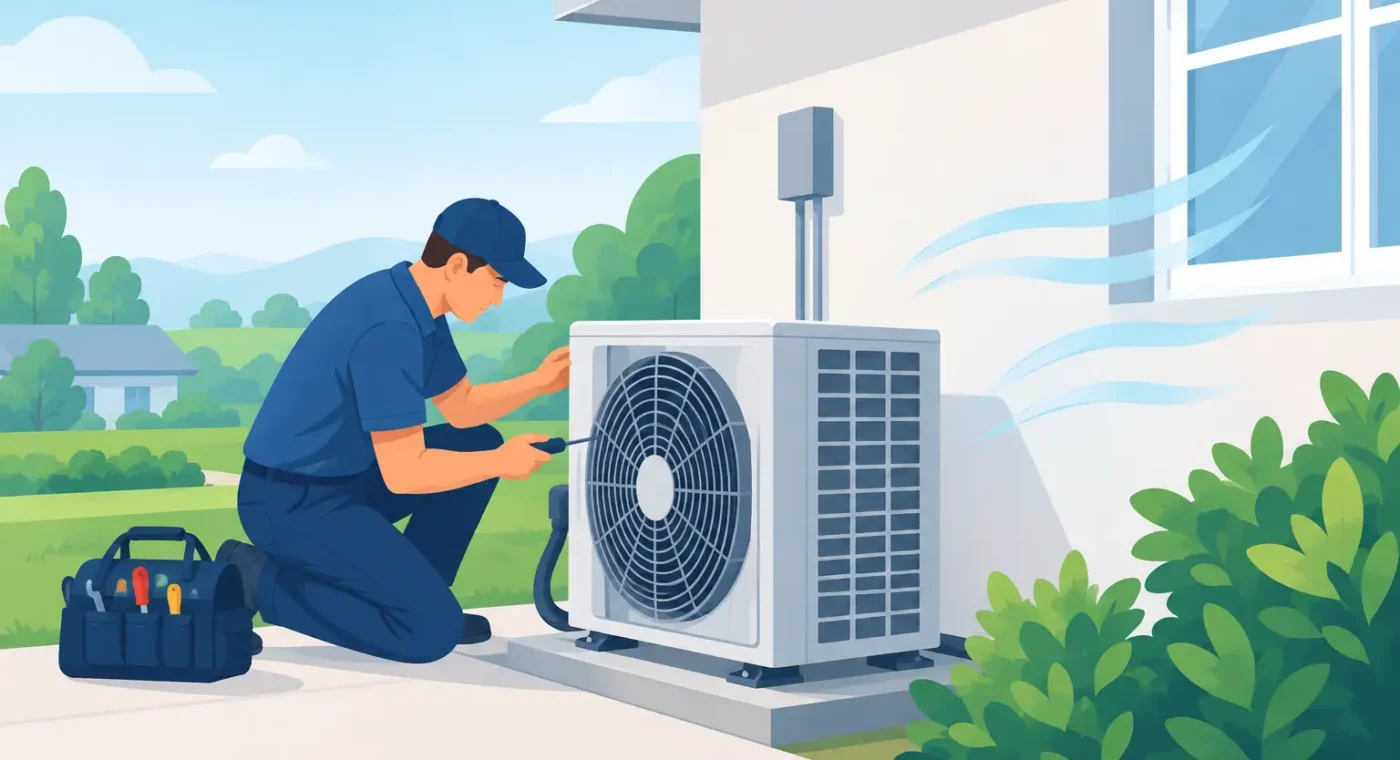
A cooling system rarely fails at a convenient time. It usually starts with small changes: rooms that take longer to cool, a thermostat that never seems satisfied, a new sound from the outdoor unit, or an energy bill that climbs without explanation. This AC service guide helps homeowners, landlords, property managers, and business operators recognize those changes early and make confident decisions before a minor issue becomes a no-cooling emergency.
What Professional AC Service Actually Includes
AC service is more than adding refrigerant or changing a filter. A professional visit should focus on finding the reason your system is not performing as it should, then correcting the issue safely and clearly.
A technician typically starts by checking thermostat operation, electrical connections, airflow, the indoor evaporator coil, the outdoor condenser, condensate drainage, refrigerant performance, and the condition of moving parts. The goal is not simply to get cold air blowing for the day. It is to identify what is causing reduced comfort, excess energy use, water leaks, repeated cycling, or system strain.
The exact scope depends on the problem and the equipment. A routine maintenance appointment may involve cleaning, testing, and adjustments. A repair call may uncover a failed capacitor, damaged contactor, clogged drain line, worn blower component, refrigerant leak, or electrical fault. Older systems can also require a practical conversation about whether continued repairs make financial sense.
For commercial spaces, the stakes are often higher. An AC issue can affect customers, employees, tenants, inventory, or sensitive equipment. Fast diagnosis matters, but so does a repair plan that reduces repeat downtime.
Signs You Should Schedule AC Service
Waiting until the system stops completely can lead to more discomfort and fewer scheduling options during peak heat. Call for service when you notice a meaningful change in cooling performance, not just when the unit is fully down.
Warm air from the vents is an obvious warning sign, but uneven temperatures are just as important. If one part of a home or building feels comfortable while another stays hot, the cause may involve airflow, ductwork, thermostat settings, insulation, zoning, or equipment capacity. The right repair depends on an accurate diagnosis.
Pay attention to short cycling, too. This is when the AC turns on and off more frequently than normal without completing a proper cooling cycle. It can be caused by thermostat issues, restricted airflow, electrical problems, dirty coils, or an incorrectly sized system. Repeated short cycles put extra wear on components and can increase utility costs.
Water around the indoor unit deserves prompt attention. Air conditioners remove humidity as they cool, and that moisture must drain correctly. A blocked condensate line can cause leaks, water damage, unpleasant odors, and in some cases a system shutdown. If you see standing water, turn the system off if it is safe to do so and arrange service.
Unusual noises should not be ignored. Rattling can point to loose panels or hardware. Buzzing may involve electrical components. Grinding or squealing can signal a problem with a motor or moving part. A quick inspection is usually less disruptive than waiting for a small mechanical issue to become a larger repair.
AC Service Guide: What You Can Check First
There are a few safe checks that can save time before your appointment. They do not replace professional service, and you should never open electrical panels, handle refrigerant, or bypass safety controls.
First, confirm that the thermostat is set to cool and that the target temperature is below the current indoor temperature. Check the batteries if your thermostat uses them. Next, look at the air filter. A dirty filter restricts airflow, forces the system to work harder, and can contribute to coil freezing or poor cooling. Replace it with the correct size and type if it is visibly dirty.
Then, make sure supply vents are open and not blocked by furniture, boxes, curtains, or equipment. For the outdoor condenser, remove leaves, grass clippings, and loose debris from around the unit. Keep at least a couple of feet of open space around it so air can move freely. Do not spray the unit with a high-pressure washer or bend the delicate coil fins.
Finally, check the circuit breaker only if the system has no power. If the breaker has tripped once, you can reset it one time. If it trips again, stop there. Repeated tripping may indicate an electrical fault that needs professional attention.
Why Seasonal Maintenance Pays Off
Maintenance is not a guarantee against every breakdown. Parts can fail without warning, especially during heavy use. Still, scheduled AC maintenance is one of the best ways to reduce avoidable problems and keep performance more consistent through the cooling season.
A clean filter and coil help the system move air and transfer heat efficiently. A clear drain line helps prevent water-related damage. Tight electrical connections and properly operating components support safer, more dependable operation. During a maintenance visit, a technician can also catch worn parts before they leave you without cooling on a hot day.
For most homes, an annual service visit before or early in the cooling season is a sensible baseline. Properties with pets, high dust levels, frequent occupancy, or year-round cooling demands may need more frequent filter changes and closer attention. Commercial properties often benefit from a planned maintenance schedule because equipment downtime can interrupt normal operations quickly.
Maintenance also gives you better information for budgeting. If a system is aging, needs recurring repairs, or is losing efficiency, you can plan ahead rather than being forced into a decision during an emergency.
Repair or Replace: How to Make the Right Call
There is no single age at which every air conditioner should be replaced. The best choice depends on the repair cost, the system’s condition, its maintenance history, energy performance, and whether replacement would solve ongoing comfort problems.
Repair is often the practical option when the system is relatively newer, the issue is isolated, and the equipment has otherwise been reliable. Replacing a capacitor, clearing a drain line, repairing a wiring issue, or addressing a minor component failure can restore dependable operation without a major investment.
Replacement deserves consideration when repairs are frequent, major components have failed, or the system struggles to cool the property even after appropriate repairs. Older equipment may also use refrigerant that is increasingly expensive or difficult to source. If your AC has poor airflow, high energy costs, and repeated breakdowns, putting more money into repairs may only delay a larger decision.
A trustworthy technician should explain the findings, provide clear options, and help you compare immediate cost with long-term value. There is a trade-off. A repair can be the lower-cost solution today, while a replacement may offer better reliability and efficiency over time. The right answer should fit your property, your budget, and your comfort needs.
What to Expect From a Professional Service Visit
A good AC service experience should feel organized, not confusing. You should know what the technician found, what work is recommended, what the options cost, and what to expect after the repair or maintenance is complete.
Start by describing the symptoms clearly. Mention when the issue began, whether it is constant or intermittent, any error messages, unusual sounds, water leaks, prior repairs, and which areas are not cooling properly. This information helps the technician diagnose the issue more efficiently.
After the inspection, ask for a straightforward explanation before authorizing work. A clear estimate should separate diagnostic findings from recommended repairs and identify any parts that may need to be ordered. If a repair is urgent because of safety, electrical concerns, or risk of further damage, the technician should explain why.
EAAIRS Services and Repair Ltd. provides AC service with the same practical approach used across essential property systems: assess the issue carefully, explain the solution clearly, and work to restore comfort with minimal disruption. For properties with electrical, appliance, or ventilation concerns alongside an AC problem, having one reliable technical service partner can make coordination much easier.
Protect Your Comfort Before the Next Heat Wave
Do not wait for a complete AC failure to take action. Replace filters regularly, keep the outdoor unit clear, schedule seasonal maintenance, and request service when cooling changes, leaks, noises, or frequent cycling begin. Early attention can protect your equipment, reduce avoidable disruption, and give you more control over repair decisions when comfort matters most.