A cooktop decision can affect more than dinner prep. It can change your kitchen’s ventilation needs, utility setup, safety profile, and repair requirements for years. When weighing induction versus gas cooktops, the best choice depends on how you cook, what your property can support, and how much disruption you are willing to take on during installation.
For homeowners, landlords, and commercial kitchen operators, the right answer is rarely just about appearance. A dependable cooktop should fit the way the space is used and be installed correctly from day one.
Induction versus gas cooktops at a glance
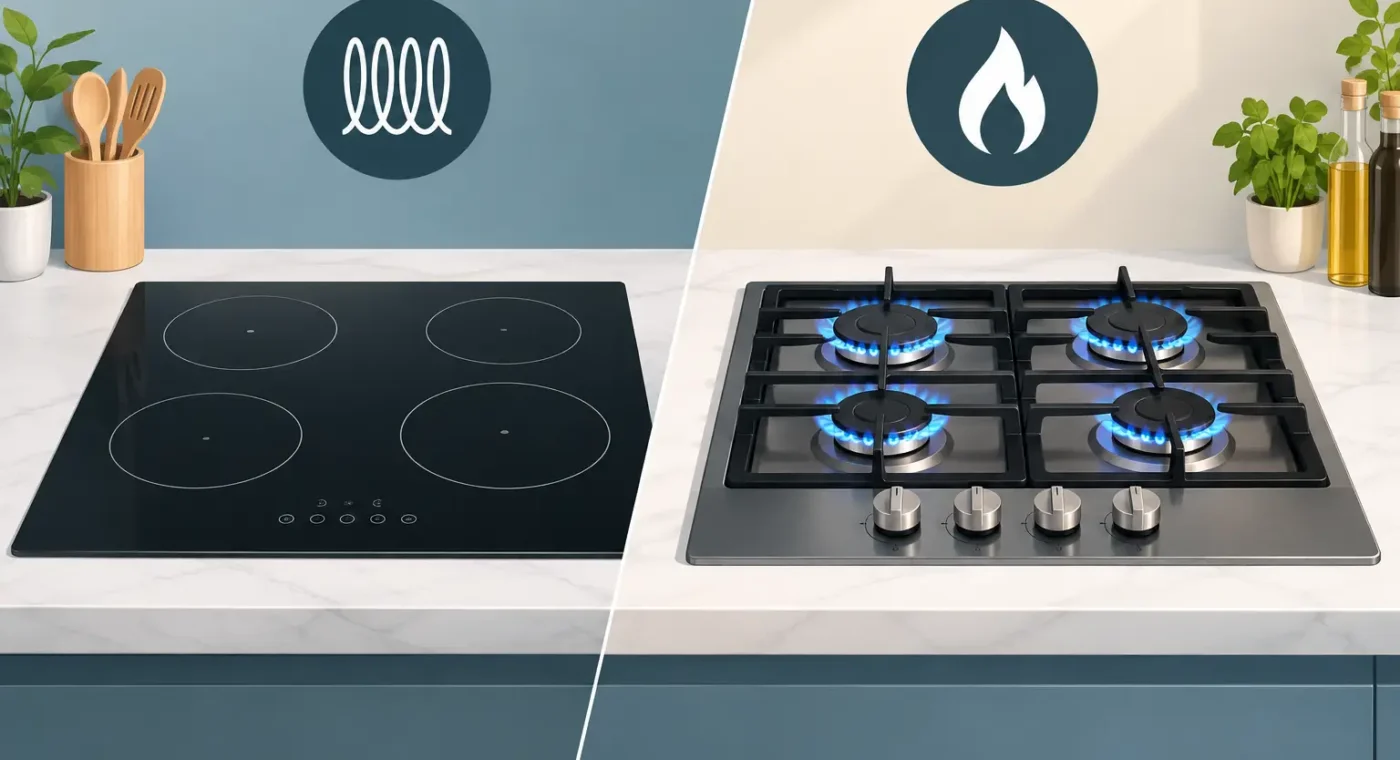
Induction cooktops use electricity to create a magnetic field that heats compatible cookware directly. The glass surface itself does not generate heat in the same way an electric coil or radiant cooktop does. This makes induction exceptionally fast, responsive, and efficient.
Gas cooktops create an open flame beneath the cookware. They have been a familiar choice in residential and professional kitchens for decades because cooks can see the flame and make immediate visual adjustments.
Both options can produce excellent results. The practical differences come down to performance, safety, operating costs, cookware, and installation requirements.
Cooking performance and control
Induction is often the fastest option for boiling water and making quick temperature adjustments. Because the pan heats directly, less energy is lost to the surrounding air. The cooktop also responds quickly when power is lowered, which helps with delicate tasks such as melting chocolate, holding sauces, or preventing a rapid boil from spilling over.
Gas offers a different kind of control. Many cooks prefer seeing the flame and being able to use nearly any cookware, including round-bottom pans with the right support. Gas can also be useful for cooking methods that benefit from direct flame, such as charring peppers or quickly heating certain foods in a wok.
For high-volume kitchens, performance is not just about heat. It is about consistency during a busy service. Induction can reduce excess heat around the cooking line, making the work area more comfortable. Gas remains a strong option for chefs who rely on flame-based techniques or already have a properly sized gas system in place.
Safety and indoor air quality
Safety is one of the clearest differences between the two cooktop types. An induction surface stays substantially cooler than a gas grate or burner because heat is generated in the cookware. After the pan is removed, the surface may remain warm from contact with the pot, but it cools much faster than many traditional cooking surfaces.
That can be a meaningful advantage for homes with young children, older adults, or tenants. It can also reduce the chance of burns caused by an unattended hot burner.
Gas cooktops require more attention because they use an open flame and combustion. A burner left on, a damaged igniter, or a gas leak requires prompt professional service. Proper ventilation is especially important with gas appliances to help manage heat, moisture, and combustion byproducts.
Induction does not eliminate the need for kitchen ventilation. Cooking still produces steam, grease, smoke, and odors. However, it avoids combustion at the cooktop itself, which may be appealing for properties focused on improving indoor air quality.
Installation requirements can decide the issue
Before choosing a model, inspect what your kitchen can realistically support. This is where many otherwise good purchase decisions become expensive surprises.
An induction cooktop typically needs a dedicated 240-volt electrical circuit with the correct amperage for the appliance. Older homes, condos, and commercial spaces may need panel upgrades, new wiring, or a properly rated breaker before installation. The electrical work must be sized to the manufacturer’s specifications and completed safely.
A gas cooktop needs an accessible gas supply line, a compatible shutoff valve, and proper connections. Depending on the appliance and local requirements, the kitchen may also need ventilation improvements. If the property does not already have gas service, extending or adding it can significantly increase project cost.
For a replacement in an existing kitchen, measure the cutout carefully. Even cooktops with the same width can have different installation dimensions, clearance requirements, and electrical or gas connection locations. A professional pre-installation assessment can prevent countertop modifications, failed inspections, or delays on installation day.
Upfront cost and long-term operating expenses
Gas cooktops often have a lower purchase price than comparable induction units, although premium gas models can be expensive. If a usable gas line already exists, replacement may be straightforward and affordable.
Induction cooktops can cost more upfront, particularly models with flexible cooking zones and advanced controls. The installation price can also rise if new electrical capacity is required. Still, induction’s efficiency may help reduce energy waste over time because it transfers more heat directly into the pan.
The utility cost difference depends on local electricity and natural gas rates, how often the cooktop is used, and the efficiency of the specific appliance. For many property owners, the more important cost question is infrastructure: Does the building already have the correct electrical circuit or gas connection?
Landlords and property managers should also consider maintenance and tenant use. A smooth induction surface is easier to wipe clean, while gas cooktops have grates, burner caps, and openings that require more detailed cleaning. On the other hand, replacing a cracked induction glass surface can be costly, so proper cookware handling matters.
Cookware compatibility and everyday use
Induction requires magnetic cookware. Cast iron and many stainless steel pans work well, while aluminum, copper, and glass cookware usually need a magnetic base to function. A simple test is to place a magnet against the bottom of the pan. If it sticks firmly, the cookware is likely induction-compatible.
Gas works with nearly every type of cookware. That flexibility can make gas easier for kitchens with an existing collection of pans or for commercial operations using specialty cookware.
Induction’s glass top also requires a little care. Avoid dragging heavy cast-iron pans across the surface, and clean spills promptly to prevent residue from baking onto the glass. Gas burners need regular cleaning as well. Grease or food debris can clog burner ports and lead to uneven flames, ignition problems, or reduced performance.
Reliability, repairs, and power outages
Gas cooktops have mechanical components such as igniters, valves, burner caps, and control knobs. Common service issues include clicking igniters, burners that will not light, weak or uneven flames, and gas odors. Any suspected gas leak should be treated as urgent: leave the area, avoid switches or flames, and contact the gas utility or emergency services as appropriate.
Induction cooktops use electronic controls, sensors, cooling fans, and power modules. Problems may include error codes, a burner that does not recognize cookware, unresponsive controls, or inconsistent heating. These units should be diagnosed by a qualified appliance technician, especially when electrical connections or internal components are involved.
During a power outage, a standard induction cooktop will not operate. Many gas cooktops also rely on electricity for ignition, though some can be lit manually if the manufacturer permits it. If outage cooking is a major concern, check the appliance instructions before relying on a gas cooktop as a backup.
Which cooktop is right for your property?
Choose induction if fast heating, easy cleaning, a cooler cooking environment, and strong safety features are your priorities. It is especially appealing for modern kitchen upgrades, all-electric homes, multifamily properties, and commercial spaces where reducing excess heat can improve comfort.
Choose gas if you prefer visible-flame cooking, use a wide variety of cookware, rely on flame-based techniques, or already have a reliable gas connection in place. It can also be the more practical choice when adding a high-capacity electrical circuit would require extensive upgrades.
For commercial kitchens, the decision should include menu requirements, ventilation capacity, staff workflow, utility availability, and equipment downtime. A cooktop that looks right on paper may not be right for a line that runs all day.
Before purchasing either type, confirm the appliance specifications and have the electrical or gas setup evaluated by a qualified professional. EAAIRS Services and Repair Ltd. can help identify what your kitchen needs before installation begins, so your new cooktop supports reliable cooking instead of creating an avoidable service call.