
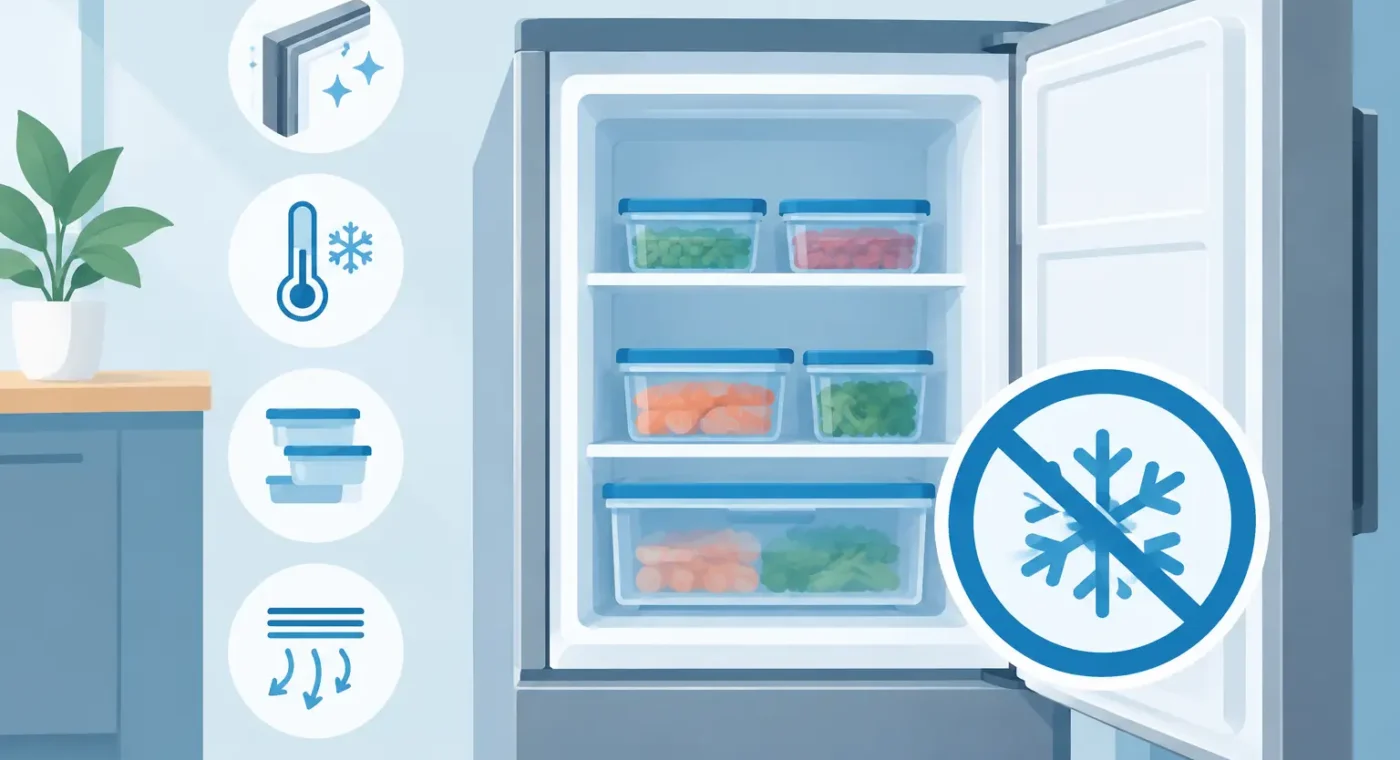
A freezer covered in frost is more than a cleaning nuisance. Ice buildup takes up valuable storage space, makes packages harder to find, can affect how consistently food stays frozen, and may force the appliance to work harder than it should. The best ways to prevent freezer frost start with controlling the warm, humid air that enters the compartment – then making sure the door, seals, and defrost system are doing their jobs.
For homeowners, landlords, and property managers, a little routine attention can prevent a messy defrosting project and help avoid an inconvenient appliance breakdown. For commercial operators, it can also protect inventory, improve access, and reduce disruption in busy kitchens and storage areas.
Why freezer frost forms in the first place
Frost develops when moisture in warm air enters the freezer and freezes on cold interior surfaces. Every time the door opens, some humid room air gets inside. That is normal. Problems begin when too much air enters, the door does not fully seal, or the appliance cannot complete its automatic defrost cycle.
A light coating of frost over time can be expected, especially in a manual-defrost freezer. Thick snow-like buildup on walls, shelves, food packages, or around the door is a sign that something needs attention.
The location of the frost offers clues. Ice concentrated around the door often points to a damaged, dirty, or misaligned gasket. Frost coating the back wall of a frost-free freezer may indicate an issue with the defrost heater, sensor, timer, or control board. Frost only around one loose package can be as simple as poor packaging.
Best ways to prevent freezer frost day to day
Close the door quickly and check it closes completely
The most effective habit is also the simplest: keep the freezer door open only as long as necessary. Decide what you need before opening it, especially during meal prep or inventory checks. Do not leave the door cracked while unloading groceries, and teach everyone in the household or workplace to check that it has latched.
An overloaded freezer can create the same problem if food packages prevent the door from closing fully. Shelves, bins, and larger boxes should sit clear of the door edge. On upright freezers, look for bags or containers that may be pushing against the gasket.
Keep the door gasket clean and in good condition
The gasket is the flexible rubber seal around the door. It is a small component with a major job: keeping humid indoor air out. Wipe it regularly with a soft cloth, warm water, and mild dish soap. Sticky spills, crumbs, grease, and dust can create gaps that allow air to leak in.
After cleaning, dry the gasket and inspect it for cracks, tears, flattened areas, or sections pulling away from the door. A simple paper test can help. Close the door on a sheet of paper and gently pull it out. If it slides out with almost no resistance at several points, the seal may not be tight enough.
A gasket may sometimes be cleaned, repositioned, or replaced without replacing the appliance. However, door alignment and hinge problems can look like gasket failures, so an accurate diagnosis matters before ordering parts.
Cool food before placing it in the freezer
Putting hot or steaming food directly into the freezer adds moisture and raises the temperature inside the compartment. The appliance then has to work harder to pull the temperature back down, while that moisture can become frost.
Let cooked food cool briefly before freezing it, but do not leave perishable food at room temperature for extended periods. Divide large batches into shallow containers so they cool more quickly, then seal them well before placing them in the freezer.
Use moisture-resistant, airtight packaging
Poor packaging lets moisture escape from food and settle as frost inside the freezer. It also contributes to freezer burn, which can leave food dry, discolored, and less appealing even when it remains safe to eat.
Use freezer-safe containers or bags, press excess air out of bags before sealing, and make sure lids are secure. Wrap foods that are likely to dry out, such as meat or baked goods, carefully before placing them in a container or bag. Labeling and dating packages also helps you rotate food instead of repeatedly opening the door to search through older items.
Set the right temperature and avoid constant adjustments
For most household freezers, 0 degrees Fahrenheit is the recommended target. A freezer set too warm can struggle to maintain food quality. One set excessively cold may run longer than necessary and can worsen frost where moisture is entering through a weak seal.
Use an appliance thermometer if you are unsure of the actual temperature. Built-in displays and dial settings are useful, but they do not always reflect the temperature in every part of a packed freezer. Give the appliance about 24 hours to stabilize after an adjustment instead of turning the setting up and down throughout the day.
Keep the freezer reasonably full, not crammed
Frozen food helps retain cold air when the door opens, so a nearly empty freezer can experience more temperature swings. At the same time, cramming packages against vents can restrict airflow and cause uneven cooling.
Aim for organized, moderate storage. Leave room around interior air vents, avoid blocking the evaporator cover at the back of the compartment, and use bins to keep smaller items from falling into the door path. If a freezer is mostly empty, a few sealed containers of water can help it hold temperature more steadily.
Defrost frost before it becomes a bigger problem
Manual-defrost freezers need periodic defrosting. Waiting until ice becomes several inches thick wastes space and makes the work more difficult. As a practical rule, plan to defrost when frost reaches about one-quarter inch thick.
Move food to a cooler with ice packs or another freezer, unplug the appliance, place towels around the base, and allow the ice to melt naturally. Never chip at ice with a knife, screwdriver, or sharp tool. It is easy to puncture an interior liner or refrigerant line, turning a maintenance task into a costly repair.
Once the compartment is dry, clean it, restore power, and wait for it to return to a safe freezing temperature before loading food back in. If heavy frost returns quickly after a proper defrost, the cause is likely more than normal use.
When frost means your freezer needs repair
Frost-free freezers are designed to defrost automatically. They still need good door habits and clean gaskets, but they should not require frequent manual defrosting. If ice repeatedly builds up in a frost-free unit, an underlying component may be failing.
Watch for warning signs such as frost returning within days or weeks, a fan that becomes unusually loud, food that is soft in some areas and over-frozen in others, water leaking onto the floor, a door that sags or will not stay closed, or a freezer that runs almost constantly. These issues can involve the defrost system, evaporator fan, sensors, thermostat, drain tube, door hinges, or electronic controls.
Commercial equipment deserves especially quick attention. Frost can block airflow, limit usable storage, interfere with door operation, and create avoidable downtime. A technician can identify whether the issue is a basic seal replacement or a deeper cooling or defrost failure, rather than relying on repeated manual defrosting as a temporary fix.
EAAIRS Services and Repair Ltd. can help diagnose persistent freezer frost, door-seal issues, and defrost system failures with fast, professional appliance service. A clear diagnosis helps protect your food, your appliance, and your schedule.
A simple routine that prevents repeat frost
Make a quick freezer check part of regular kitchen or property maintenance. Wipe spills before they reach the gasket, remove packages blocking the door, confirm the temperature is near 0 degrees Fahrenheit, and look over the interior walls for new ice. For rental properties and commercial spaces, include freezer seals and door closure in routine turnover or facility inspections.
Most frost problems begin small. Addressing a loose package, worn seal, or temperature concern early is far easier than dealing with a freezer packed with ice – or discovering that it cannot hold a safe temperature when you need it most.