A failing fryer during a dinner rush is not just an equipment problem. It can delay orders, frustrate staff, waste inventory, and send customers elsewhere. When operators ask about the best upgrades commercial kitchens need, the right answer is rarely the newest or most expensive piece of equipment. It is the upgrade that removes a daily bottleneck, reduces emergency repairs, and keeps the kitchen producing consistently.
For restaurants, cafeterias, catering operations, hotels, and other foodservice businesses, every upgrade should be tied to a practical operational goal. Better efficiency matters, but reliability, safety, capacity, and serviceability often deliver the faster return.
Start With the Problems Costing You Most
Before replacing equipment, look closely at what is interrupting service. A range that heats unevenly, a refrigerator that struggles to hold temperature, or a dishwasher that leaves racks backed up may be costing far more than its repair invoice suggests. Labor delays, food loss, utility waste, and negative guest experiences add up quickly.
Track recurring service calls, employee complaints, peak-hour slowdowns, and utility bills for several weeks. This gives owners and managers a clearer basis for deciding whether repair, maintenance, or replacement makes financial sense. Equipment that has one isolated issue may be worth repairing. Equipment that repeatedly fails during busy periods may be a better candidate for replacement.
It also helps to assess supporting systems. A new appliance cannot perform properly if the electrical circuit is undersized, ventilation is inadequate, or gas and water connections are not set up for the unit’s requirements. Planning these details before installation prevents avoidable delays and expensive corrections later.
Best Upgrades for Commercial Kitchens to Prioritize
The best investment depends on the type of operation, menu volume, available space, and the condition of existing equipment. Still, several upgrades consistently improve day-to-day performance when selected and installed correctly.
High-efficiency refrigeration
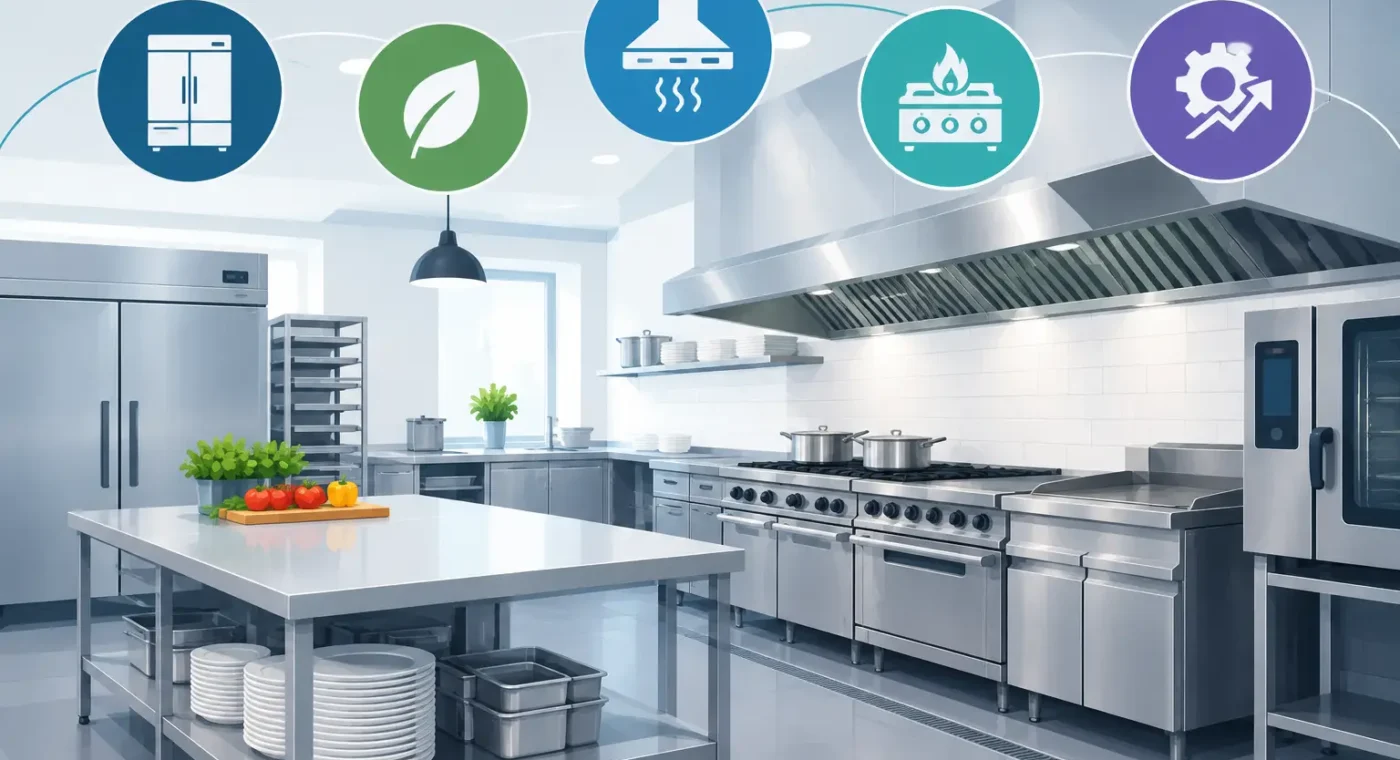
Commercial refrigerators and freezers run around the clock, making them one of the most important energy and food-safety investments in the building. Older units may have worn door gaskets, weak compressors, ice buildup, inconsistent temperatures, or poor airflow. These issues can create unnecessary energy costs and put valuable inventory at risk.
A newer, properly sized reach-in refrigerator, walk-in system, undercounter unit, or prep table can improve temperature consistency and organization. Choose capacity based on actual delivery schedules and prep volume, not just the largest unit that fits through the door. Oversizing wastes energy and floor space, while undersizing leads to overcrowding and poor circulation.
Installation quality is critical. Units need adequate clearance for ventilation, level placement, correct electrical supply, and accessible space for future service. Regular condenser cleaning and gasket inspections will protect the investment after installation.
Faster, more consistent cooking equipment
Cooking equipment should support the pace of the menu. If staff are constantly waiting for recovery temperatures, rotating pans to find hot spots, or working around burners that fail intermittently, production suffers. Upgrading a worn range, convection oven, griddle, fryer, or combi oven can increase output while improving food consistency.
A combi oven can be a strong choice for kitchens that bake, roast, steam, and reheat in high volume. It may replace several separate cooking tasks, but it is not automatically the best fit for every operation. The purchase cost, water treatment requirements, staff training, ventilation needs, and maintenance schedule should all be considered before making the change.
For smaller kitchens, a high-performance countertop unit may provide more value than a major line rebuild. The key is matching the equipment to the menu and peak-hour workflow. A busy breakfast operation may benefit more from a reliable griddle than from an advanced oven that sits idle most of the day.
Ventilation and hood system improvements
Kitchen ventilation is easy to overlook until heat, smoke, odors, or poor air quality start affecting staff and guests. A properly designed hood and exhaust system helps remove heat and grease-laden vapors, supports safer working conditions, and protects surrounding equipment from excess heat and buildup.
If the kitchen has added cooking equipment over time, the existing hood may no longer be sized or configured for the current load. Signs of trouble include excessive heat on the line, smoke escaping into the kitchen, grease accumulation, loud fan operation, or frequent shutdowns.
Ventilation work should be planned with cooking equipment changes, not treated as an afterthought. Electrical controls, makeup air, ductwork, fire suppression, and local code requirements can all affect the scope. A professional assessment can identify whether cleaning, repair, balancing, or a full system upgrade is the right move.
Electrical capacity and dedicated circuits
Commercial kitchens rely heavily on electricity, even when gas is used for primary cooking. Refrigeration, dishwashers, ice machines, microwaves, mixers, point-of-sale systems, lighting, and ventilation controls all need reliable power. Overloaded circuits, frequent breaker trips, damaged outlets, and improvised extension cords are warnings that the electrical system needs attention.
Adding dedicated circuits for high-demand equipment improves safety and reduces unexpected interruptions. Upgrading panels or correcting outdated wiring may not be as visible as a new oven, but it can prevent expensive equipment damage and help the kitchen operate more reliably.
Any electrical upgrade should account for future growth. If expansion, new equipment, or a menu change is likely within the next few years, leaving room in the panel and planning circuits now can avoid reopening walls or disrupting operations later.
High-capacity dishwashing and water heating
Slow dish turnover can stop a kitchen even when the cooking line is fully operational. If staff run out of clean pans, utensils, or place settings during service, the problem may be the dish machine, water heater, plumbing supply, or workflow around the dish area.
A commercial dishwasher with the right cycle speed and rack capacity can reduce labor pressure and improve sanitation consistency. It must also receive the correct water temperature, pressure, drainage, and electrical supply. Replacing the dishwasher without addressing an undersized water heater or failing plumbing connection can leave the underlying problem unresolved.
Water heater upgrades deserve careful planning because commercial demand can change quickly. A unit that works adequately during normal service may fall behind during banquet events, weekend volume, or back-to-back cleaning cycles. Proper sizing should reflect peak demand rather than average use alone.
Preventive monitoring and maintenance access
Some of the most valuable kitchen upgrades are less dramatic. Temperature alarms, leak detection, accessible shutoff valves, labeled electrical panels, and organized equipment clearances make it easier to catch problems before they become emergencies. These improvements can reduce product loss and shorten repair visits because technicians can diagnose issues safely and quickly.
When installing new equipment, avoid boxing it into a space that prevents cleaning or service access. Refrigeration coils, electrical connections, gas valves, water lines, and drain points should remain reachable. Saving a few inches of floor space is rarely worth the added downtime when a repair is needed.
Plan Installation Around Business Continuity
Commercial kitchen upgrades require more coordination than simply delivering a new appliance. Equipment removal, electrical work, plumbing modifications, ventilation changes, permits, delivery access, and testing may all be part of the project. The best schedule is one that limits disruption without rushing critical installation steps.
For many businesses, work can be completed during closed hours, slower weekdays, or phased around essential equipment. A clear plan should identify which appliances must remain operational, how food inventory will be protected, and who will verify that the new equipment is functioning before service begins.
Working with a multi-trade service provider can simplify this process. EAAIRS Services and Repair Ltd. can help commercial operators coordinate appliance, electrical, ventilation, and water-heating needs so one issue does not hold up the rest of the project. Accurate diagnosis and a clear estimate before work begins help managers make decisions with fewer surprises.
Choose Value Over the Lowest Initial Price
The cheapest equipment is not always the most affordable choice. Consider expected service life, utility use, warranty coverage, availability of replacement parts, required maintenance, and the cost of downtime. A lower-priced unit that needs frequent repairs or creates workflow delays can become the more expensive option within a short time.
At the same time, not every kitchen needs premium equipment. A dependable mid-range unit that fits the menu, volume, utility capacity, and budget may deliver better value than an oversized model with features the team will not use. The goal is practical reliability, not unnecessary complexity.
A commercial kitchen should make busy service feel controlled, not fragile. Start with the equipment and building systems that create the most disruption, then make upgrades that protect your staff, food quality, and ability to serve customers without interruption.