A cold shower is frustrating. A failed water heater in an occupied rental, restaurant, salon, or commercial kitchen can be much more serious – interrupting daily routines, customer service, cleaning, and operations. Water heating is one of those essential systems most people do not think about until it stops working, starts leaking, or sends energy costs higher than expected.
The right response depends on what is happening, how old the equipment is, and how much hot water the property actually needs. Some problems call for a straightforward repair. Others signal that replacement is the safer, more cost-effective choice. Knowing the difference can help you act quickly without paying for work that does not solve the real problem.
Water Heating Problems That Need Attention
Not every change in hot water performance means the entire unit has failed. A worn heating element, faulty thermostat, failing igniter, sediment buildup, or damaged valve may be repairable. But waiting too long can turn a minor issue into water damage, a complete breakdown, or an avoidable interruption for tenants or customers.
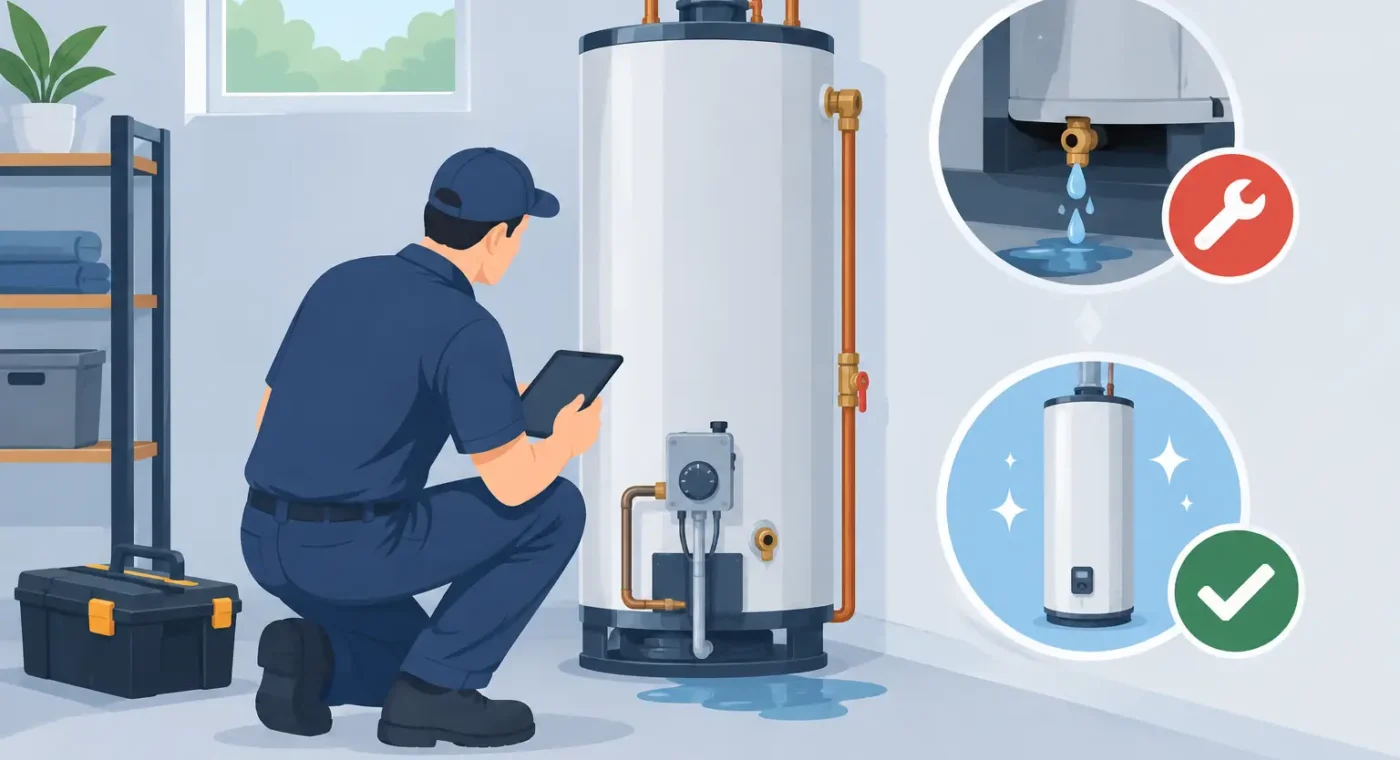
Pay attention when hot water runs out faster than usual, takes longer to recover, changes temperature during use, or appears rusty or cloudy. Popping or rumbling noises from a tank often point to sediment at the bottom. Leaks around fittings may be limited to a valve or connection, while water collecting under the tank can indicate corrosion inside the unit.
A noticeable increase in utility bills also deserves investigation. Water heaters work hard every day, but they should not need to work harder than necessary. A system that is cycling excessively, struggling to reach temperature, or losing heat through failing components can waste energy long before it stops producing hot water altogether.
Repair or Replace? The Decision Depends on the System
A professional diagnosis should come before a repair-or-replace decision. Replacing equipment that has a simple, serviceable issue is unnecessary. On the other hand, repeatedly repairing an aging unit can cost more over time than installing a dependable new system.
Age is a useful starting point. Traditional tank water heaters commonly last eight to 12 years, though water quality, maintenance history, usage, and installation conditions affect their lifespan. If a tank is approaching the end of that range and has internal corrosion or a recurring leak, replacement is often the practical route. Once the tank itself is compromised, a repair cannot restore its structural integrity.
Repairs are usually worthwhile when the unit is relatively new and the issue involves a replaceable part. Thermostats, pressure-relief valves, heating elements, burners, pilot assemblies, and certain electrical components can often be repaired or replaced efficiently. The key is confirming that the repair addresses the source of the problem, not just the symptom.
For property managers and business owners, downtime also changes the calculation. A unit that fails repeatedly can create tenant complaints, shut down cleaning procedures, or affect customer-facing operations. In those cases, dependable replacement may be the better business decision even when another temporary repair is technically possible.
Choosing the Right Water Heating System
The best replacement is not always the biggest unit or the most expensive model. It needs to match the property’s fuel source, available space, peak demand, and expected usage. A household with two people has different needs than a large family, multi-unit property, busy café, or commercial kitchen.
Traditional Tank Water Heaters
Storage-tank systems remain a reliable choice for many homes and smaller commercial applications. They store a set volume of hot water and are available in gas and electric models. Their upfront cost is often lower than other options, and they are familiar to most property owners.
The trade-off is standby heat loss and limited stored capacity. If several people shower back-to-back or equipment demands hot water at the same time, the tank may need time to recover. Proper sizing matters. An undersized system will create daily frustration, while an oversized unit can waste energy and floor space.
Tankless Water Heaters
Tankless systems heat water on demand instead of storing it. They can be an excellent option for properties that want more continuous hot water, improved energy efficiency, or a smaller equipment footprint. They are especially appealing where demand is variable but hot water cannot run out during busy periods.
However, tankless installation is not always simple. It may require electrical upgrades, gas-line changes, new venting, water treatment, or adjustments to meet the unit’s flow requirements. The initial investment can be higher, so it is important to evaluate the full installation scope rather than comparing equipment prices alone.
Heat Pump and Commercial Options
Heat pump water heaters can significantly reduce energy use in the right location by transferring heat from surrounding air. They work best where there is enough space and suitable ambient temperature, such as a garage, utility room, or mechanical area. They may not be ideal for every climate, layout, or high-demand application.
Commercial water heating requires even more careful planning. Restaurants, healthcare facilities, multi-unit buildings, and businesses with sanitation requirements may need high-recovery equipment, multiple units, recirculation systems, or redundancy to avoid operational disruption. A system should be designed around real demand, not guesswork based on residential equipment standards.
Why Accurate Diagnosis Matters
Hot-water complaints can come from more than the water heater itself. A failing mixing valve can cause inconsistent temperatures. A plumbing crossover can allow cold water to interfere with hot-water lines. Electrical supply problems may prevent an electric unit from heating correctly, while a venting or combustion issue can affect gas equipment.
That is why a quick part swap is not always the right answer. A qualified technician should inspect the unit, check related connections and safety controls, identify the cause of the issue, and explain the available options clearly. You should know what is wrong, what the recommended work includes, and what it will cost before the work begins.
EAAIRS Services and Repair Ltd. provides water heater repair and installation alongside electrical, appliance, and HVAC support, helping homeowners and commercial operators avoid the hassle of coordinating multiple contractors when systems overlap.
When a Water Heater Becomes an Urgent Call
Some situations should not wait for a convenient appointment. Shut off the water supply if a leak is significant and it is safe to do so. If you smell gas near a gas water heater, leave the area, avoid switches or open flames, and contact the appropriate emergency utility service. Do not attempt to diagnose a gas leak yourself.
You should also arrange prompt professional service for discolored water, a leaking tank, a pressure-relief valve that is discharging repeatedly, visible corrosion, electrical burning smells, or a complete loss of hot water in a business that depends on sanitation. These problems can affect safety, property condition, and business continuity.
Fast response matters, but so does getting the repair right. Ask whether the technician can inspect the full system, provide clear pricing, and explain whether the issue is repairable or whether replacement will offer better long-term value. A free estimate can make that decision less stressful when replacement is on the table.
Simple Maintenance That Protects Performance
Regular maintenance can extend equipment life and reduce surprise breakdowns. A water heater should be inspected periodically for leaks, corrosion, unusual noise, and changes in performance. Tank systems may need flushing to remove sediment, particularly in areas with hard water. The temperature and pressure-relief valve should also be checked as part of professional maintenance.
For tankless equipment, descaling is often necessary to protect the heat exchanger and maintain consistent flow. The needed frequency depends on water quality and usage. Skipping this service can reduce efficiency and lead to preventable component failures.
Property managers can benefit from keeping basic records: installation date, model information, past repairs, maintenance dates, and recurring complaints. This makes it easier to budget for replacement and prevents repeated service calls from becoming the only maintenance plan.
Hot water should support your home or operation quietly and reliably. When it does not, acting early, choosing the right equipment, and working with a professional who communicates clearly can restore comfort without unnecessary disruption.