
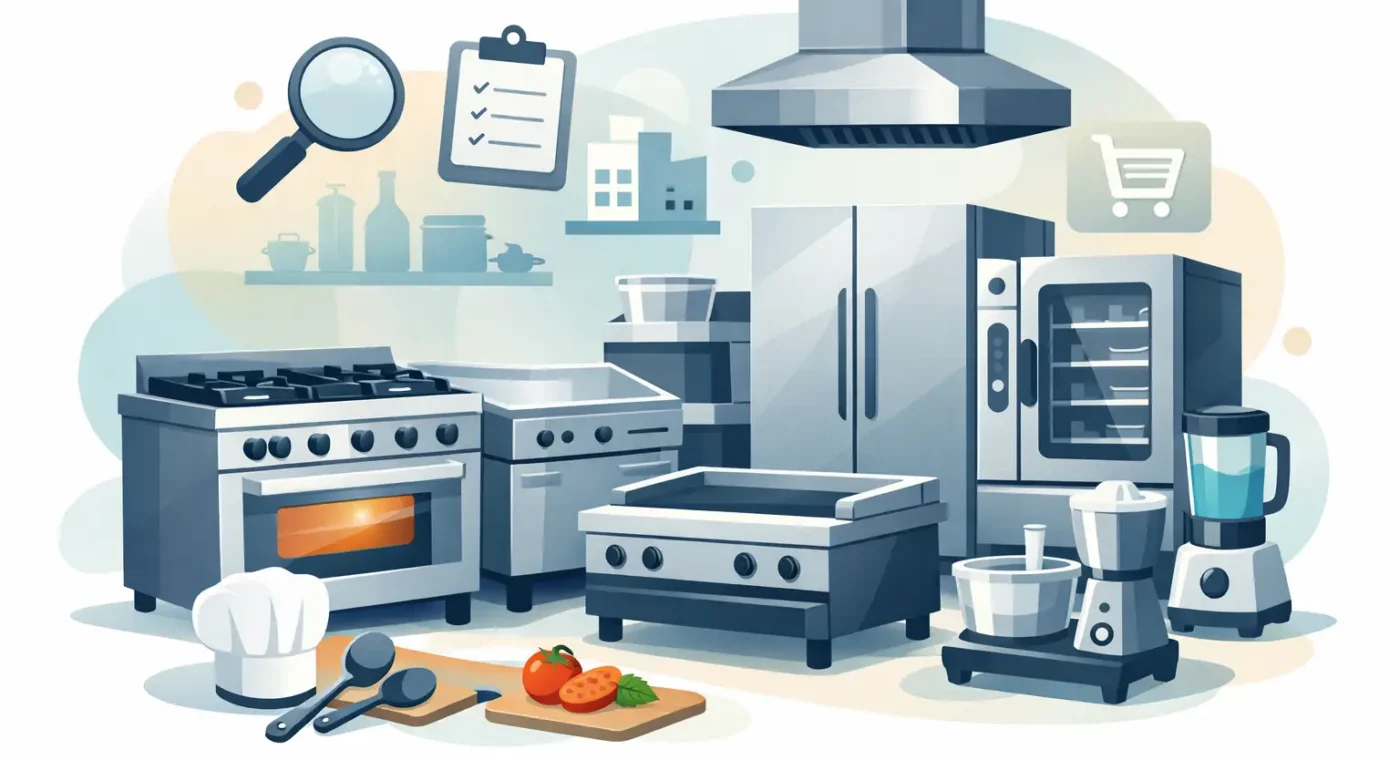
A fryer that cannot recover temperature during a Friday rush, a walk-in cooler that starts running warm overnight, or a range that trips a breaker can quickly turn into lost sales and frustrated staff. This commercial kitchen appliance guide helps restaurant owners, operators, and property managers make practical equipment decisions that protect food quality, employee safety, and daily operations.
Commercial equipment is not a one-size-fits-all purchase. The right appliance depends on your menu, production volume, available utilities, kitchen layout, ventilation, and the support you can get when something goes wrong. A lower purchase price can be costly if the unit is undersized, difficult to service, or frequently out of operation.
Start With Your Kitchen’s Actual Demand
Before comparing brands or features, look at how your kitchen works during its busiest hour. A compact café with a limited breakfast menu has very different needs from a high-volume restaurant, bakery, school kitchen, or catering operation. Buying based on the average day instead of the peak rush is a common mistake.
For cooking equipment, consider the number of orders your team must produce at once, the cooking methods on your menu, and how quickly each appliance needs to recover between batches. A fryer with insufficient recovery capacity may struggle even if its oil capacity appears adequate. Likewise, a small griddle can become a bottleneck when it is responsible for breakfast, lunch, and late-night service.
Refrigeration should be sized for delivery schedules, prep volume, inventory turnover, and safe separation of raw and ready-to-eat foods. More storage is not automatically better. Oversized refrigeration can consume unnecessary energy and floor space, while an overloaded reach-in or walk-in can restrict airflow and create temperature problems.
Choose Equipment That Fits the Utilities You Have
A commercial appliance only performs as intended when the building can support it. Confirm utility requirements before ordering, especially in an existing restaurant space where electrical panels, gas lines, venting, or water connections may be limited.
Electrical Capacity and Connections
Many commercial ovens, refrigerators, dishwashers, and specialty appliances require dedicated circuits and specific voltage. A unit may need 208V, 240V, or 480V power, and some equipment requires three-phase service. Installing the wrong unit or relying on an overloaded circuit can lead to nuisance breaker trips, poor performance, damaged components, and safety concerns.
Have a qualified technician verify the appliance specifications, panel capacity, disconnect requirements, outlet configuration, and circuit protection before installation. This step is especially valuable when replacing older equipment, since the existing connection may not meet the needs of a newer model.
Gas, Water, Drainage, and Ventilation
Gas ranges, ovens, fryers, and steam equipment need properly sized gas lines, shutoff valves, and safe connections. Water-dependent equipment, including ice machines, dishwashers, steamers, and coffee systems, may need filtration, pressure regulation, backflow protection, and accessible drains.
Ventilation deserves the same attention. Grease-producing appliances generally require a compliant hood and fire suppression system. Heat, smoke, and vapor must be managed correctly to maintain a safer work environment and help equipment operate efficiently. Moving a cooking line or adding a new appliance can trigger ventilation and code requirements that should be addressed before the equipment arrives.
The Core Appliances Most Commercial Kitchens Rely On
Every operation has a different equipment list, but a few categories carry most of the daily workload. Prioritize reliability and serviceability for the appliances your staff cannot work around.
Cooking equipment includes ranges, ovens, griddles, fryers, charbroilers, steamers, and microwaves. Select these based on menu demand, recovery time, control precision, and cleaning requirements. Gas equipment often offers responsive heat and may be preferred by chefs, while electric models can provide consistent temperatures and may suit buildings without gas service. The best choice depends on utility availability, operating costs, and the food you produce.
Refrigeration includes walk-in coolers and freezers, reach-in units, prep tables, undercounter refrigerators, and ice machines. Temperature consistency is more valuable than extra features. Look for durable door gaskets, easy-to-clean condenser access, adequate airflow clearance, and controls your team can monitor without guesswork.
Warewashing equipment is another critical category. High-temperature and chemical-sanitizing dishwashers each have advantages, but both require correct water supply, drainage, and routine cleaning. A dishwasher that leaves dishes dirty or fails sanitation checks can slow service and create a serious health concern.
Prep equipment such as mixers, slicers, food processors, holding cabinets, and warming equipment should match the volume and pace of production. Heavy-duty equipment costs more upfront, but it can be the better investment when it operates for hours every day.
Look Beyond the Purchase Price
The least expensive appliance is not always the most affordable one to own. Evaluate the total operating cost over the expected life of the equipment. That includes energy and water use, installation work, replacement parts, cleaning labor, service needs, and the business impact of downtime.
Energy-efficient equipment can lower utility costs, but only when it suits the operation. For example, a high-efficiency dishwasher may save water and energy, yet its benefit depends on how many racks your team runs each day. A premium combi oven may offer exceptional flexibility, but it may not be the right investment for a menu that rarely uses its capabilities.
Ask practical questions before purchasing: Are replacement parts readily available? Can the unit be serviced without pulling apart the entire cooking line? Is the manufacturer known for dependable support? Does the warranty cover labor as well as parts? These details matter when a failed component threatens a busy service period.
Plan for Service Access From Day One
Equipment that is squeezed tightly against walls, counters, or other appliances is harder to clean and more expensive to repair. Leave the manufacturer-recommended clearance around refrigeration, cooking equipment, and mechanical components. Technicians need safe access to panels, valves, connections, filters, and condensers.
This is particularly important for refrigeration. Dirty condenser coils, blocked airflow, worn door gaskets, and neglected drain lines can force a system to work harder and shorten its service life. Staff should be able to perform basic daily cleaning without moving heavy equipment or disconnecting utilities.
Keep equipment manuals, model numbers, serial numbers, warranty details, and past service records in one accessible location. When a repair is needed, this information helps the technician diagnose the issue faster and identify the correct part. It also gives operators a clearer picture of whether repeated repairs are still worthwhile.
Build Maintenance Into Your Operating Routine
Commercial kitchen appliances are exposed to grease, heat, moisture, food debris, and constant use. Waiting until a unit fails is rarely the most economical approach. A planned maintenance routine reduces surprise breakdowns and helps identify small problems before they interrupt service.
Daily staff tasks should include cleaning spills, checking temperatures, inspecting door seals, emptying grease trays, and reporting unusual noises, leaks, odors, or error codes. Weekly and monthly tasks may involve cleaning filters, checking drain lines, inspecting fryer oil quality, and making sure ventilation components are not obstructed.
Professional maintenance is particularly useful for refrigeration, ice machines, cooking equipment, electrical connections, and gas appliances. A trained technician can identify worn components, unsafe wiring, declining temperatures, ignition problems, and performance issues that are not obvious during a busy shift.
Know When Repair Makes More Sense Than Replacement
Replacement is not always the answer when an appliance stops working. A newer unit with a clear, isolated failure may be a strong repair candidate, especially if parts are available and the equipment otherwise meets your operational needs. Replacing a failed fan motor, thermostat, door gasket, heating element, or ignition component can restore dependable service at a reasonable cost.
Replacement may be the better decision when breakdowns are frequent, critical parts are obsolete, energy use is excessive, or repair costs approach a significant portion of a comparable new unit. Also consider whether the current appliance is undersized or no longer fits the menu. Spending money to revive the wrong equipment can delay a more necessary upgrade.
A professional diagnosis should explain the problem, the repair options, expected costs, and likely risks. Clear information lets you make a business decision instead of reacting under pressure.
A Commercial Kitchen Appliance Guide for Fewer Disruptions
The best equipment plan combines suitable capacity, correct installation, accessible service space, and consistent maintenance. It also accounts for the reality that appliances will eventually need attention. Fast, accurate repair support can make the difference between a manageable interruption and a day of lost revenue.
For commercial operators who need help with appliance repair, electrical requirements, installation, or related building systems, EAAIRS Services and Repair Ltd. provides dependable technical support designed to reduce downtime. Choosing equipment carefully is a strong start, but protecting it with timely professional service helps your kitchen stay ready for the next rush.