
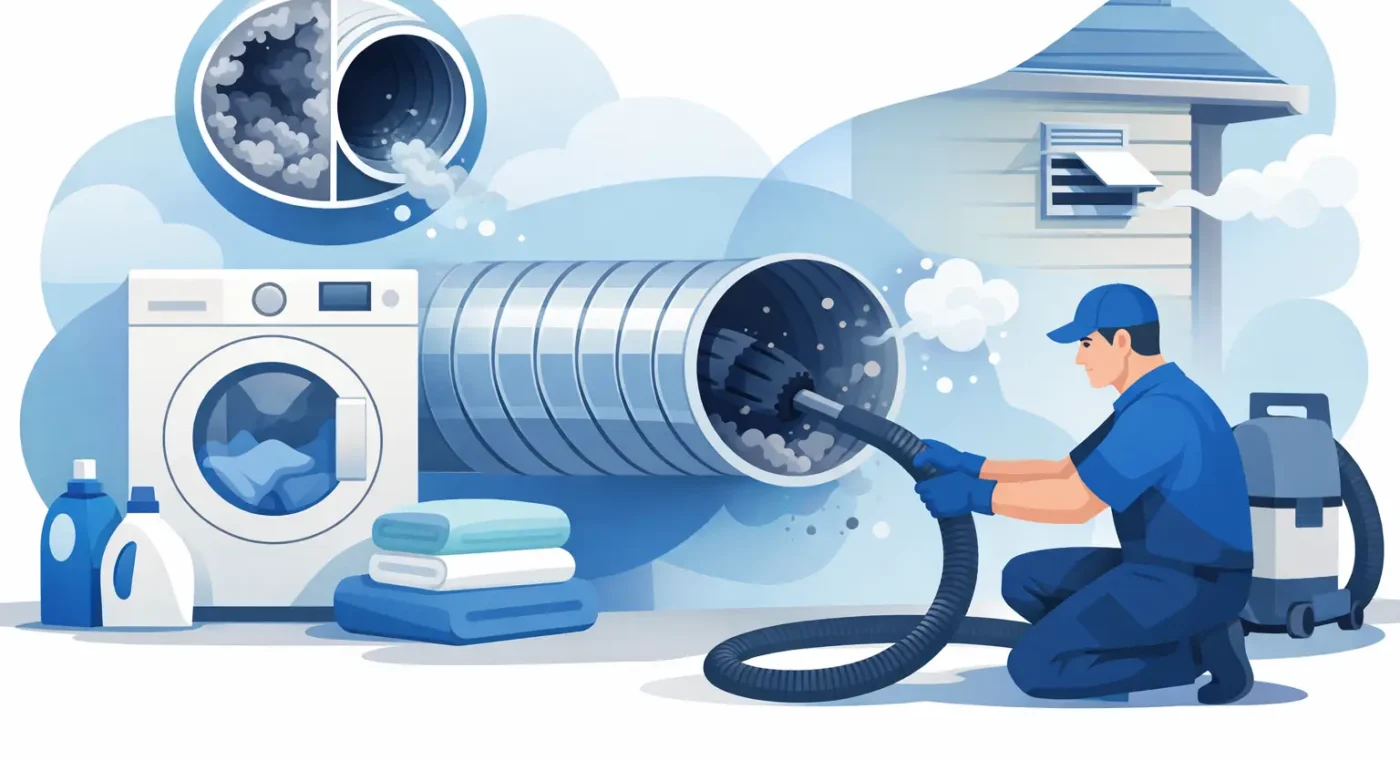
A dryer that takes two or three cycles to finish a normal load is not just frustrating. It is often a warning that airflow is restricted somewhere beyond the lint screen. So, is dryer duct cleaning necessary? For most homes, rental properties, and commercial laundry areas, yes. Regular cleaning helps reduce fire risk, protects dryer performance, and prevents unnecessary wear on the appliance.
Lint is highly flammable, and the visible lint trap only catches part of it. Fine lint can move through the dryer vent line, collect in bends, settle around the exterior vent hood, and gradually narrow the path that hot, moist air needs to travel. The result is a dryer that works harder, runs hotter, and leaves you with higher energy use and a preventable safety concern.
Is Dryer Duct Cleaning Necessary? In Most Cases, Yes
Dryer duct cleaning is a practical maintenance service, not an optional cosmetic upgrade. Every time a load dries, fabric fibers, dust, pet hair, and moisture move through the vent system. Even customers who clean the lint screen after every load can develop buildup in the ductwork because the screen is not designed to capture every fine particle.
A restricted duct makes it difficult for the dryer to exhaust heat and moisture outdoors. That can lead to longer drying times, overheated clothing, excess humidity in the laundry area, and stress on internal dryer components. Over time, the appliance may need repairs sooner than expected.
The safety issue matters most. When lint accumulates near heat and airflow becomes limited, the risk of a dryer-related fire increases. Cleaning the duct does not eliminate every possible appliance hazard, but it removes one of the most common and manageable causes of dryer overheating.
For property managers and landlords, dryer duct maintenance also helps protect the property and reduce service calls. A tenant may report that the dryer is broken when the real issue is a clogged or poorly installed vent. Identifying the actual cause early can avoid a replacement expense that was never necessary.
What a Clean Dryer Vent Does for Your Property
The most noticeable benefit is usually faster drying. When air can move freely through the vent, moisture exits the dryer as designed. Loads finish in less time, and the dryer does not need to run repeated cycles to do a basic job.
A clean duct can also lower operating costs. A dryer that runs twice as long uses more electricity or gas, depending on the model. The savings from improved efficiency vary by household size and laundry habits, but avoiding unnecessary cycles is a simple way to reduce waste.
There is also a comfort benefit. If damp air cannot escape properly, it may accumulate in the laundry room or nearby spaces. That moisture can contribute to musty odors and, in more serious cases, create conditions that are not ideal for walls, cabinetry, or flooring. This is especially relevant in apartments, condos, interior laundry closets, and commercial facilities with frequent dryer use.
Signs Your Dryer Duct May Need Cleaning
You do not need to wait for a complete blockage before scheduling service. Pay attention to changes in how the dryer operates. A dryer that used to finish a load in one cycle but now leaves towels damp is asking for attention.
Common warning signs include:
- Clothes take longer than normal to dry, especially heavy items such as towels or bedding.
- The dryer or laundry room feels unusually hot during operation.
- A burning smell or overheated smell appears while the dryer is running.
- The exterior vent flap does not open properly when the dryer is on.
- Lint appears around the dryer, behind the appliance, or near the outdoor vent opening.
- The dryer shuts off mid-cycle, displays an airflow-related error, or needs frequent resets.
A burning smell should never be ignored. Turn the dryer off, avoid running another cycle, and arrange for a professional inspection. The cause may be lint buildup, a failing component, damaged wiring, or another issue that needs proper diagnosis.
How Often Should Dryer Ducts Be Cleaned?
For a typical household, professional dryer duct cleaning is often recommended about once a year. That is a reliable starting point, but the right schedule depends on how much laundry you do and how the vent system is installed.
A large family, a home with pets, or a household that runs laundry every day may benefit from cleaning every six to nine months. The same can be true for rental properties and shared laundry rooms, where usage is higher and it is harder to confirm that every user cleans the lint screen consistently.
Commercial operators should use a more frequent maintenance plan. Restaurants, salons, gyms, laundromats, multifamily properties, and facilities with staff uniforms or linens can generate significant lint volume. In these settings, regular duct service supports safety, appliance uptime, and smoother daily operations.
Vent length matters too. A short, straight duct that exits directly through an exterior wall is easier to keep clear than a long run with several turns. Each elbow creates a place where lint can collect. Roof exits, concealed ductwork, and older flexible vent materials may require closer attention and a more thorough inspection.
Why Cleaning the Lint Screen Is Not Enough
Cleaning the lint screen after every load is essential, but it is only one part of dryer maintenance. The screen protects the dryer from large lint buildup near the drum area. It does not clean the vent pipe running from the dryer to the outside of the building.
Even the lint screen itself can develop an invisible film from dryer sheets and fabric softener residue. When that happens, airflow through the screen may be reduced. Washing it occasionally with warm water, mild soap, and a soft brush can help restore airflow after it is fully dry.
Homeowners can also keep the area behind the dryer free of lint and avoid crushing the transition hose when pushing the appliance back into place. However, reaching deep into the duct with a basic vacuum or brush kit has limits. It may not remove compacted lint from long runs, bends, roof vents, or exterior termination points. In some cases, improper DIY cleaning can push debris farther into the system or damage the duct.
When Professional Dryer Duct Cleaning Makes Sense
Professional service is particularly worthwhile when the vent path is difficult to access, the dryer is showing clear airflow symptoms, or you have recently moved into a home with an unknown maintenance history. It is also smart after a renovation, when construction dust may have entered the laundry area and vent system.
A trained technician can inspect the full route, remove buildup using proper equipment, check the exterior vent hood, and look for installation issues that affect airflow. Common concerns include disconnected duct sections, crushed hoses, excessive bends, damaged vent covers, and unsafe materials. A cleaning appointment can reveal whether the problem is simply lint or whether the dryer itself needs repair.
This distinction matters. Replacing a dryer before checking the duct can be an expensive mistake. On the other hand, cleaning a vent will not fix a failed heating element, worn blower wheel, faulty sensor, or electrical issue. Accurate diagnosis helps you spend money on the right solution.
For customers who need appliance, electrical, or ventilation support under one roof, EAAIRS Services and Repair Ltd. can help identify the source of the problem and recommend a clear next step. The goal is not just to clear a duct, but to restore safe, dependable operation without unnecessary disruption.
A Small Service That Prevents Bigger Problems
Dryer duct cleaning is one of those maintenance tasks that is easy to postpone because the system is mostly out of sight. But when drying times increase, heat builds up, or lint starts appearing where it should not, waiting usually makes the problem more costly.
Treat your dryer vent like any other essential property system: inspect it regularly, respond quickly to warning signs, and use qualified service when the ductwork is difficult or the cause is unclear. A clean airflow path gives your dryer a better chance to run safely, efficiently, and reliably through every load.