
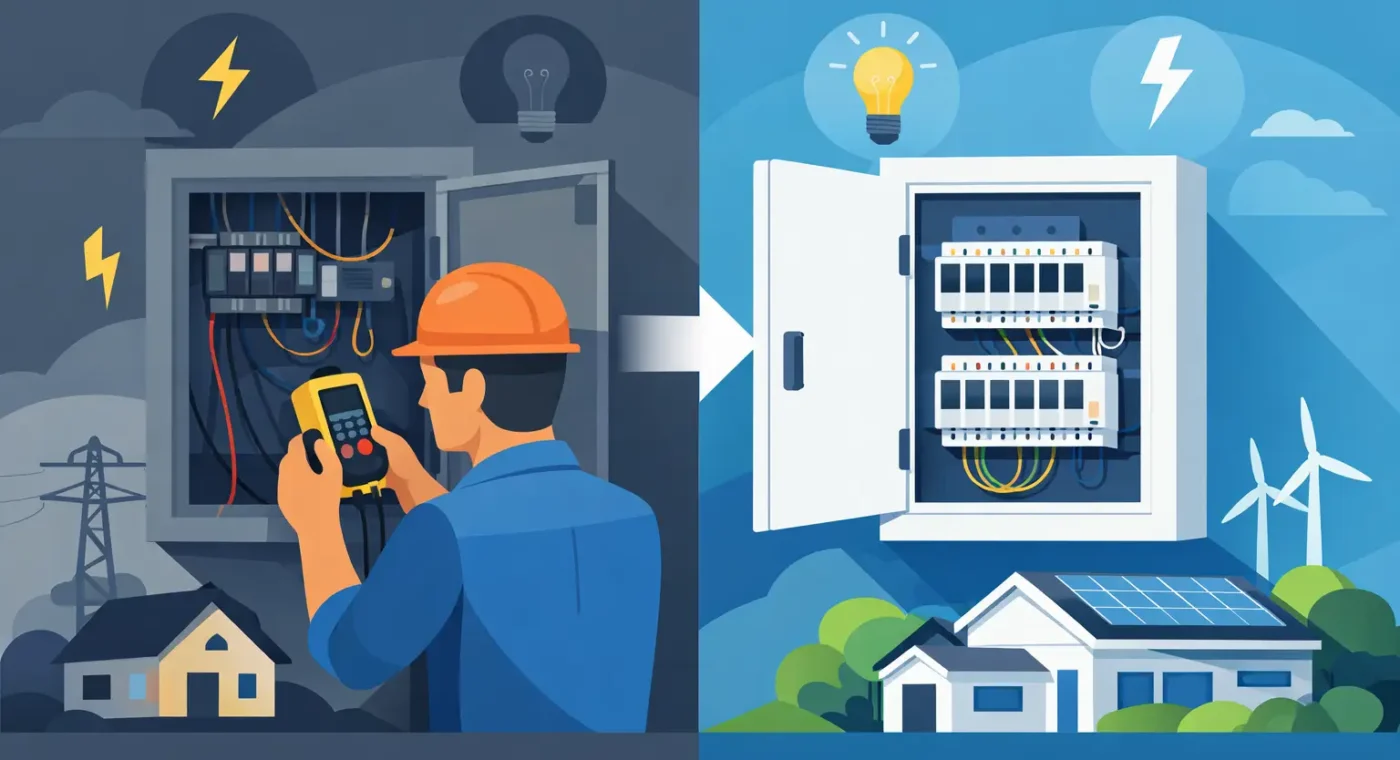
A lot of panel problems do not start with sparks or smoke. They start with small annoyances – breakers that trip when the microwave and toaster run together, lights that dim when the AC kicks on, or a tenant saying one part of the building keeps losing power. An electrical panel upgrade example helps make these warning signs easier to understand before they turn into a bigger safety or reliability issue.
A real-world electrical panel upgrade example
Here is a common residential scenario. A homeowner has an older 100-amp panel in a house that was built decades ago. Over time, the electrical load has changed. The home now has central air, a newer refrigerator, a larger washer and dryer, more countertop appliances, multiple televisions, computers, and a garage circuit that gets used for tools and battery charging.
On paper, nothing seems dramatic. In daily life, the system is struggling. The breakers trip during hot weather, especially when the AC runs at the same time as the dryer and kitchen appliances. A few circuits are overloaded with modern use, and the panel has no room left for additional breakers. The owner also wants to install an EV charger within the next year.
In this electrical panel upgrade example, the solution is not just replacing a few breakers. The better long-term fix is upgrading from a 100-amp panel to a 200-amp panel, replacing worn or outdated components, reorganizing circuits, and making sure the grounding and service equipment meet current code requirements.
That kind of upgrade gives the property more usable capacity, improves safety, and creates room for future additions. It also reduces the frustrating cycle of temporary fixes that never fully solve the problem.
Why panel upgrades happen
For most property owners, the panel itself is not top of mind until something starts going wrong. The panel is the traffic control center for the building’s electrical system. If it is undersized, outdated, damaged, or packed beyond its intended use, the whole property can feel unreliable.
Older homes often had electrical service sized for a very different lifestyle. Years ago, there may have been fewer appliances, no dedicated circuits for large equipment, and much lower overall demand. Today, even a modest home can place a heavier load on the panel than the original design expected.
Commercial properties and rental units face similar issues, but with different pressure points. A restaurant may add equipment. An office may reconfigure workstations. A landlord may upgrade units with new appliances or mini-splits. In each case, the panel has to support the real load, not just the original building layout.
Signs a panel may need an upgrade
Sometimes the warning signs are obvious, and sometimes they are easy to dismiss. Frequent breaker trips are one of the most common indicators. If the same circuits keep tripping under normal use, that usually points to overload, a wiring issue, or a panel that is no longer adequate for the property.
Flickering or dimming lights can also be a clue, especially when a large appliance starts. Warm breakers, buzzing sounds, burning smells, rust inside the panel, or visible corrosion need prompt professional attention. These are not nuisance issues. They can point to failing connections or damaged equipment.
Another common reason is lack of space. If a panel is full and a property owner wants to add a water heater, HVAC equipment, a hot tub, a workshop circuit, or EV charging, an upgrade may be the right answer. In some cases, a subpanel can help. In others, the main panel capacity itself is the bottleneck.
What happens during the upgrade process
A proper panel upgrade starts with evaluation, not guesswork. A licensed electrician reviews the current service size, the condition of the panel, the connected loads, and any expansion plans. This step matters because not every problem requires the same fix.
For example, one property may need a full service upgrade from 100 amps to 200 amps. Another may only need panel replacement because the existing equipment is obsolete or unsafe. A commercial site might need circuit rebalancing, dedicated lines for specific equipment, or coordination with utility requirements.
Once the scope is clear, the work usually includes removing the old panel, installing the new panel, reconnecting circuits, labeling breakers properly, and checking grounding and bonding. Permits and inspections are typically part of the process. Depending on the building and service conditions, there may also be coordination with the utility company for disconnect and reconnect.
Downtime varies. Some upgrades can be completed in a day, while more complex jobs may take longer. The key is planning the shutdown clearly so homeowners, tenants, or business operators know what to expect.
Cost depends on more than the panel itself
One of the biggest questions people ask is cost, and the honest answer is that it depends. The panel is only part of the total job. Service size, wiring condition, permit requirements, utility coordination, grounding updates, and code corrections all affect the final price.
A straightforward residential panel replacement is very different from a full service upgrade with meter work and major code updates. Commercial projects can vary even more because equipment loads, access, and operating hours complicate the job.
That is why a free estimate matters. It gives you a real picture of the work instead of a low number that grows once the panel is opened. Transparent pricing should cover the actual conditions on site, not just the best-case scenario.
When replacement is enough and when an upgrade is better
This is where many property owners get stuck. If the panel is old or defective, replacing it with a similar size panel may seem like the cheaper option. Sometimes that is reasonable. If the service capacity is still sufficient and the issue is mainly equipment age or damage, a like-for-like replacement may solve the problem.
But if the property has already outgrown the existing capacity, replacement alone may only postpone the next service call. A 100-amp panel that is already strained will not become future-ready just because it is newer. If you are planning renovations, major appliances, HVAC upgrades, or EV charging, it often makes more sense to upgrade once instead of paying twice.
The right answer depends on your current load, your plans for the property, and the condition of the existing service equipment. Good electrical advice should be practical, not one-size-fits-all.
An electrical panel upgrade example for a small business
A small commercial kitchen offers another useful example. The operator adds a new prep appliance and a replacement refrigeration unit, then starts having nuisance breaker trips during busy hours. Staff reset breakers and keep working, but the interruptions affect productivity and create stress during service.
After inspection, the issue turns out to be a combination of limited panel capacity, poorly distributed loads, and older breakers that are no longer performing reliably. In this case, the upgrade is not only about adding capacity. It is about making the system more dependable for a business that cannot afford repeated downtime.
For commercial operators, reliability often matters as much as safety. Lost power to one circuit can interrupt food service, damage workflow, or affect customer experience. A properly planned panel upgrade helps protect operations, not just equipment.
Why professional installation matters
Electrical panel work is not a handyman project. The risks are too high, and the code requirements are too specific. The panel connects directly to the building’s power distribution. Mistakes can lead to equipment damage, failed inspections, fire risk, or serious injury.
Professional service also helps with the details many property owners do not see right away – load calculations, breaker sizing, grounding, labeling, permit handling, and coordination with inspectors or the utility if needed. Fast service is valuable, but accurate diagnosis is what keeps the repair from becoming a repeat problem.
For homeowners, landlords, and business owners, the goal is simple: get the issue handled safely, correctly, and with minimal disruption. That is the value of working with a licensed team that can explain the options clearly and complete the job with accountability.
How to know when to make the call
If your property is showing signs of electrical strain, waiting usually does not make the system cheaper or safer to fix. The best time to ask for an evaluation is when you first notice recurring problems, before they become an emergency. That is especially true if you are planning any equipment additions or renovations.
At EAAIRS Services and Repair Ltd., we see many customers who have been managing around panel issues for months. Once the system is evaluated, the path forward is often more straightforward than expected. The important thing is getting clear answers, fair pricing, and a repair plan that fits how your home or business actually uses power.
A panel upgrade is not just about adding amps. It is about making your property safer, more reliable, and easier to live or work in every day – and that peace of mind is usually worth addressing sooner rather than later.