
A hot afternoon is a bad time to find out your air conditioner has been working harder than it should. This air conditioner tune up guide helps homeowners, landlords, property managers, and business operators understand what routine AC care involves, what can safely be checked between service visits, and when a trained technician should take over.
A tune-up is not just a quick filter change. It is a focused inspection of the system components that affect cooling, airflow, energy use, drainage, and safe operation. Done before peak cooling season, it can uncover small concerns before they become an uncomfortable breakdown, an after-hours call, or a disruption to tenants and customers.
What an AC Tune-Up Should Accomplish
Your air conditioner moves heat out of the building through a connected indoor and outdoor system. When airflow is restricted, coils are dirty, electrical parts are worn, or refrigerant performance is off, the system may still run but cool less effectively. That often means longer cycles, uneven temperatures, and higher utility bills.
A professional tune-up is designed to verify that the equipment is operating within normal conditions. The technician checks how the system starts, cools, drains, and shuts down. They also look for developing issues that are easier and less expensive to address before a part fails completely.
The exact scope depends on the system’s age, type, condition, and manufacturer requirements. A central split system, ductless mini-split, rooftop unit, and commercial cooling setup do not have identical maintenance needs. Still, a dependable service visit should address performance, safety, cleanliness, and clear next steps.
Air Conditioner Tune Up Guide: What to Check First
Before booking service, start with a few simple observations. These details help a technician diagnose the issue faster and help you decide whether the system needs routine maintenance or prompt repair.
Check the thermostat setting and confirm it is set to cool at a temperature below the current indoor temperature. If the thermostat uses batteries, replace them if the display is dim or inconsistent. Then make sure the indoor unit has power and that no circuit breaker has tripped. If a breaker trips again after being reset once, leave it off and arrange professional electrical and AC service. Repeated tripping can point to a problem that should not be ignored.
Next, inspect the air filter. A clogged filter is one of the most common causes of weak airflow and reduced efficiency. Most one-inch filters need attention every one to three months, while thicker media filters may last longer. Homes with pets, construction dust, smokers, or frequent occupancy may need more frequent changes. Use the filter size and airflow direction marked on the frame, and avoid installing a denser filter than the equipment can handle without professional guidance.
Walk outside to look at the condenser unit. Clear leaves, grass clippings, mulch, and stored items from around it. The unit needs open space to release heat. Do not cover it while it is operating, and do not use a pressure washer on the delicate coil fins. Bent fins and coil damage can restrict airflow and require proper repair.
Finally, pay attention to symptoms: rooms that no longer cool evenly, new rattling or buzzing sounds, musty odors, water around the indoor unit, or a system that runs constantly. These signs do not always mean a major repair is needed, but they do mean a routine tune-up should not be delayed.
What a Professional Technician Does During Service
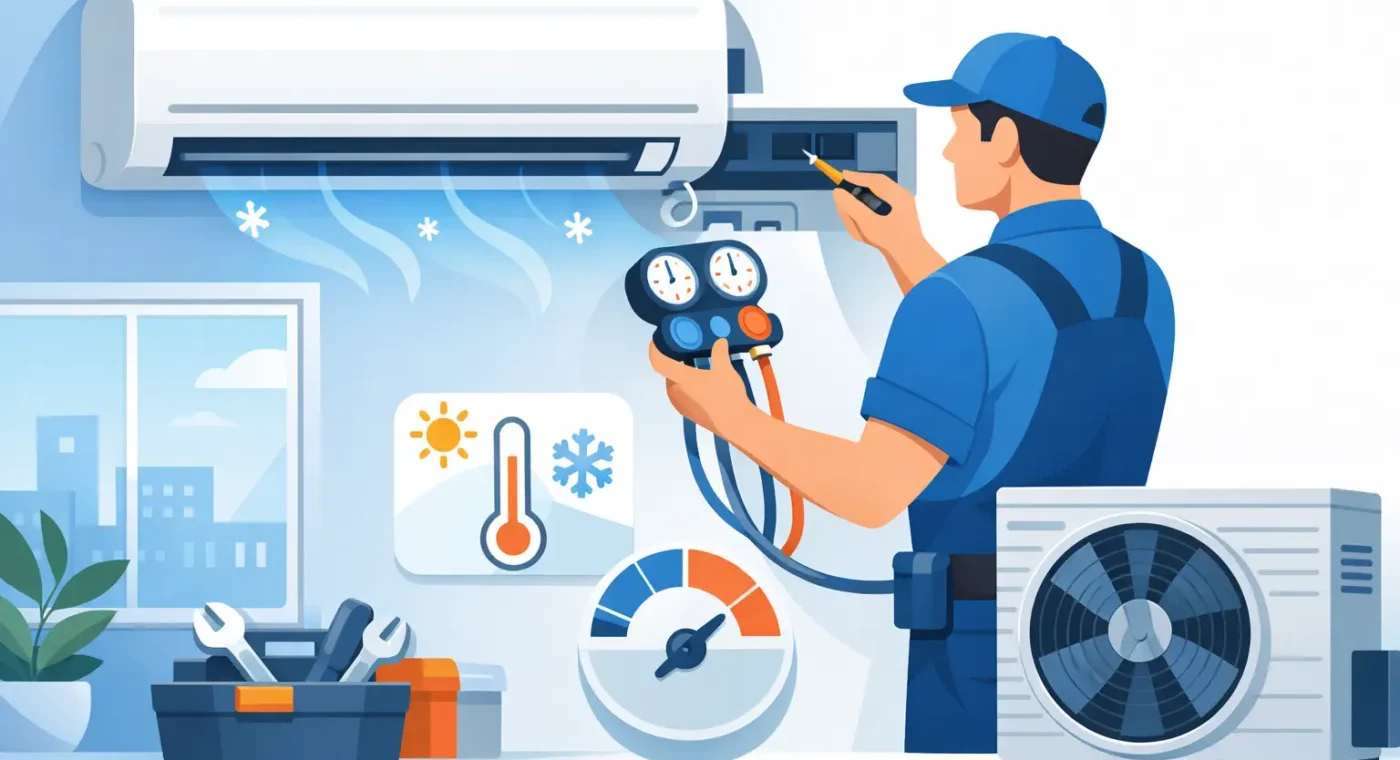
A complete AC maintenance visit goes beyond what is visible from the thermostat or outdoor unit. Licensed technicians use testing equipment and their experience to evaluate components that homeowners should not disassemble or adjust.
The visit typically begins with a system operation check. The technician measures temperature performance, listens for unusual operation, verifies thermostat response, and checks airflow at the indoor equipment. They inspect the blower compartment and accessible duct connections for signs of leaks, dirt buildup, or restricted airflow.
Electrical inspection matters because air conditioning equipment relies on high-voltage circuits, capacitors, contactors, disconnects, and control wiring. Loose connections and aging electrical components can cause hard starting, intermittent cooling, or sudden equipment failure. A technician can inspect these parts safely, test readings, and identify components nearing the end of their useful life.
Coils and condensate drainage also need attention. The indoor evaporator coil absorbs heat, while the outdoor condenser coil releases it. Dirt on either coil makes the system work harder. A technician can determine whether cleaning is needed and use methods appropriate for the equipment. They will also inspect the condensate drain, pan, and drain line. A blocked drain can cause water damage, humidity problems, and system shutdowns.
Refrigerant is another area for professional-only work. Refrigerant does not get used up during normal operation. If levels are low, there may be a leak or another system issue. Adding refrigerant without finding the cause is not a lasting repair. A qualified technician should test system performance, check for leaks when indicated, and explain the recommended repair before work begins.
Maintenance Tasks You Can Handle Between Visits
Routine owner care helps protect the work completed during a professional tune-up. Keep the thermostat area free from heat sources such as lamps or direct sunlight, which can cause inaccurate readings. Change filters on schedule and keep supply and return vents open and unobstructed by furniture, rugs, or inventory.
For properties with multiple occupants, it helps to document filter changes and service dates. Property managers can add these tasks to seasonal maintenance calendars, while commercial operators can assign a staff member to report unusual sounds, odors, or temperature changes early. A brief record of when a problem began often makes diagnosis more efficient.
Avoid closing multiple vents in an effort to force more cooling into another room. Most residential systems are designed for balanced airflow, and closing too many vents can create pressure issues. If one area stays warmer than the rest of the property, the solution may involve ductwork, insulation, thermostat placement, zoning, or equipment sizing. The right answer depends on the building, not a one-size-fits-all adjustment.
When a Tune-Up Becomes a Repair Call
Maintenance is preventive, but some conditions need faster action. Turn the system off and request service if you smell burning, see smoke, hear loud grinding, or notice water leaking near electrical components. Ice on refrigerant lines or the indoor coil also deserves prompt attention. Continuing to operate an iced system can damage equipment and will not solve the underlying airflow or refrigerant problem.
Call for professional help when you notice any of these concerns:
- The AC blows warm air or cannot reach the thermostat setting.
- The breaker trips, the unit repeatedly shuts off, or it struggles to start.
- Water is pooling near the air handler, ceiling, or wall.
- New banging, screeching, grinding, or electrical buzzing develops.
- Cooling costs rise sharply without a clear change in weather or usage.
For landlords and commercial operators, quick response can protect more than comfort. Cooling problems can lead to tenant complaints, employee discomfort, damaged inventory, and interrupted operations. Early diagnosis gives you more options than waiting for a complete failure during the busiest part of the season.
How Often Should You Schedule AC Service?
Most central air conditioning systems benefit from professional maintenance once a year, ideally in spring before sustained heat arrives. Older units, high-use properties, homes with indoor air quality concerns, and commercial systems may need more frequent attention. Manufacturer warranty terms and the equipment’s service history can also influence the right schedule.
Annual service does not guarantee that a part will never fail. Age, weather, electrical events, and normal wear still matter. What it does provide is a practical opportunity to catch loose wiring, drainage issues, dirty components, weak electrical parts, and declining performance before they create a larger problem.
When arranging service, ask what the inspection includes, whether the technician will explain any findings, and whether you will receive clear pricing before recommended repairs begin. Reliable maintenance should leave you with a better understanding of your system’s condition, not more uncertainty.
EAAIRS Services and Repair Ltd. provides professional AC inspection, maintenance, and repair with the same practical focus: accurate diagnosis, clear recommendations, and fast support when comfort cannot wait. If your system is showing warning signs or has not been checked before the season, scheduling service now is a simple way to protect a cooler, more dependable property.