
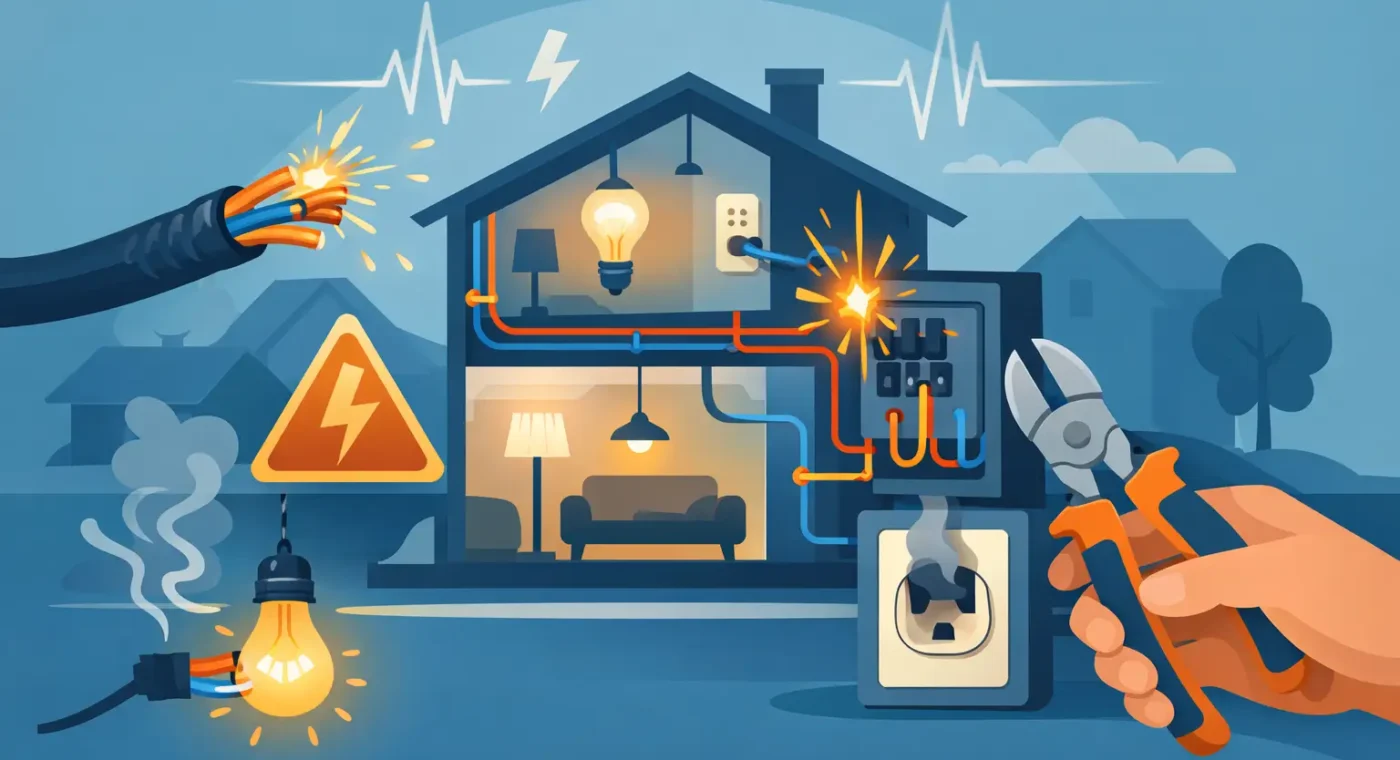
A breaker that trips once after a major storm may be a one-time issue. A breaker that trips every time you run the microwave, toaster, or space heater is your property telling you something different. The best signs you need rewiring are often easy to miss at first, but acting early can prevent damaged equipment, repeated outages, electrical fires, and costly disruption.
For homeowners, rewiring protects the people and appliances that make a house function. For landlords, property managers, and business operators, it can also protect tenants, customers, inventory, and daily operations. Electrical work is not a place for temporary fixes. A licensed electrician can identify whether the concern is a single failed component, an overloaded circuit, an aging panel, or wiring that needs replacement.
Best Signs You Need Rewiring Before a Small Problem Grows
1. Breakers trip or fuses blow repeatedly
Circuit breakers are designed to shut off power when they detect an overload, short circuit, or ground fault. An occasional trip can happen when too many high-demand appliances are running on one circuit. Repeated tripping, however, deserves professional attention.
You may notice it when the dishwasher runs at the same time as the microwave, or when an office circuit drops every time equipment is switched on. The problem may be an overloaded circuit that needs to be redistributed, but it may also point to loose, damaged, or undersized wiring. Resetting the breaker again and again does not solve the cause.
If your property still uses a fuse box, frequent blown fuses should be treated with the same urgency. Never replace a fuse with a higher-rated one to stop it from blowing. That can allow wiring to overheat before the fuse reacts.
2. Lights flicker, dim, or brighten without explanation
A light that flickers only because a bulb is loose is usually simple to resolve. But lights that dim when the air conditioner starts, brighten unexpectedly, or flicker in several rooms may indicate a larger electrical issue.
Voltage fluctuations can come from overloaded circuits, failing connections, a panel problem, or deteriorating wiring. In a commercial setting, they can also affect point-of-sale systems, refrigeration controls, computers, and sensitive equipment. If changing the bulb does not resolve the issue, arrange an electrical inspection instead of waiting for a complete power failure.
3. Outlets or switches feel warm, look discolored, or make noise
An outlet or switch should not feel hot during normal use. Warm faceplates, discoloration, scorch marks, buzzing, crackling, or a burning odor are warning signs that may indicate a loose connection or overheating wire.
Turn off power to that circuit if you can do so safely, stop using the affected outlet or switch, and call a qualified electrician promptly. Do not cover the plate, spray anything into the outlet, or assume the issue will settle down. Heat and arcing can develop behind the wall, where damage is not visible until it becomes serious.
4. You rely on extension cords and power strips every day
Extension cords are useful for temporary tasks, not permanent electrical planning. If bedrooms, workstations, kitchens, stockrooms, or commercial prep areas depend on multiple power strips because there are not enough outlets, your electrical system may no longer match how the space is used.
The answer is not always a full rewire. Sometimes adding properly placed outlets or dedicated circuits is enough. But in older properties, widespread reliance on extension cords can reveal an electrical layout that was never designed for modern appliances, charging stations, entertainment systems, or business equipment.
5. Outlets are loose, dead, or do not hold plugs securely
A plug that slips out of an outlet is more than an inconvenience. Loose contacts can create poor connections, heat buildup, and arcing. Dead outlets, especially several in the same area, can also point to a failed connection somewhere upstream.
A technician may find that the repair is limited to replacing a damaged receptacle. On the other hand, loose outlets throughout an aging building can be one of the clearest signs that the wiring and electrical devices need a broader evaluation. The condition of the wiring behind the wall matters as much as the outlet you can see.
6. Your home or building has older wiring materials
Age alone does not automatically mean every wire needs to be replaced. A well-maintained older property may have been upgraded properly over time. Still, certain wiring types and electrical panels require closer attention because they may not meet current safety expectations or support present-day power demands.
Homes with knob-and-tube wiring, aluminum branch wiring, ungrounded two-prong outlets, or an outdated fuse system should be inspected by a licensed electrician. Older commercial spaces may have similar concerns, particularly when the building has changed use over the years. A retail space converted into a café, for example, has a very different electrical load than it did before commercial kitchen equipment was installed.
7. You get shocks, tingling, or a burning smell
Even a mild shock from an appliance, switch, or outlet should not be ignored. It can signal poor grounding, faulty wiring, moisture exposure, or an appliance issue that needs diagnosis. If multiple appliances produce the same sensation, the electrical system should be checked without delay.
A persistent burning smell is more urgent. If you see smoke, sparks, flames, or active arcing, move people away from the area, call emergency services, and do not attempt a repair yourself. Once the immediate danger is addressed, a professional inspection can determine the source and the scope of needed repairs.
8. Appliances do not run reliably
Appliances can fail for many reasons, so a malfunctioning refrigerator, dryer, oven, or HVAC unit does not always mean your building needs rewiring. However, power-related symptoms across several devices can point back to the electrical system.
Watch for appliances that lose power, run intermittently, trip breakers, or seem to underperform when other equipment is operating. Large appliances often need dedicated circuits. If a new appliance has been added to an older kitchen, laundry room, or commercial workspace, the existing circuit may not have enough capacity for the load.
9. Renovations or new equipment have outgrown the system
Electrical systems are built around expected demand. When a property adds central air conditioning, an EV charger, a remodeled kitchen, a hot tub, additional office equipment, or commercial cooking appliances, the demand can change quickly.
A full rewire may not always be necessary. Some upgrades require a new dedicated circuit, a panel upgrade, or targeted rewiring in the remodeled area. The right solution depends on the age and condition of the existing wiring, the load calculation, local code requirements, and the equipment being installed. A professional assessment prevents guesswork and helps avoid costly rework later.
What Happens During a Rewiring Assessment?
A proper electrical assessment should begin with the symptoms you have noticed: which breakers trip, when lights flicker, what equipment is connected, and whether the issue is limited to one room or affects the entire property. The electrician can then inspect the panel, outlets, switches, visible wiring, grounding, and circuit loads.
From there, you should receive a clear explanation of what is causing the problem and what repair options make sense. In some cases, a targeted repair is the safe, cost-effective choice. In others, partial or full rewiring may be the better long-term investment, particularly if the property has aging materials, recurring failures, or plans for major upgrades.
For businesses and occupied rental properties, planning matters. Electrical work may need to be scheduled around tenants, customers, refrigeration needs, business hours, or critical equipment. A dependable service provider will help reduce downtime while keeping safety at the center of the job.
Do Not Wait for a Complete Electrical Failure
Electrical issues rarely improve by being ignored. The earlier a problem is diagnosed, the more options you usually have to address it safely and affordably. EAAIRS Services and Repair Ltd. can help homeowners and commercial property operators identify electrical concerns, explain the recommended work clearly, and restore confidence in the system powering the property.
If a breaker keeps tripping, an outlet feels warm, or your space has simply outgrown its wiring, schedule a professional evaluation while the warning signs are still manageable.