
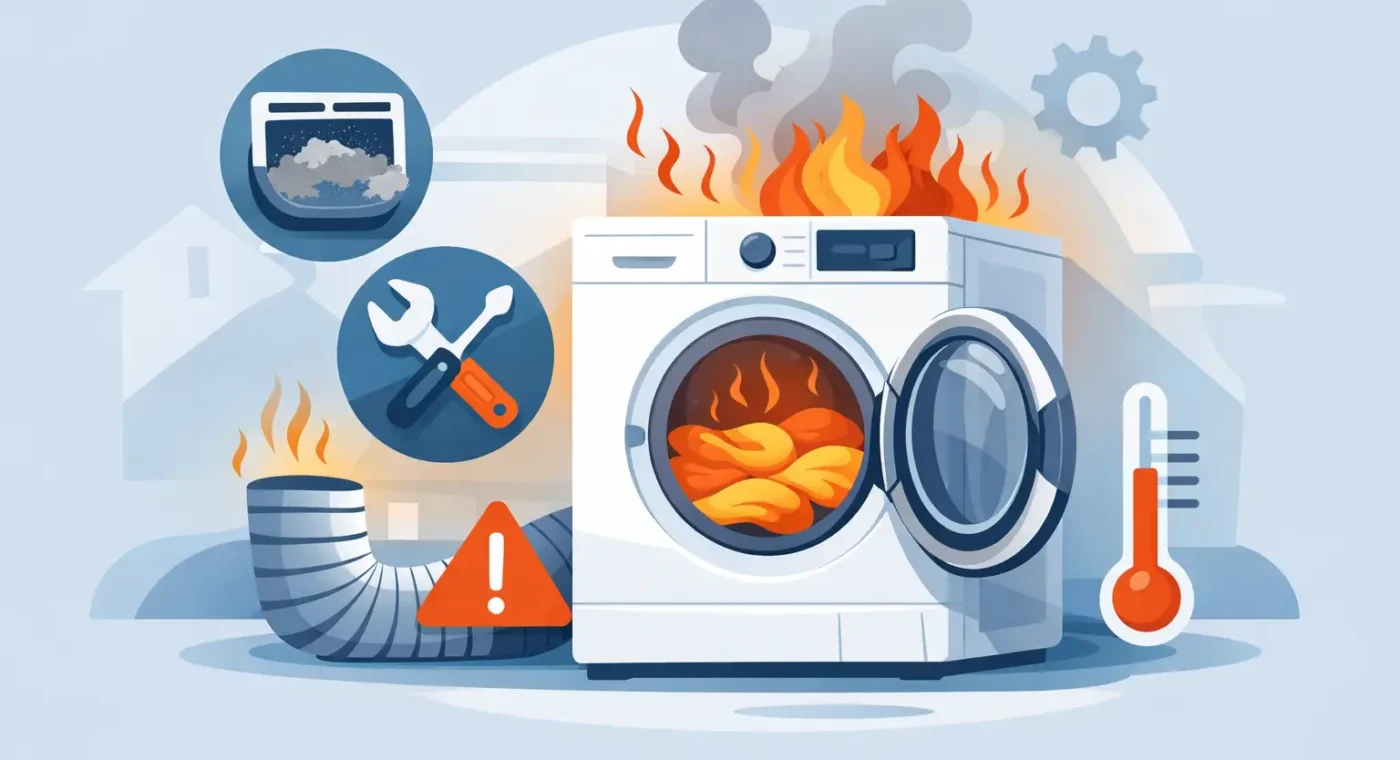
A dryer that feels unusually hot, leaves clothes scorching, or shuts off mid-cycle is not a problem to ignore. If you are asking, “why is my dryer overheating,” the answer is often restricted airflow, but several mechanical and electrical issues can create the same warning signs. Left unresolved, overheating can damage clothing, shorten the life of the appliance, raise energy costs, and increase fire risk.
The safest response is simple: stop using the dryer until you identify the cause. A warm cabinet is normal during operation. A burning smell, excessive heat in the laundry room, repeated shutoffs, or clothes that are too hot to handle are not.
Why Is My Dryer Overheating? Start With Airflow
Dryers create heat, but they depend on a clear path to move that heat and moisture outdoors. When lint, crushed ductwork, or a blocked exterior vent prevents air from leaving, heat builds inside the drum, heater housing, and machine cabinet.
A clogged lint screen is the easiest place to start. Clean it before every load, then occasionally wash it with warm water and mild dish soap. Dryer sheets and fabric softener can leave a nearly invisible film that restricts airflow even when the screen looks clean. Let the screen dry completely before reinstalling it.
The lint screen is only one part of the system. Lint can collect in the vent hose behind the dryer, the duct running through the wall or ceiling, and the outside vent hood. If the exterior flap does not open fully while the dryer runs, air is likely restricted. Heavy lint around the vent opening, weak exhaust airflow, or a laundry room that becomes humid during a cycle also point to a venting issue.
Flexible plastic or foil-style ducts can sag, tear, and trap lint. A properly installed rigid or semi-rigid metal duct is generally safer and allows better airflow. The best setup depends on the dryer location and duct route, but long runs with multiple turns need professional attention because they are harder to clean and more likely to restrict airflow.
Other Common Causes of Dryer Overheating
A failing cycling thermostat or thermal sensor
Your dryer uses temperature controls to cycle the heating element or burner on and off. If a cycling thermostat, thermistor, or high-limit thermostat is malfunctioning, the dryer may stay hot longer than it should or fail to regulate temperature accurately.
This problem often shows up as clothes shrinking, hot cycles becoming much hotter than normal, or the dryer shutting down unexpectedly. Because testing these components requires access to electrical connections and specialized tools, this is usually a job for an appliance technician.
A heating element that stays on
In an electric dryer, the heating element can sometimes warp or develop a fault that allows it to remain energized when it should cycle off. The dryer may continue producing heat even on a low-heat or air-only setting. That is a clear sign to stop using the appliance and schedule service.
Gas dryers have different heating components, including an igniter, flame sensor, gas valve coils, and burner assembly. A gas dryer that overheats may have airflow trouble, but it can also have a burner-control issue. Do not attempt to disassemble gas connections or adjust burner parts yourself.
A blocked or weak blower wheel
The blower wheel pushes air through the dryer and into the vent system. If it is clogged with lint, cracked, loose, or obstructed by a small object, the dryer cannot move enough air to remove heat. You may hear unusual rattling, scraping, or a high-pitched noise, along with poor drying performance.
A weak blower can look like a duct blockage because both problems cause long dry times and excessive heat. Accurate diagnosis matters here. Cleaning only the exterior vent will not solve a damaged blower wheel, and replacing parts will not fix a blocked duct.
Overloading or poor load selection
An overloaded dryer can restrict tumbling and reduce airflow through fabrics. Dense loads such as towels, bedding, or work uniforms may dry unevenly and hold heat longer. This does not usually cause severe overheating by itself, but it can expose an existing airflow or thermostat issue.
Use the correct cycle for the fabric and leave enough room for clothes to tumble freely. If normal-sized loads still come out excessively hot, the problem is likely inside the dryer or vent system rather than the way it is being loaded.
Electrical issues and damaged wiring
Loose wiring, a failing control board, or an incorrect electrical supply can affect how an electric dryer heats and cycles. You might notice a burning electrical odor, flickering display, tripped breaker, or a dryer that behaves inconsistently from one cycle to the next.
Electrical repair should not be a trial-and-error project. A qualified technician can check the appliance, power cord, outlet, breaker, and related connections safely. This is especially important in rental properties and commercial laundry areas, where repeated use can turn a small electrical issue into costly downtime.
What to Do When Your Dryer Gets Too Hot
If the dryer is overheating now, turn it off and allow it to cool. If you smell burning, see smoke, or suspect a fire, leave the area, call emergency services, and do not reopen the dryer door unless it is safe to do so.
Once the dryer is cool, unplug an electric model if you can do so safely. For a gas dryer, turn it off and avoid handling the gas line. Clean the lint screen, inspect the visible section of the vent hose for crushing or disconnection, and check whether the outside vent flap is blocked by lint, nests, or debris.
Do not keep running test loads to see whether the problem improves. Repeated overheating can damage internal safety devices, scorch fabrics, and worsen a developing fault. If basic lint-screen cleaning and a visible vent check do not clearly solve the problem, arrange professional dryer and duct service.
When Dryer Duct Cleaning Is the Right Fix
Professional dryer duct cleaning is often the right next step when the vent route is long, hidden, or difficult to reach. It is also a strong choice if dry times have gradually increased, the dryer feels hot on the outside, or lint is visible around the exterior vent.
A thorough service should address the full exhaust path, not just the short hose behind the machine. The technician should also look for disconnected sections, crushed ducting, unsafe materials, poor termination points, and excess turns that restrict airflow. In many cases, correcting the duct layout improves both safety and drying performance.
For property managers and commercial operators, scheduled duct maintenance can prevent avoidable interruptions. Shared laundry rooms and high-use machines produce more lint than a typical household dryer, so their vent systems may need attention more often.
When to Call for Dryer Repair
Call for appliance repair promptly if your dryer overheats after the vent is cleaned, if it produces heat on an air-only setting, or if it shuts off repeatedly. A technician can test airflow, thermostats, heating circuits, sensors, blower operation, and electrical connections to identify the actual failure instead of replacing parts based on guesswork.
EAAIRS Services and Repair Ltd. can help homeowners, landlords, and businesses address dryer overheating with professional diagnosis, dryer duct cleaning, and repair support. Fast service matters when a laundry appliance is creating a safety concern or disrupting daily operations.
Simple Habits That Help Prevent Overheating
Clean the lint screen after every cycle and avoid pushing the dryer tightly against the wall, where the vent hose can kink. Keep the exterior vent area clear, and pay attention when dry times begin creeping up. Those early signs are often your best opportunity to correct airflow problems before heat becomes a serious concern.
Your dryer should make laundry easier, not leave you worrying about hot metal, burnt smells, or another appliance failure. Treat unusual heat as a service signal, not an inconvenience, and get the system checked before the next load turns a manageable repair into a larger safety issue.