
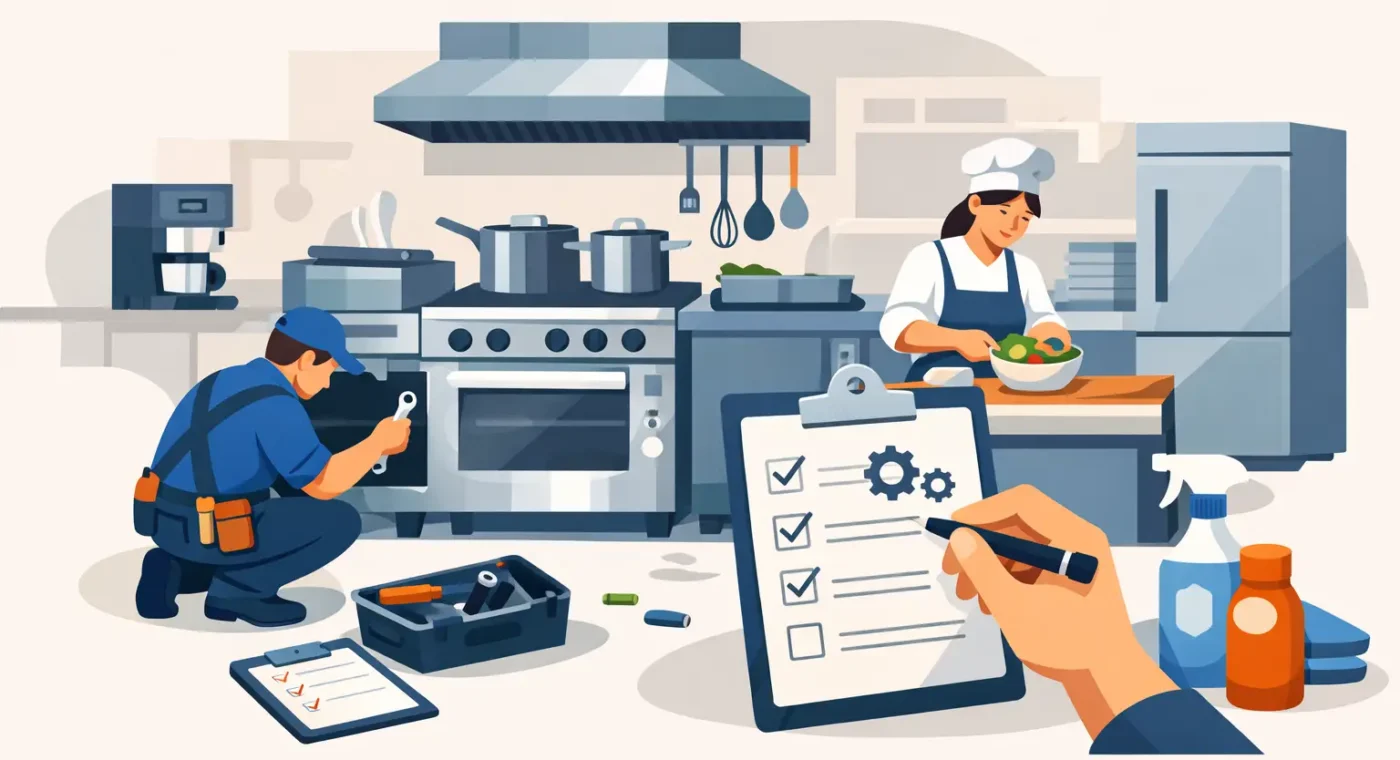
A failed refrigerator during a lunch rush, an oven that will not hold temperature, or a dishwasher that stops draining can disrupt far more than one shift. It can waste inventory, delay service, create safety concerns, and put pressure on staff. This commercial appliance maintenance guide helps restaurant owners, property managers, and commercial operators build practical routines that prevent avoidable breakdowns while making it easier to spot problems early.
Why Commercial Appliance Maintenance Pays Off
Commercial equipment works harder than residential appliances. A reach-in cooler may run all day in a hot kitchen. A fryer may cycle through intense temperatures for hours. Ice machines, dishwashers, ranges, and ventilation systems all depend on clean components, proper airflow, reliable power, and correct daily use.
Waiting until equipment fails is usually the expensive option. Emergency repairs often happen when your business can least afford downtime, and a small issue can become a damaged motor, failed control board, spoiled product, or unsafe electrical condition. Routine maintenance does not eliminate every repair, but it gives technicians and staff a better chance to correct wear before it interrupts operations.
The right schedule depends on your equipment, volume, kitchen conditions, and manufacturer requirements. A high-volume restaurant needs more frequent attention than a lightly used breakroom kitchen. Still, every operation benefits from assigning responsibilities, documenting checks, and calling for professional service before performance declines further.
Commercial Appliance Maintenance Guide: Start With Daily Habits
The most effective maintenance tasks are often the simplest ones. They happen at closing, before opening, or during a quick shift handoff. Staff should know what normal operation looks and sounds like for each appliance. That makes unusual noises, temperature changes, leaks, and error codes easier to identify immediately.
Clean equipment according to the manufacturer’s instructions. Remove food debris from cooking surfaces, wipe exterior panels and door gaskets, clear spills promptly, and empty grease collection areas as required. Grease buildup is not just a cleaning problem. It can restrict performance, create odors, increase fire risk, and damage nearby components over time.
Refrigeration deserves special attention. Check that doors close fully, gaskets are intact, interior temperatures remain in the safe range, and products are not blocking air vents. Overloading a cooler or pushing it tightly against a wall can reduce airflow and force the system to work harder. If you see condensation, frost buildup, warm spots, or repeated cycling, schedule service before the unit loses cooling altogether.
For dishwashers, verify that spray arms are unobstructed, filters are clean, and the machine is reaching proper wash and rinse temperatures. Poor cleaning results may come from clogged filters, incorrect chemical levels, water supply issues, or a failing heating component. Rewashing dishes costs labor and water, but it can also indicate a sanitation issue that should not wait.
Build a Weekly and Monthly Checklist
A written checklist turns maintenance from a good intention into an operational habit. Keep it specific to your kitchen and give one person responsibility for confirming it is complete. A manager does not need to perform every task, but someone should review the log and act on repeated concerns.
Each week, inspect door seals, hoses, drains, handles, knobs, and visible electrical cords. Look for cracks, loose connections, corrosion, standing water, and signs of pest activity. Clean accessible condenser areas only if your equipment instructions allow it and staff can do so safely. Many refrigeration failures begin with restricted airflow caused by dust and grease around coils or vents.
Monthly checks should go further. Test oven temperature accuracy with a dependable thermometer, inspect fryer oil quality and filtration practices, review ice machine cleanliness, and check for unusual vibration from mixers, exhaust systems, or refrigeration equipment. Record temperatures and any error messages instead of relying on memory. A pattern of small temperature swings or intermittent alarms gives a technician useful diagnostic information.
Do not overlook utility connections. Water lines, gas connections, drain lines, and electrical supply points need periodic inspection by qualified professionals. A commercial kitchen brings heat, moisture, grease, and heavy use together in one space. Those conditions can wear down connections faster than expected.
Protect Refrigeration, Cooking, and Warewashing Equipment
Different appliance categories fail in different ways, so maintenance should match the risk.
Refrigerators, Freezers, and Ice Machines
Keep ventilation clear and avoid storing boxes on top of units where they can trap heat. Clean door gaskets gently so they seal properly, and replace them when they are torn, warped, or no longer holding the door closed. For ice machines, follow a scheduled cleaning and sanitizing plan based on water conditions and usage. Scale, slime, and mineral buildup can affect ice quality, water flow, and machine reliability.
A compressor that runs constantly, a freezer with excessive frost, or a cooler that cannot recover temperature after the door opens are service calls, not issues to manage around. Continued operation can damage the system and put stored food at risk.
Ovens, Ranges, Fryers, and Griddles
Daily cleaning prevents carbon and grease from accumulating on burners, heating surfaces, and controls. Keep ignition areas clear, and pay attention to delayed ignition, uneven flames, inconsistent heat, smoke, or a gas smell. If you smell gas, stop using the appliance, follow your site’s safety procedures, and contact a qualified technician immediately.
Fryers need disciplined oil management. Filtering and changing oil on schedule helps product quality and reduces strain from debris buildup. Never add water to hot oil, and allow equipment to cool according to safe procedures before cleaning.
Commercial Dishwashers
Clean filters and strainers daily, inspect spray arms weekly, and use the correct detergents and rinse aids. Hard water can leave scale on heating elements and internal components, which may reduce performance and increase energy use. If dishes come out cloudy, wet, or improperly sanitized, do not assume the cause is staff technique. The machine may need service or water-quality adjustments.
Know When Staff Should Stop and Call for Service
Staff can handle routine cleaning and visual checks. They should not attempt electrical repairs, gas work, sealed refrigeration repairs, or internal mechanical adjustments. Untrained repairs can worsen damage, void warranties, and create real safety risks.
Call a professional when an appliance trips breakers, gives off a burning smell, leaks water or gas, loses temperature control, displays recurring error codes, makes grinding or loud buzzing sounds, or needs repeated resets. The same applies when a machine is technically operating but no longer performing consistently. A dishwasher that intermittently fails to heat or a cooler that slowly runs warm may be warning you before a full shutdown.
When requesting service, provide the appliance make and model, the issue, any error code, when it began, and whether the problem is constant or intermittent. Note recent power interruptions, cleaning procedures, or changes in performance. These details support a faster, more accurate diagnosis and help reduce time on site.
Include Electrical and Ventilation in the Plan
Appliances do not operate independently from the rest of the building. A weak electrical connection, overloaded circuit, poor ventilation, blocked dryer duct, or faulty exhaust system can affect equipment performance and safety. If several appliances show power issues, or cooling equipment struggles in an unusually hot space, the cause may be broader than the appliance itself.
This is where working with a multi-trade service provider can simplify maintenance. EAAIRS Services and Repair Ltd. can help commercial operators address appliance, electrical, cooling, and related system concerns without requiring separate contractors for every issue. For busy facilities, that means fewer handoffs and a clearer path from diagnosis to repair.
Make Maintenance Part of Your Operating Routine
A maintenance plan only works when it fits the realities of your operation. Assign simple daily tasks to trained staff, schedule deeper checks during slower periods, and keep service records where managers can find them. If equipment is older, heavily used, or essential to revenue, consider preventive professional inspections more often than the minimum recommendation.
Reliable equipment starts with small, consistent actions. A clean filter, a clear vent, a recorded temperature, or a service call placed one day earlier can protect inventory, staff, customers, and the next shift.