
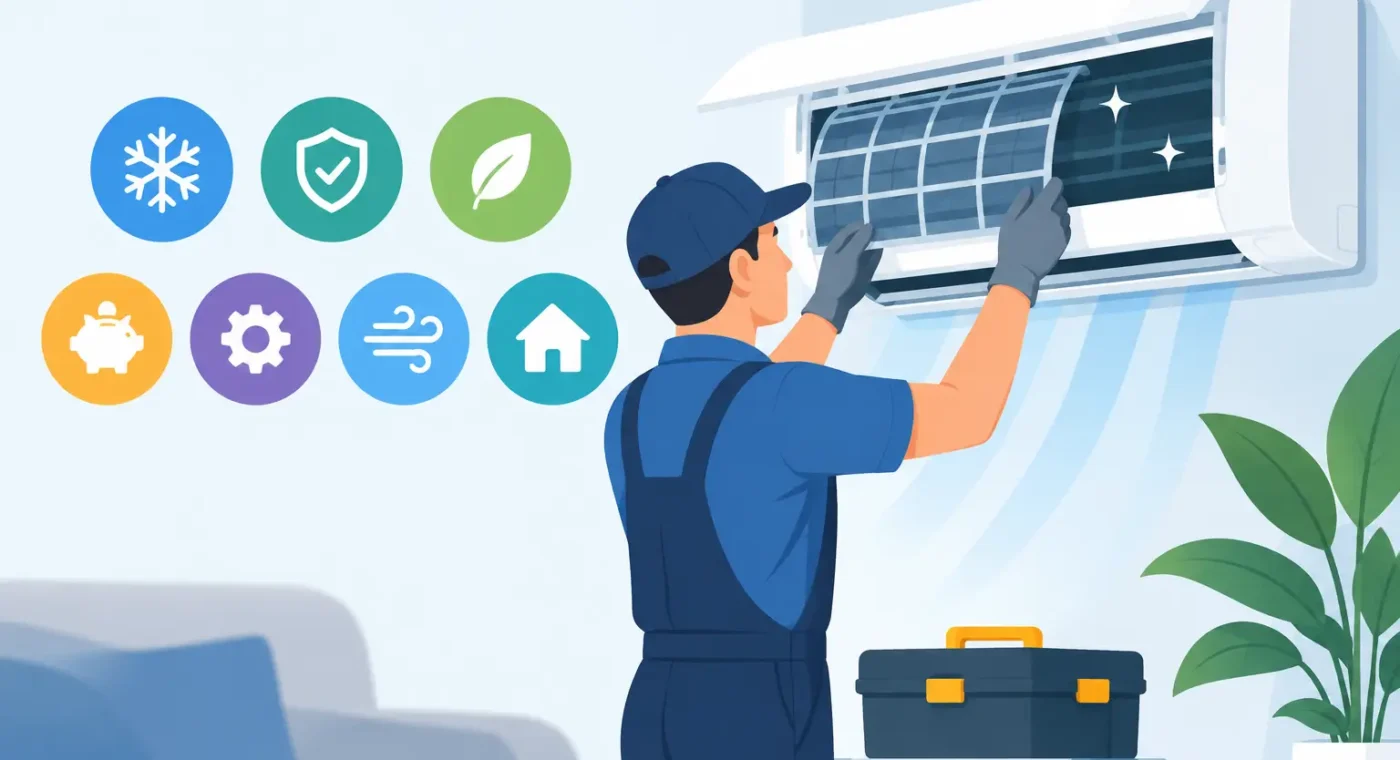
A system that cools your home or business all afternoon without complaint can still be developing a problem behind the scenes. The best reasons to schedule AC maintenance are rarely about fixing something that has already failed. They are about catching the small issues that raise costs, reduce comfort, and turn a hot day into an urgent service call.
For homeowners, a neglected air conditioner can mean uneven temperatures, higher utility bills, and a surprise repair when the heat is at its worst. For landlords, property managers, and business owners, it can mean tenant complaints, interrupted operations, and avoidable downtime. A planned maintenance appointment gives you more control over all of it.
1. Lower Energy Use Without Sacrificing Comfort
Air conditioners work hardest when airflow is restricted, components are dirty, or refrigerant levels are not where they should be. A clogged filter, debris around an outdoor condenser, or a struggling blower motor may seem minor on its own. Together, those problems can force the system to run longer just to reach the temperature on the thermostat.
During maintenance, a technician can inspect the system’s condition, check airflow, clean key components as needed, and identify signs that the unit is operating inefficiently. The goal is not to promise a specific utility-bill reduction, because savings depend on the age of the equipment, insulation, thermostat settings, and local weather. The practical benefit is making sure your AC is not using more electricity than necessary because of a correctable issue.
This matters especially in commercial spaces. A system that runs inefficiently for extended hours can add unnecessary operating costs month after month. Preventive service is often far less disruptive than realizing the problem after a utility bill spikes.
2. Find Small Problems Before They Become Emergency Repairs
Most major AC failures do not start as major failures. They often begin with a loose electrical connection, worn capacitor, drainage issue, refrigerant leak, or part that is beginning to fail under heavy use. Left alone, a small concern can place stress on other components and lead to a larger repair.
Maintenance gives a qualified technician time to inspect the system before it reaches that point. If a part shows wear, you can make a clear decision with information in hand rather than making a rushed choice during a breakdown. That is valuable for any property, but it is especially important for restaurants, offices, rental properties, and other locations where a loss of cooling affects customers, employees, equipment, or tenants.
There is a trade-off to consider. Maintenance cannot guarantee that an older system will never need a repair. Mechanical equipment can fail unexpectedly. But routine service improves the odds that developing issues are identified early, when options are usually simpler and less expensive.
3. Avoid Peak-Season Scheduling Stress
The first sustained heat wave brings a predictable rush of AC calls. When many systems fail at once, appointment availability can tighten and replacement parts may take longer to source. Scheduling maintenance before or early in the cooling season is a practical way to avoid discovering a problem when demand is at its highest.
A maintenance visit also gives you time to plan if the technician finds something significant. You may decide that a repair makes sense, or you may learn that an aging unit is nearing the point where replacement is more practical. Either way, you can review the estimate, ask questions, and schedule work around your household or business operations.
For property managers, this timing is particularly useful. Servicing systems between tenant turnovers, before seasonal occupancy increases, or before a busy commercial period can reduce complaints and last-minute coordination.
4. Protect Indoor Airflow and Moisture Control
Your air conditioner does more than make rooms feel cooler. It also helps manage humidity and moves air through the property. When the system is not functioning properly, you may notice rooms that feel sticky, weak airflow from vents, musty odors, or temperatures that vary from one area to another.
Some of these symptoms have simple causes, such as a dirty filter or blocked vent. Others may point to drainage concerns, duct issues, or equipment that needs closer diagnosis. Maintenance helps identify what is affecting performance before the problem becomes more noticeable.
Good airflow is not just a comfort issue. In a business, it can affect employee comfort and customer experience. In a rental property, it can quickly become a service request. At home, it can make bedrooms, upper floors, or frequently used rooms difficult to cool even when the system appears to be running.
5. Extend the Useful Life of Your Equipment
Replacing an air conditioner is a major property expense. While every system eventually reaches the end of its service life, regular maintenance can help reduce unnecessary wear along the way. Clean components, proper airflow, secure electrical connections, and timely attention to minor problems all support more reliable operation.
Think of maintenance as protecting the equipment you already own. If a system is relatively new, service helps preserve its performance. If it is older, maintenance gives you a clearer picture of its condition and may help you get more dependable use from it while you plan ahead.
Age alone does not always mean replacement is the right answer. A well-maintained older unit may still be worth repairing, while a newer unit with repeated major problems deserves a closer assessment. A professional diagnosis should consider repair history, efficiency, parts availability, and the actual condition of the system rather than relying on a one-size-fits-all recommendation.
6. Keep Electrical and Safety Concerns From Going Unnoticed
Air conditioning systems rely on electrical components that experience heat, vibration, and frequent cycling. Over time, connections can loosen and parts can wear. These issues may show up as a system that trips a breaker, makes unusual noises, starts slowly, or shuts off unexpectedly.
Those warning signs should not be ignored. A technician can inspect the system and determine whether the concern is isolated to the AC equipment or requires electrical attention. This is one reason multi-trade support can be useful: you do not have to coordinate separate providers when a cooling issue may involve both HVAC and electrical systems.
Maintenance is also a good time to check the condensate drain. A blocked drain can cause water to back up, trigger a safety shutoff, or create water damage concerns around the indoor unit. It is a small detail with the potential to create a very inconvenient problem.
7. Gain a Clearer Plan for Repairs, Upgrades, and Budgeting
One of the best reasons to schedule AC maintenance is simple: it replaces guesswork with useful information. You learn how the system is operating, what should be watched, and whether any repairs deserve attention soon. That helps homeowners budget with fewer surprises and helps commercial operators plan maintenance around business hours.
A thorough service visit should not feel like a sales pitch. You should receive a straightforward explanation of what was found, what is urgent, what can wait, and what each option may cost. Transparent pricing and a clear estimate make it easier to decide what is right for your property.
At EAAIRS Services and Repair Ltd., the focus is on fast, professional diagnosis and practical solutions that reduce disruption. Whether you manage one home, several rental units, or a busy commercial property, having one reliable service partner can make routine maintenance much easier to coordinate.
When Should You Schedule AC Maintenance?
For most properties, once a year is a sensible starting point, ideally before the hottest part of the cooling season. Systems that run heavily, serve larger commercial spaces, operate in dusty environments, or have a history of repairs may benefit from more frequent attention.
Do not wait for your annual appointment if you notice warm air, poor airflow, water around the indoor unit, unusual sounds, short cycling, bad odors, or a sudden increase in energy use. Those symptoms call for a service evaluation rather than routine maintenance alone.
A well-timed maintenance appointment is a small step that can prevent a difficult day later. Schedule service while your system is still working, and you can make decisions on your timeline instead of during the next heat-driven emergency.