A light flickers, a circuit goes dead, or a fuse blows just as your business is opening for the day. In a breaker panel vs fuse box decision, the issue is not simply which system is newer. It is whether your electrical system can safely support the way your home or commercial property operates now.
Older fuse boxes can still function properly in limited situations, but they were built for a time when properties used far less electricity. Modern appliances, HVAC equipment, computers, commercial kitchen equipment, EV chargers, and high-demand tools can quickly expose the limits of an older system. Knowing the difference helps you plan a repair or upgrade before a minor electrical problem becomes a disruption.
Breaker Panel vs Fuse Box: The Main Difference
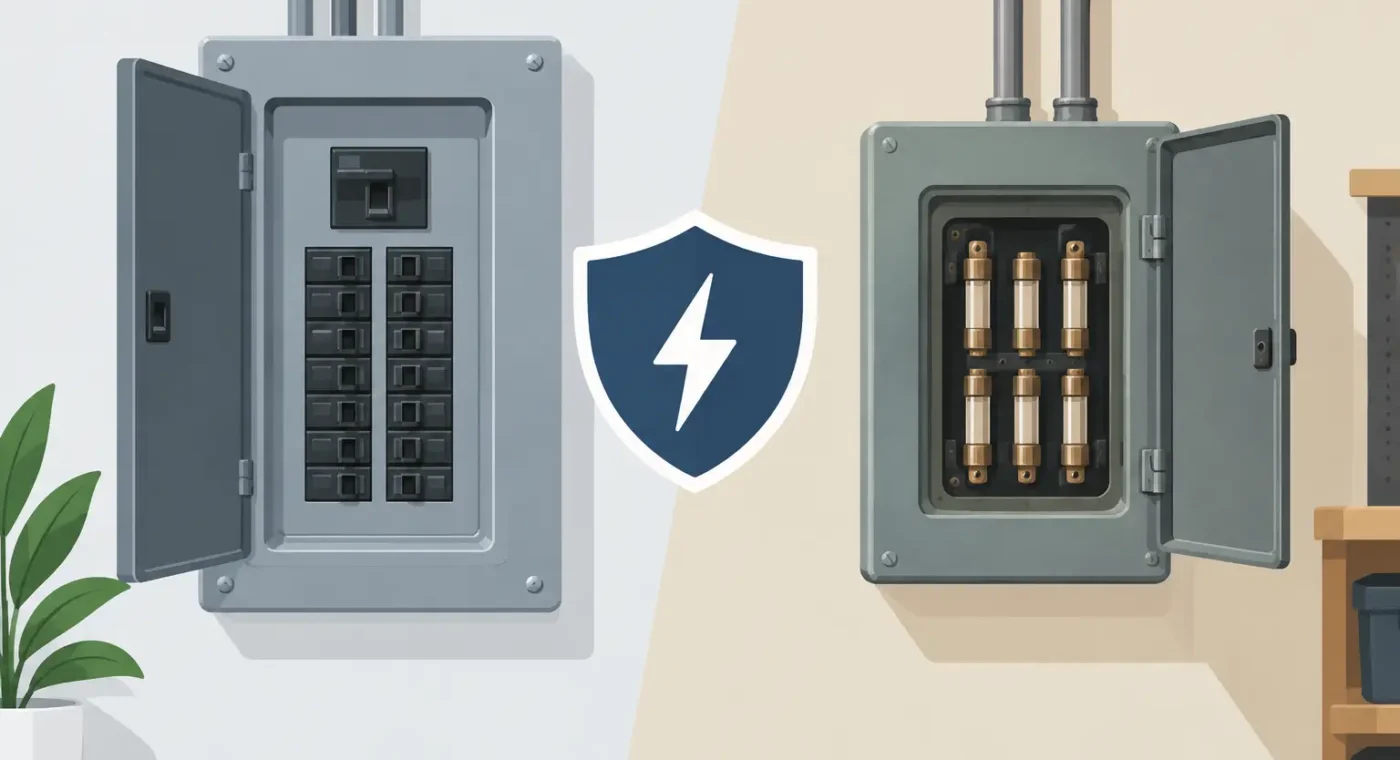
Both systems protect wiring from overheating when a circuit is overloaded or develops a fault. They do the same basic job, but they interrupt power in different ways.
A fuse box uses screw-in or cartridge fuses. Inside each fuse is a metal element designed to melt when too much current passes through it. Once it blows, that fuse must be replaced with another fuse of the correct type and rating before the circuit can operate again.
A breaker panel uses switches called circuit breakers. When a circuit overloads or faults, the breaker trips to the off position. After the cause is addressed, the breaker can usually be reset by moving it fully off and then back on. It does not need to be replaced every time it trips.
That resettable function is one reason breaker panels are standard in most modern properties. More importantly, modern panels are generally better suited to current electrical loads, newer safety devices, and future expansion.
A fuse box is not automatically unsafe
Age alone does not prove an electrical system is dangerous. A properly installed fuse box with correctly sized fuses may continue to serve a small, low-demand property. However, it should be evaluated carefully when the property has undergone renovations, added major appliances, changed commercial equipment, or experienced recurring electrical issues.
The risk often comes from improper modifications. For example, installing a fuse with a higher amp rating than the circuit wiring can safely handle may stop the fuse from blowing, but it can allow the wires to overheat. Using pennies or other metal objects in place of fuses is extremely dangerous and requires immediate professional attention.
Why Breaker Panels Usually Make More Sense Today
A breaker panel is usually the more practical choice for homeowners, landlords, and business operators because it offers better convenience, capacity, and upgrade options. When a breaker trips, it gives you a visible clue about which circuit has a problem. The panel can also be labeled clearly, making it easier to identify the circuit serving a kitchen, HVAC unit, office area, or appliance.
Modern breaker panels can support specialized protection that older fuse systems typically cannot accommodate as easily. Ground-fault circuit interrupter protection helps reduce electrical shock hazards in locations such as bathrooms, kitchens, garages, outdoor areas, and utility spaces. Arc-fault circuit interrupter protection is designed to detect certain dangerous arcing conditions that can lead to electrical fires.
For commercial properties, panel capacity matters even more. A restaurant, rental property, retail space, or office may add refrigeration, cooking equipment, dedicated HVAC systems, point-of-sale equipment, or additional outlets over time. A crowded, outdated panel can make maintenance harder and limit the ability to add properly protected circuits.
A breaker panel also provides a better foundation for upgrades such as an electric water heater, central air conditioning, heat pump, hot tub, workshop equipment, solar equipment, or EV charging. That does not mean every property needs the largest panel available. The right size depends on a professional load calculation, the service feeding the building, and your actual plans for the property.
Safety Signs That Call for an Electrical Inspection
Do not wait for a complete power failure to take electrical concerns seriously. Electrical systems often provide warning signs before a serious failure occurs. Arrange an inspection if you notice any of the following:
- Fuses blow repeatedly or breakers trip frequently.
- Lights dim or flicker when an appliance or HVAC system starts.
- The panel feels hot, smells burnt, buzzes, or shows corrosion.
- You rely on extension cords or power strips because there are not enough outlets.
- A fuse box contains oversized fuses, adapters, or makeshift repairs.
- You are planning a renovation, appliance upgrade, EV charger, or new commercial equipment.
A breaker that trips once may simply be doing its job after a temporary overload. A breaker that trips again and again is different. Resetting it repeatedly without finding the cause can mask problems such as an overloaded circuit, damaged wiring, failing appliance, loose connection, or short circuit.
Likewise, never remove a panel cover or replace a fuse if you are unsure of the correct procedure. The main service components inside an electrical panel can remain energized even when individual breakers are off. This work should be handled by a licensed electrician with the proper testing equipment and safety practices.
When Repair Is Enough and When an Upgrade Is Better
The best choice is not always a full replacement. If a breaker panel is relatively modern, correctly sized for the property, and in good condition, a licensed electrician may be able to solve the problem by replacing a faulty breaker, correcting a loose connection, adding a dedicated circuit, or improving panel labeling.
A fuse box can sometimes be serviced as well, particularly where the electrical demand is modest and the equipment is in sound condition. Still, service may only be a short-term solution if the system has no spare capacity, lacks modern grounding and safety protection, or cannot meet current electrical needs.
An upgrade becomes the stronger long-term decision when the existing equipment is damaged, overcrowded, obsolete, improperly altered, or unable to support planned loads. Property owners should also consider an upgrade when insurance requirements, a property sale, or renovation work brings an outdated electrical system into focus.
For landlords and commercial operators, the cost of downtime deserves attention. A panel failure can affect tenant comfort, refrigeration, lighting, security systems, point-of-sale equipment, and daily operations. Addressing known limitations proactively is often less expensive than handling an emergency shutdown, product loss, or tenant complaint later.
What to Expect From a Professional Panel Assessment
A reliable electrical assessment starts with more than a quick look at the box. The electrician should inspect the panel condition, breaker or fuse types, wiring condition, grounding and bonding, signs of overheating, available capacity, and the electrical demands of major equipment.
They may ask practical questions: Has the air conditioner been replaced recently? Are you adding an electric range or water heater? Do certain appliances cause lights to dim? Does your business plan to add equipment or extend operating hours? These details help determine whether the issue is a single circuit problem or a service-capacity problem.
You should receive a clear explanation of the findings and recommended options. A straightforward repair may be appropriate, or the electrician may recommend a panel replacement, service upgrade, dedicated circuits, surge protection, or updated safety devices. Transparent pricing and a written scope of work help you compare the immediate cost with the value of preventing future interruptions.
Choosing the Right Solution for Your Property
For most properties, the breaker panel vs fuse box question comes down to electrical demand, condition, safety, and future plans. A well-maintained fuse box may not require instant replacement, but it deserves careful review if your property depends on modern appliances or has recurring electrical concerns.
A breaker panel is generally the better fit for a growing household, a renovated rental, or a business that needs dependable power and room to expand. It offers easier resets, better support for modern protection, and a clearer path for adding circuits safely.
If your panel is warm, noisy, overloaded, or difficult to trust, schedule a professional assessment before the next tripped circuit interrupts your comfort or operations. EAAIRS Services and Repair Ltd. can help identify the cause, explain the practical options, and restore safe, dependable power with clear recommendations and responsive service.