
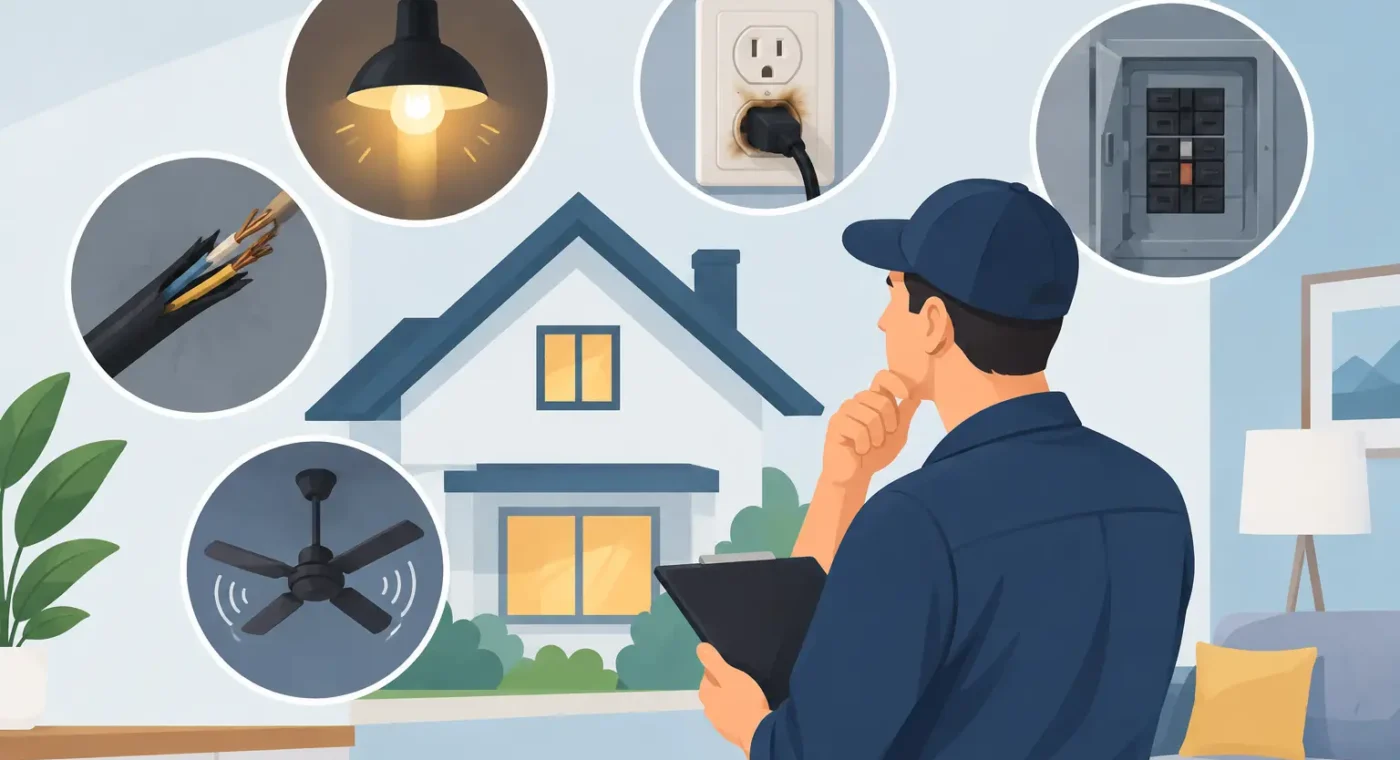
A breaker that trips once after a storm may not mean much. A breaker that trips repeatedly while normal appliances are running is a different story. The best signs of hidden electrical problems are often small changes in how your home or business operates – until they become an outage, damaged equipment, or a serious safety risk.
Electrical issues can develop behind walls, above ceilings, inside panels, and at outlets that appear perfectly normal from the outside. Homeowners, landlords, property managers, and business operators do not need to diagnose the wiring themselves. They do need to recognize when a pattern calls for a licensed electrician.
10 Best Signs of Hidden Electrical Problems
1. Breakers trip repeatedly
Circuit breakers are designed to shut off power when a circuit is overloaded or unsafe. One trip can happen when too many high-demand items run on the same circuit, such as a space heater, microwave, and coffee maker. If the same breaker keeps tripping after you reduce the load, the cause may be a damaged wire, loose connection, failing breaker, or an appliance drawing more current than it should.
Do not keep resetting a breaker just to restore power. Repeated resets can allow a developing problem to worsen. A professional can determine whether the issue is in the panel, the circuit wiring, or a connected appliance.
2. Lights flicker, dim, or brighten unexpectedly
A light that flickers only when its bulb is loose is usually a simple fix. Flickering that affects several lights, happens in multiple rooms, or appears when major equipment starts up deserves prompt attention.
For example, lights may dim briefly when an air conditioner or refrigerator compressor starts. A slight, occasional dip can be normal in some properties. Frequent dimming, pronounced flickering, or lights that become unusually bright may point to a loose neutral connection, overloaded circuit, or service issue. In a commercial space, these fluctuations can also affect computers, refrigeration, point-of-sale systems, and sensitive kitchen equipment.
3. Outlets or switches feel warm
Wall plates, switches, and outlets should not feel hot during ordinary use. A little warmth at a device charging area may come from the charger itself, but warmth in the outlet, switch plate, or plug is not something to ignore.
Heat often means resistance, and resistance can develop when wiring connections are loose, components are worn, or a circuit is carrying more power than it should. Turn off use of that outlet or switch and arrange an inspection. If you see smoke, sparks, discoloration, or melting plastic, shut off power at the breaker if it is safe to do so and seek urgent electrical help.
4. You notice burning odors or buzzing sounds
A persistent burning smell near an outlet, electrical panel, fixture, or appliance can indicate overheating insulation or arcing. The odor may be faint at first and disappear after a few minutes, which is why it is easy to dismiss. It should still be investigated.
Buzzing, crackling, or sizzling from a wall, panel, or switch can also signal a loose connection or electrical arcing. Modern electrical systems should operate quietly. Never open a panel or remove outlet covers to look for the source yourself. Shut off the affected circuit when possible and call a licensed technician.
5. Outlets are loose, discolored, or unreliable
A plug that falls out of an outlet, an outlet with a cracked faceplate, or a receptacle that only works when a cord is held at a certain angle may seem like a minor inconvenience. It can also create poor contact and heat buildup.
Brown marks, yellowing, scorch marks, or melted plastic are more urgent warning signs. In rental properties and commercial buildings, these issues should be addressed quickly because high daily use accelerates wear. Replacing a visible outlet may be part of the solution, but the wiring behind it also needs to be checked.
6. You rely on extension cords or power strips for everyday power
Extension cords are intended for temporary use. When a room depends on power strips and extension cords every day, it often means the property does not have enough properly located outlets for current demand.
This is common in older homes, offices that have added workstations, and commercial kitchens where new equipment has been introduced over time. The risk depends on the equipment involved. A power strip for phone chargers is different from one serving heaters, microwaves, refrigerators, or commercial appliances. A qualified electrician can recommend dedicated circuits, additional outlets, or panel upgrades based on the actual load.
7. Appliances perform inconsistently
Electrical problems do not always begin with a dead outlet. A dryer that takes longer to run, a dishwasher that loses power, an oven that heats unevenly, or an air conditioner that shuts down unexpectedly may have an appliance fault, an electrical supply problem, or both.
This is where accurate diagnosis matters. Replacing an appliance without testing its circuit can leave the real issue unresolved. Likewise, electrical work alone may not solve a failing appliance component. A multi-trade service provider can help identify which system is responsible and reduce unnecessary downtime.
8. GFCI outlets will not reset or trip without a clear reason
Ground-fault circuit interrupter, or GFCI, outlets are commonly installed in bathrooms, kitchens, garages, laundry rooms, outdoors, and other areas where moisture is present. They are designed to trip quickly when they detect a ground fault.
A GFCI may trip after exposure to moisture or because of a faulty device plugged into it. But a unit that will not reset, trips repeatedly with nothing connected, or shuts off several downstream outlets may indicate a wiring issue. Avoid bypassing the protection or replacing it with a standard outlet. The safety feature is there for a reason.
9. Your electrical panel shows age, corrosion, or warning signs
The panel is the control center for your property’s electrical system. Rust, corrosion, moisture stains, buzzing, a hot panel door, loose breakers, or labels that no longer match the circuits all warrant professional attention.
Older panels are not automatically unsafe, but age can matter when a property has added central air conditioning, an EV charger, renovated kitchen equipment, extra refrigeration, or other high-demand loads. An inspection can confirm whether the existing capacity is appropriate or whether targeted repairs, new circuits, or an upgrade would be the better investment.
10. You experience shocks, tingling, or unexplained power loss
A tingle from an appliance casing, a switch, or a metal fixture is never normal. Even a mild sensation can indicate improper grounding, damaged wiring, or a fault in connected equipment. Stop using the item and have it evaluated.
Unexplained power loss in one room, part of a building, or a group of outlets can be equally concerning, especially if it returns on its own. Intermittent faults are often harder to find because they can disappear before help arrives. Make note of which circuits are affected, what equipment was running, and when the problem occurred. Those details help speed up diagnosis.
When an Electrical Problem Needs Immediate Help
Some situations should not wait for a convenient appointment. Burning odors, smoke, visible sparks, a hot electrical panel, repeated shocks, water near electrical equipment, or a loss of power affecting essential safety systems require immediate action. Move people away from the area, avoid touching damaged equipment, and shut off power only if you can do so safely.
For landlords and commercial operators, act quickly when electrical trouble affects refrigeration, ventilation, security systems, fire-related equipment, or critical business operations. Fast response protects people, inventory, equipment, and tenant or customer confidence.
What a Professional Electrical Inspection Can Find
Hidden electrical problems rarely have one universal cause. A licensed technician can test circuits, inspect connections, evaluate panel condition, check grounding and GFCI protection, and identify whether an appliance is contributing to the problem. The right repair may be as straightforward as replacing a worn outlet, or it may involve correcting a damaged circuit or adding capacity for modern equipment.
EAAIRS Services and Repair Ltd. provides reliable electrical diagnosis for homes and commercial properties, with clear recommendations, transparent pricing, and responsive support when comfort or operations are on the line.
The safest next step is not to wait for a small warning sign to become a major disruption. If something feels hot, sounds unusual, trips repeatedly, or behaves inconsistently, schedule a professional inspection while the problem is still manageable.