
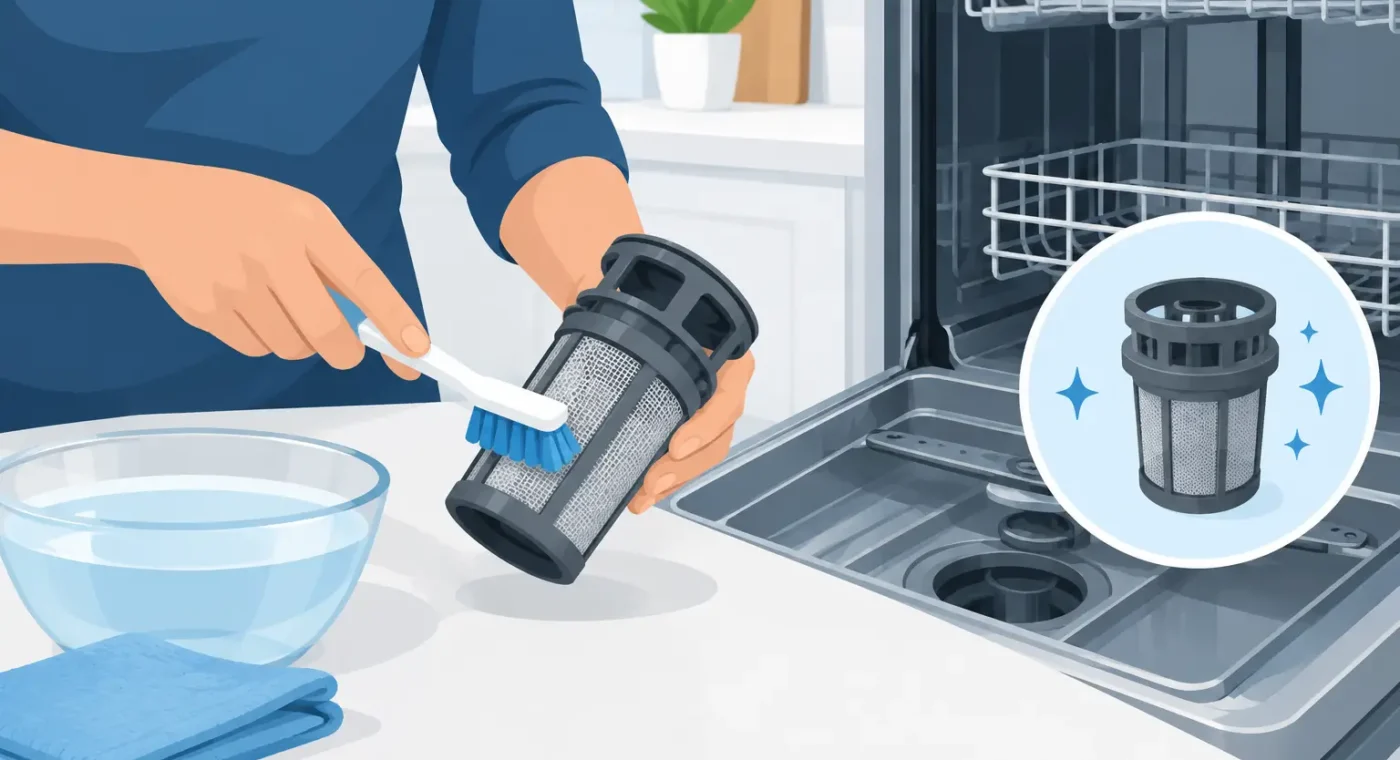
A dishwasher that leaves grit on glasses, smells unpleasant after a cycle, or drains slowly is often telling you one simple thing: the filter needs attention. Knowing how to clean dishwasher filter parts correctly can restore washing performance without risking damage to the appliance or creating a bigger drainage problem.
For most homeowners, this is a manageable maintenance task that takes less than 20 minutes. The key is to work gently, use the right cleaning method for the buildup you see, and recognize when a dirty filter is not the only issue.
Why Your Dishwasher Filter Matters
The dishwasher filter catches food particles, grease, and debris before they can circulate back onto dishes or move deeper into the drain system. When it becomes clogged, water cannot move as freely through the machine. That can lead to poor cleaning results, standing water in the bottom of the tub, unpleasant odors, longer cycles, and extra strain on the pump.
Most modern dishwashers have a removable manual-clean filter near the bottom spray arm. Some older models use a self-cleaning filtration system or food disposer instead. Before removing anything, check your owner’s manual or look for a round or cylindrical filter assembly in the dishwasher floor. If the part does not turn or lift out easily, do not force it.
Regular filter cleaning is especially worthwhile in busy homes, rental properties, and commercial break rooms where the dishwasher runs frequently. It is a small step that helps prevent the kind of disruption that turns a routine appliance into an urgent repair call.
How to Clean Dishwasher Filter Step by Step
1. Turn off the dishwasher and empty the lower rack
Start with the dishwasher off and cooled down. Pull out the lower rack and set it aside so you have clear access to the bottom of the tub. If there is standing water, remove as much as you can with a cup and a towel before taking out the filter.
Look for the filter assembly below or near the lower spray arm. In many models, the main filter twists counterclockwise and lifts out. A flat mesh screen may sit underneath it. Take a moment to notice how the pieces fit together. A quick photo with your phone can make reassembly easier.
2. Remove loose debris carefully
Hold the filter over a trash can and tap out loose food particles. Check for labels, broken glass, toothpicks, small bones, pieces of plastic, or other debris that may be caught in the mesh. Wear gloves if you cannot clearly see what is inside.
Never reach into the sump area below the filter without checking for sharp objects. Broken glass can settle at the bottom of the dishwasher and remain hidden under cloudy water or food residue.
3. Rinse with warm water and a soft brush
Rinse the filter under warm running water. Use a soft toothbrush, nylon dish brush, or non-abrasive sponge to clean the mesh and remove residue from the plastic frame. Mild dish soap is usually enough for normal buildup.
Pay close attention to the fine screen. This is where grease and tiny particles collect. If water does not flow through the mesh easily, keep rinsing and brushing gently until the openings are clear. Avoid steel wool, wire brushes, or harsh scrubbing pads, which can tear the mesh or damage the filter surface.
4. Treat grease or mineral buildup when needed
A filter coated in greasy film may need a longer soak in warm, soapy water. Let it sit for 10 to 15 minutes, then brush it again and rinse thoroughly. If you see white, chalky mineral deposits, a short soak in a mixture of warm water and white vinegar can help loosen the buildup.
Do not use bleach, drain cleaner, oven cleaner, or highly caustic products on dishwasher filters. These chemicals can damage plastic, rubber seals, and metal components. They can also leave residue behind that does not belong in an appliance designed to wash dishes.
5. Clean the filter housing before reinstalling it
With the filter removed, wipe the filter housing and surrounding area with a damp cloth. Pick up loose debris from the bottom of the tub, but do not pour large amounts of water into the opening. Check the lower spray arm for visible food particles that may be blocking its holes.
If the dishwasher has a flat screen beneath the cylindrical filter, rinse that piece as well. It may lift out directly, or it may be secured by the main filter assembly. Follow the placement used by your model rather than forcing parts that appear fixed.
6. Reinstall the filter securely
Place every filter piece back in its original position. Most cylindrical filters need to be turned clockwise until they lock. The filter should sit flat and feel secure, not loose or tilted.
Running the dishwasher without a properly installed filter can allow debris into the pump area. That can create a much more expensive issue than a dirty filter, so this final step matters.
How Often Should You Clean a Dishwasher Filter?
For an average household, cleaning the filter once a month is a reliable starting point. If you rinse dishes thoroughly, run the dishwasher only a few times a week, and do not notice odors or residue, you may be able to clean it every two to three months.
More frequent cleaning is a better choice when the dishwasher runs daily, dishes go in with heavy food residue, or the home has hard water. Property managers may also want filter cleaning added to turnover or preventive maintenance checklists. It is a simple way to reduce avoidable service calls and protect appliances between tenants.
The best schedule depends on use, not just the calendar. A quick visual inspection takes seconds. If the filter looks greasy, feels coated, or has visible particles trapped in the mesh, clean it.
Signs the Filter Is Not the Only Problem
Cleaning the filter often improves dishwasher performance, but it will not solve every drainage or cleaning complaint. If water remains in the bottom after you clean and reinstall the filter, the issue may involve the drain hose, air gap, garbage disposal connection, drain pump, or plumbing line.
Poor cleaning can also come from clogged spray arms, a failed circulation pump, incorrect detergent use, low water temperature, or a worn door seal. A dishwasher that makes grinding noises, leaks, trips a breaker, displays an error code, or stops mid-cycle needs more than routine maintenance.
Do not keep restarting a dishwasher that is failing to drain or making unusual mechanical sounds. Repeated cycles can leave water where it should not be and may put additional stress on the pump and motor.
When to Call for Dishwasher Repair
Professional help is the practical next step when the filter is clean but the same problem returns. This is particularly true if you find recurring debris in the filter, because it may indicate that water is not circulating or draining correctly.
A qualified appliance technician can inspect the filter system, pump, hose, spray arms, electrical connections, and related components to identify the actual cause. For landlords and commercial operators, fast diagnosis is often less costly than dealing with repeated downtime, dissatisfied tenants, or interrupted kitchen operations.
EAAIRS Services and Repair Ltd. provides reliable appliance service for problems that go beyond basic cleaning, with a focus on clear diagnosis, fair pricing, and restoring normal operation quickly. If a clean filter does not bring your dishwasher back to life, timely service can prevent a minor performance issue from becoming a larger repair.
A clean filter is one of the easiest ways to keep dishes cleaner and your dishwasher working with less strain. Make it part of regular kitchen maintenance, and treat persistent odors, drainage problems, or unusual noises as a reason to get the appliance checked before the next busy cycle.