
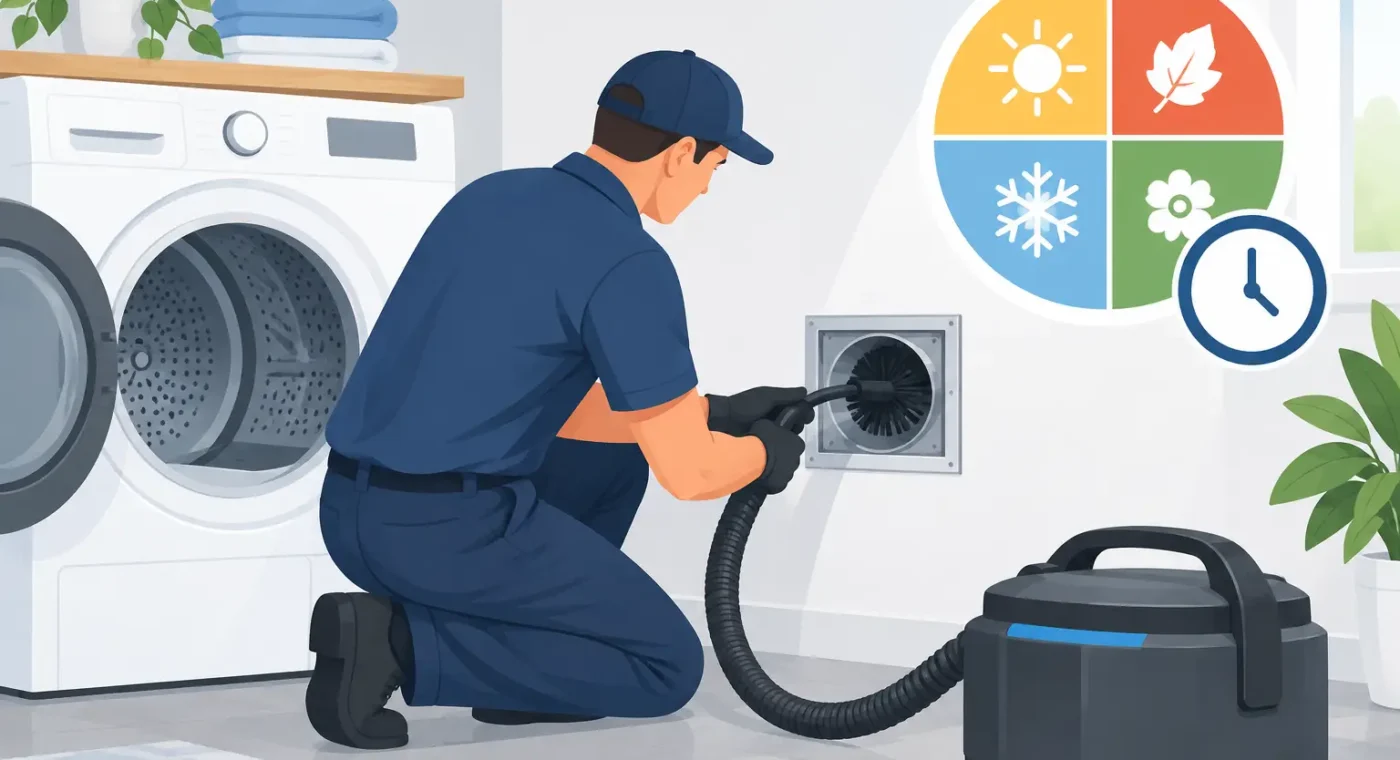
A dryer that suddenly needs two or three cycles to dry a normal load is not just frustrating. It can signal a restricted vent line that is wasting energy, straining the appliance, and creating a preventable fire risk. The best time for dryer vent cleaning is before those warning signs become a disruption – usually as part of a planned annual maintenance routine, timed around how heavily the dryer is used.
For homeowners, landlords, and commercial operators, scheduling service before the busy season is often easier and less expensive than dealing with an overheated dryer, a tenant complaint, or unexpected equipment downtime. A clean vent helps the dryer move hot, moist air outdoors as intended, so clothes dry more efficiently and the appliance does not have to work harder than necessary.
The Best Time for Dryer Vent Cleaning Is Before Peak Use
For most households, professional dryer vent cleaning once a year is a sensible baseline. Spring or early fall is often a practical time to schedule it. In spring, cleaning removes lint and debris accumulated during colder months, when families may run more laundry loads and keep windows closed. In early fall, it prepares the system for heavier indoor laundry use during the cooler season.
There is no single calendar date that works for every property. The right schedule depends on the number of loads, the length and layout of the duct, the type of dryer, and whether the vent serves a home or a commercial operation. A short, straight vent serving a lightly used household dryer may need only annual attention. A long duct run with several turns can collect lint faster and deserves closer monitoring.
The key is to book cleaning while the dryer is still operating normally. Waiting until it stops drying effectively turns routine maintenance into an urgent repair call.
Why fall is a popular choice
Fall works well for many properties because laundry use often rises as outdoor activities slow down, school schedules return, and heavier clothing enters the rotation. Cleaning before that demand increases helps reduce the chance of a clogged vent interrupting a busy week.
It is also a good time for property managers to address maintenance between seasonal inspections. Scheduling units in advance gives tenants notice and helps avoid last-minute access issues.
Why spring can be just as effective
Spring cleaning season creates a natural reminder to take care of systems that are out of sight, including dryer ducts. The dryer may have been used more frequently for blankets, towels, and cold-weather clothing, and lint can build up gradually without obvious symptoms.
For homes in areas with wet, cold, or windy winters, a spring inspection can also identify exterior vent hood issues. A damaged flap, bird nest, pest activity, or outdoor debris can restrict airflow even when the indoor lint screen is cleaned regularly.
When You Should Not Wait for Your Scheduled Cleaning
Annual service is a guideline, not permission to ignore a problem. If the dryer shows signs of restricted airflow, arrange an inspection as soon as possible. Continuing to operate it can increase utility costs, shorten the appliance’s working life, and allow lint to build up further inside the duct.
Common warning signs include:
- Clothes take longer than one normal cycle to dry.
- The dryer or laundry room feels unusually hot during operation.
- A burning smell or hot, musty odor appears while the dryer is running.
- The exterior vent flap does not open properly when the dryer is on.
- Lint accumulates around the dryer, behind the appliance, or near the exterior vent outlet.
- The dryer shuts off early, displays overheating messages, or needs frequent resets.
A blocked vent is not always the only cause of these symptoms. The appliance itself may have a failed heating component, blower issue, sensor problem, or damaged transition hose. That is why a professional assessment matters. It confirms whether the problem is in the dryer, the vent system, or both, so the right repair is made the first time.
How Often Should Different Properties Clean Their Dryer Vents?
A family that runs several loads every day produces far more lint than a one- or two-person household. Homes with pets also tend to see faster buildup because pet hair mixes with lint and can cling inside ducts. If you have a large household, frequent loads, long ductwork, or a dryer located far from an exterior wall, cleaning every six to nine months may be the better choice.
Rental properties need a proactive approach. Tenants may clean the lint screen inconsistently, and property owners cannot always see early performance changes. Annual dryer vent cleaning, documented as part of property maintenance, helps protect the building and provides a clear service record. Multi-unit buildings may require a customized schedule based on shared duct layouts, access points, and equipment use.
Commercial laundry operations, salons, gyms, hospitality properties, and businesses that process linens should schedule inspections and cleanings more frequently. In these settings, a dryer outage can affect daily operations quickly. Depending on volume, quarterly or semiannual cleaning may be appropriate. A technician can recommend an interval based on actual lint buildup and the condition of the duct system rather than relying on a generic rule.
What a Professional Dryer Vent Cleaning Should Address
Cleaning the lint screen is necessary, but it is not the same as cleaning the dryer vent. The lint screen catches only part of the material released during drying. Fine lint can pass through, settle in the transition hose and ductwork, and collect at bends or at the exterior termination.
A thorough service should focus on the full airflow path, not just the area behind the dryer. That includes inspecting the connection from the appliance, clearing accessible ductwork, checking the exterior outlet, and confirming that air is moving freely outside while the dryer operates. The technician should also look for crushed, disconnected, excessively long, or unsafe vent materials that can reduce airflow.
This is especially valuable after a new dryer installation, a renovation, or a move. Appliances are often pushed too close to the wall, which can pinch the vent connection. Remodeling work can introduce dust into ducts, while exterior changes can obstruct the outlet. A quick inspection after these projects can prevent a small installation issue from becoming an ongoing performance problem.
Simple Habits Between Professional Visits
Regular cleaning works best when paired with good daily habits. Clean the lint screen before every load, and wash the screen occasionally with warm water and mild soap if dryer sheets or fabric softener leave a film that limits airflow. Let it dry fully before reinstalling it.
Keep the area around the dryer clear of boxes, clothing, cleaning supplies, and other combustible materials. Check the outdoor vent hood from time to time. It should open while the dryer runs and close afterward without being blocked by leaves, snow, nests, or landscaping.
Avoid using the dryer if you smell burning, notice smoke, or find that the machine is extremely hot. Turn it off and arrange service. Those are not issues to test with another cycle.
Plan Service Before It Becomes an Emergency
The best maintenance schedules are predictable, but they are also flexible. Put dryer vent cleaning on the calendar once a year, then move the appointment sooner if usage rises or warning signs appear. For landlords and business owners, creating a recurring maintenance plan is often the simplest way to avoid missed service and unexpected downtime.
EAAIRS Services and Repair Ltd. can inspect dryer vent performance, identify airflow restrictions, and help determine a cleaning schedule that fits your property and usage level. A professional visit gives you a clearer picture of both the dryer and the duct system, with practical recommendations instead of guesswork.
A clean dryer vent is one of those maintenance tasks that is easy to postpone because it is mostly hidden. Scheduling it before the dryer starts struggling keeps laundry moving, helps protect the equipment, and gives your household or business one less urgent problem to manage.