
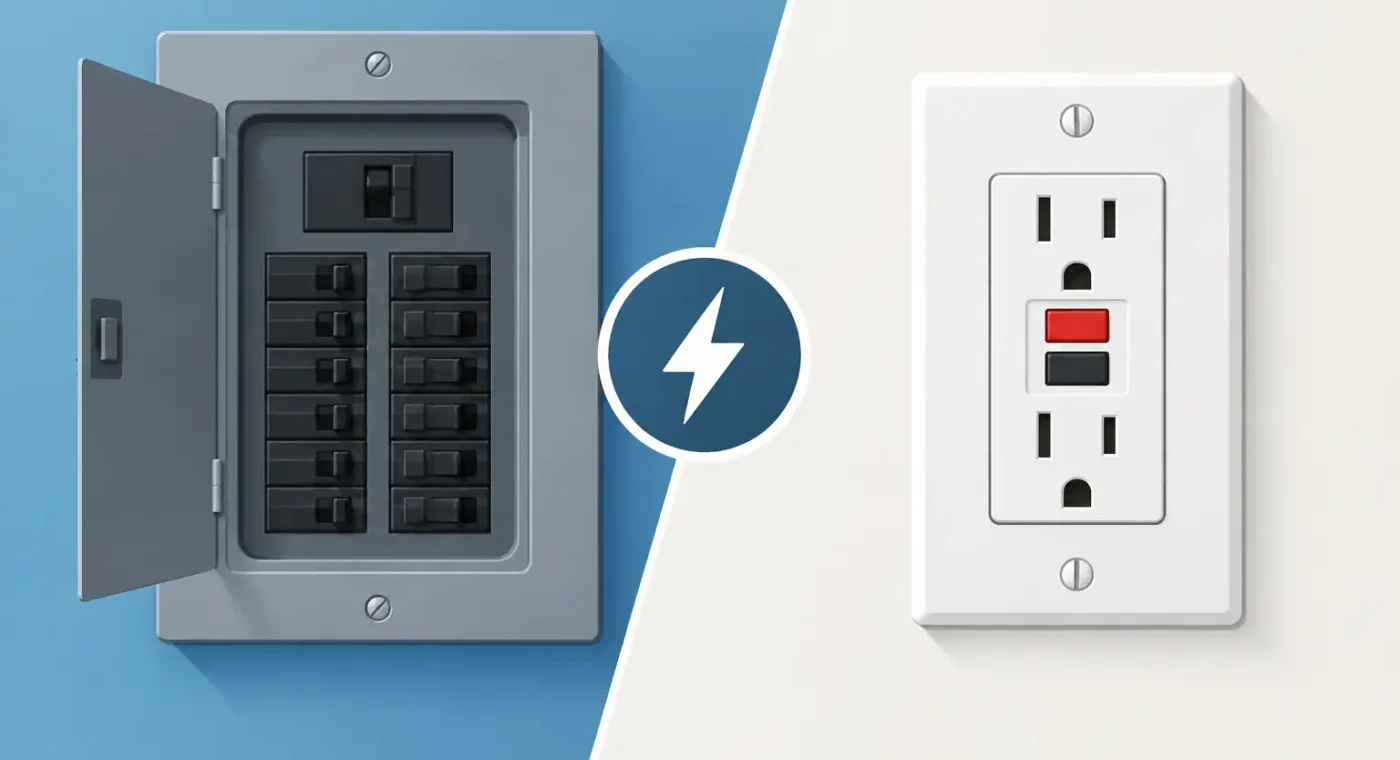
A tripped bathroom outlet and a tripped breaker can look like the same problem: the power is off. But in a circuit breaker vs GFCI outlet situation, the device that shut off – and the reason it shut off – matters. One protects the wiring in your walls. The other is designed to protect people from dangerous electrical shock. Knowing the difference can help homeowners, landlords, and property managers respond safely and avoid turning a small electrical issue into a larger repair.
Circuit Breaker vs GFCI Outlet: The Main Difference
A circuit breaker is located in the electrical panel. Its primary job is to protect the circuit wiring from overheating when there is too much electrical current. A GFCI outlet, short for ground-fault circuit interrupter, is usually installed at the point of use, such as a kitchen, bathroom, garage, laundry area, or outdoor location. Its job is to shut off power quickly when it detects electricity taking an unintended path, including through a person.
Both devices can interrupt power, but they do not provide the same protection. A standard circuit breaker responds to overloads and short circuits. A GFCI responds to a ground fault, which can occur when electricity leaks from the circuit instead of returning through its intended path.
For example, a space heater drawing more power than the circuit can handle may trip the breaker. A hair dryer dropped near a sink may cause a GFCI to trip, even if the breaker remains on. That fast response is why GFCI protection is required in many locations where water, moisture, concrete, or outdoor exposure raise the risk of shock.
What a Circuit Breaker Protects
Every branch circuit in a typical home or commercial property is supplied through a breaker in the electrical panel. Breakers are sized for the wiring and expected electrical load of that circuit. Common residential examples include 15-amp circuits for lighting and general outlets and 20-amp circuits for kitchens, garages, and dedicated equipment.
When too many devices run at once, the current can exceed what the circuit is designed to carry. The breaker trips before the wiring overheats enough to damage insulation or create a fire risk. It will also trip during a short circuit, such as when a hot wire contacts a neutral wire or grounded metal component.
A breaker trip is not automatically a sign that the breaker has failed. It may mean the circuit was overloaded by appliances, tools, or equipment. However, repeated trips deserve professional attention. Resetting a breaker again and again without identifying the cause can hide damaged wiring, a failing appliance, loose connections, or an overloaded circuit.
When a breaker is likely the issue
If several outlets, lights, or appliances in the same area lose power at once, the problem may be a tripped breaker. Check the electrical panel for a breaker that is in the middle position or marked as tripped. Move it fully to OFF before returning it to ON.
If it immediately trips again, leave it off. Do not hold it in place, replace it with a larger breaker, or attempt panel repairs yourself. The breaker is responding to a condition that needs diagnosis.
What a GFCI Outlet Protects
A GFCI outlet compares the electricity flowing out on the hot wire with the electricity returning on the neutral wire. If it senses even a small difference, it disconnects the circuit in a fraction of a second. That imbalance can signal that electricity is flowing somewhere unsafe, such as through water, a damaged cord, an appliance casing, or a person.
Most GFCI receptacles have TEST and RESET buttons on the face. A GFCI outlet may protect only itself, or it may protect several standard outlets downstream on the same circuit. This is why an outlet in a garage, bathroom, basement, exterior wall, or utility room can stop working even though there is no visible reset button on that outlet.
GFCIs are commonly required in bathrooms, kitchens near sinks, laundry areas, garages, unfinished basements, crawl spaces, outdoors, and other locations defined by local electrical code. Exact requirements vary by property type, renovation scope, and jurisdiction, so a licensed electrician should confirm what applies to your installation.
When a GFCI outlet is likely the issue
If a single outlet or a small group of outlets has no power while the breaker remains on, look for a tripped GFCI. Check nearby rooms and less obvious locations. A bathroom GFCI, for example, may protect outlets in another bathroom, a garage, or an exterior area.
Press RESET firmly once. If it resets and stays on, the trip may have been caused by moisture, a temporary appliance fault, or a plugged-in device with a damaged cord. If it will not reset, immediately trips again, feels warm, shows discoloration, or makes a buzzing sound, stop using the circuit and schedule an electrical inspection.
Why One Does Not Replace the Other
A common misunderstanding is that installing a GFCI outlet eliminates the need for a circuit breaker. It does not. GFCI protection is not designed to protect wiring from overloads and short circuits. Likewise, a standard breaker does not reliably provide the rapid ground-fault protection needed in wet or high-risk locations.
The safest electrical systems use both. The breaker protects the branch circuit and its conductors. The GFCI protects people from specific shock hazards at the outlet or elsewhere on the protected circuit.
There are also GFCI breakers, which combine circuit overload protection with ground-fault protection in the panel. These can be useful when protecting an entire circuit, when outlet access is limited, or when local code requires a particular arrangement. They are not automatically the best choice in every property. A GFCI receptacle can make testing and resetting more convenient, while a GFCI breaker can protect every outlet on that branch circuit. The right option depends on the circuit layout, equipment served, code requirements, and the condition of the existing electrical system.
Common Problems and What They Can Mean
Electrical protection devices trip for a reason. Sometimes that reason is simple, such as too many countertop appliances on one kitchen circuit. Other times, it points to a problem that should not be ignored.
A breaker that trips when an air conditioner, microwave, dryer, or commercial appliance starts may indicate an overloaded circuit, a failing component, incorrect breaker sizing, or a dedicated circuit that is needed. A GFCI that trips only when one appliance is plugged in may reveal a fault in that appliance or its cord. A GFCI that trips during rain may point to moisture in an outdoor outlet, cover, box, or underground connection.
Age can matter as well. Older outlets may be worn, improperly wired, or lack the protection required for current use. Older panels can have labeling problems, loose connections, corrosion, or capacity limits that make adding modern appliances difficult. The visible trip is often just the symptom. Accurate diagnosis is what prevents repeat shutdowns and unsafe temporary fixes.
What You Can Safely Check First
Before calling for service, unplug portable appliances from the affected outlets. Then check whether the breaker has tripped and whether any GFCI outlet nearby needs to be reset. Keep the area dry, especially around bathrooms, kitchens, garages, and outdoor outlets.
Do not remove outlet covers, open the electrical panel, or use a higher-amp breaker to stop nuisance trips. Never reset a device that has been exposed to flooding, visible burning, melted plastic, or a strong electrical odor. Those conditions require prompt professional service.
For rental properties and commercial spaces, document which equipment was running when the outage occurred. That detail can shorten diagnosis and reduce downtime. A restaurant, office, retail location, or multifamily property may also have multiple panels or dedicated circuits, making professional troubleshooting especially valuable.
When to Call a Licensed Electrician
Call for electrical service when a breaker or GFCI repeatedly trips, outlets lose power without an obvious cause, or a reset will not hold. You should also schedule an inspection if outlets are warm, discolored, loose, sparking, or making unusual sounds.
A licensed technician can test the circuit, identify whether the issue is in the panel, wiring, outlet, or connected equipment, and recommend a code-conscious repair. That may involve replacing a failed GFCI, correcting improper wiring, adding a dedicated circuit, repairing an appliance connection, or upgrading protection at the panel.
When power keeps cutting out, the goal is not simply to get the reset button or breaker back on. The goal is to restore safe, dependable operation. EAAIRS Services and Repair Ltd. can help identify the source of the problem so your home or business can get back to normal with less disruption.