
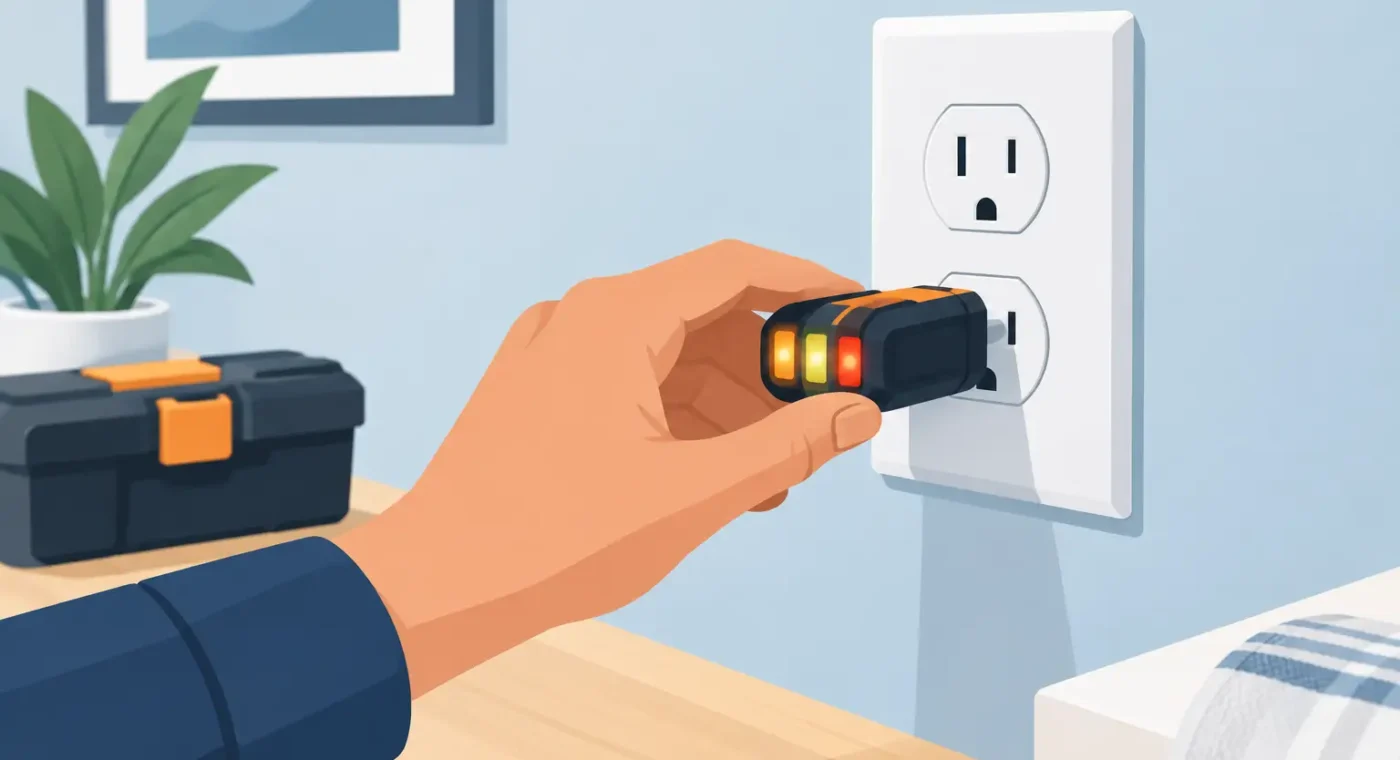
A dead outlet can stop a refrigerator, interrupt a home office, or create a frustrating problem in the middle of a busy workday. Knowing how to test electrical outlet issues helps you identify whether the problem is simple, such as a tripped GFCI, or serious enough to require professional electrical service. The goal is not to repair live wiring yourself. It is to gather useful information safely and know when to stop.
Before you test anything, pay attention to warning signs. An outlet that feels warm, sparks, smells burnt, has discoloration, makes a buzzing sound, or will not hold a plug securely needs prompt attention. Do not continue plugging devices into it to see whether it starts working again. Turn off the circuit at the electrical panel if it is safe to do so, and arrange for a licensed electrician.
Start With the Simple Checks
Many outlet calls have a straightforward cause. Before using a tester, plug in a small lamp, phone charger, or other device you know works. A large appliance is not ideal for this first check because its own cord or internal components may be the problem.
If the device does not turn on, test it in a different outlet. If it works elsewhere, the outlet or circuit is likely at fault. If it does not work anywhere, troubleshoot the device first.
Next, check the electrical panel for a tripped breaker. A breaker may sit slightly out of line with the others rather than moving all the way to the OFF position. To reset it, move the breaker firmly to OFF, then back to ON. If it trips again right away, leave it off. Repeated breaker trips can point to an overloaded circuit, a damaged appliance, loose wiring, or a fault that needs professional diagnosis.
Also look for nearby GFCI outlets. These usually have TEST and RESET buttons and are commonly found in kitchens, bathrooms, garages, laundry areas, basements, and outdoor locations. One GFCI can protect several standard outlets farther down the circuit, sometimes in an entirely different room. Press RESET and test the outlet again. If the GFCI will not reset, or resets and quickly trips, do not force it.
How to Test Electrical Outlet With a Plug-In Tester
A plug-in receptacle tester is the easiest tool for checking a standard three-slot outlet. It has a pattern of indicator lights that can reveal several common wiring conditions, including an open ground, open neutral, open hot, and reversed hot-neutral wiring.
With dry hands and a dry floor, insert the tester fully into the outlet. Read the light pattern using the chart printed on the tester. A normal pattern generally indicates the outlet has power and its basic hot, neutral, and ground connections appear correct.
That result is useful, but it is not a complete electrical inspection. Basic plug-in testers cannot identify every problem. For example, they may not reliably detect a bootleg ground, where wiring has been improperly altered to make an outlet appear grounded. They also cannot determine whether a connection is loose behind the wall or whether the circuit can safely carry the load placed on it.
If the tester shows a fault, avoid removing the outlet cover or attempting to move wires unless you are qualified to do so. Wiring errors can create shock and fire hazards, especially in older homes, remodeled spaces, rental properties, or commercial buildings with heavy equipment loads.
Test the GFCI Function
If the outlet has TEST and RESET buttons, plug in the tester and press TEST. The outlet should shut off, and the tester lights should go out. Press RESET to restore power.
Some plug-in testers also include a GFCI test button. That button can help test GFCI protection on a circuit, but results vary based on the outlet type and circuit setup. If a GFCI does not trip when tested, will not reset, or leaves downstream outlets without power, a licensed electrician should inspect the circuit.
Using a Multimeter Safely
A multimeter can provide more detailed voltage readings, but it involves testing a live outlet. If you are not comfortable working near energized electrical equipment, a plug-in tester is the safer choice. Calling a professional is the right decision when there is any uncertainty.
Set a properly rated multimeter to AC voltage, using a range higher than your expected voltage. Most standard residential outlets in the United States should read approximately 120 volts. The exact reading can vary somewhat based on electrical load and utility supply.
To check voltage, place one probe in the narrow slot, which is typically the hot side, and the other probe in the wider neutral slot. A normal reading is generally close to 120 volts. Keep your fingers behind the insulated probe guards and never allow the metal probe tips to touch each other while they are in the outlet.
You can also measure from the narrow hot slot to the round grounding opening. That should also read close to 120 volts on a properly grounded outlet. A reading from the wide neutral slot to ground should be close to zero.
These checks can help identify a missing hot, neutral, or ground connection, but interpreting unexpected readings is not always simple. Low voltage, intermittent voltage, or voltage that changes when an appliance starts may be related to a loose connection, a shared neutral issue, panel problem, or an overloaded circuit. Those conditions deserve prompt professional attention.
Never use a multimeter on an outlet that is wet, damaged, visibly scorched, or loose in the wall. Do not test an outlet while standing on a damp surface. Do not insert objects other than properly rated test probes into a receptacle.
What Different Outlet Problems Can Mean
An outlet that is completely dead may be connected to a tripped breaker, tripped GFCI, failed receptacle, disconnected wire, or failed connection elsewhere on the circuit. The location matters. If several outlets in one area lose power together, the issue is usually on the shared circuit rather than at each individual outlet.
An outlet that works only sometimes is more concerning. Intermittent power can happen when a wire connection loosens behind the receptacle or at another junction point. You may notice lights flickering, chargers cutting in and out, or a plug working only when held at a certain angle. Stop using that outlet until it has been inspected.
A warm outlet is never normal under ordinary use. A high-wattage appliance can make a plug feel slightly warm, but the outlet faceplate should not be hot. Heat can indicate a loose connection, worn receptacle, undersized wiring, or a circuit carrying more load than it should.
If an outlet has two slots but no grounding opening, it may be an older ungrounded receptacle. Do not assume it is safe simply because it provides power. Updating older outlets may require GFCI protection, a properly installed grounding path, or broader electrical upgrades depending on the wiring condition and local code requirements.
When to Call a Licensed Electrician
A quick reset or simple tester reading can be helpful, but some electrical issues should not become a DIY project. Arrange professional service if you notice burning smells, scorch marks, sparks, buzzing, repeated breaker trips, moisture near an outlet, loose receptacles, or inconsistent power.
The same applies if a GFCI will not reset, a tester indicates reversed polarity or an open ground, or a multimeter produces unusual readings. Property managers and business operators should act quickly when outlets serve refrigeration, office equipment, kitchen appliances, or critical operations. Waiting can turn a small electrical problem into equipment damage, downtime, or a safety risk.
A qualified technician can trace the circuit, inspect connections, test the panel, identify overload conditions, and repair the actual source of the problem rather than replacing an outlet that was never the real issue. EAAIRS Services and Repair Ltd. provides reliable electrical diagnosis for homeowners and commercial properties when fast, professional support is needed.
A working outlet should be quiet, cool, secure, and dependable. If yours is anything less, treat the test as the first step toward a safe repair, not a reason to ignore the warning signs.