
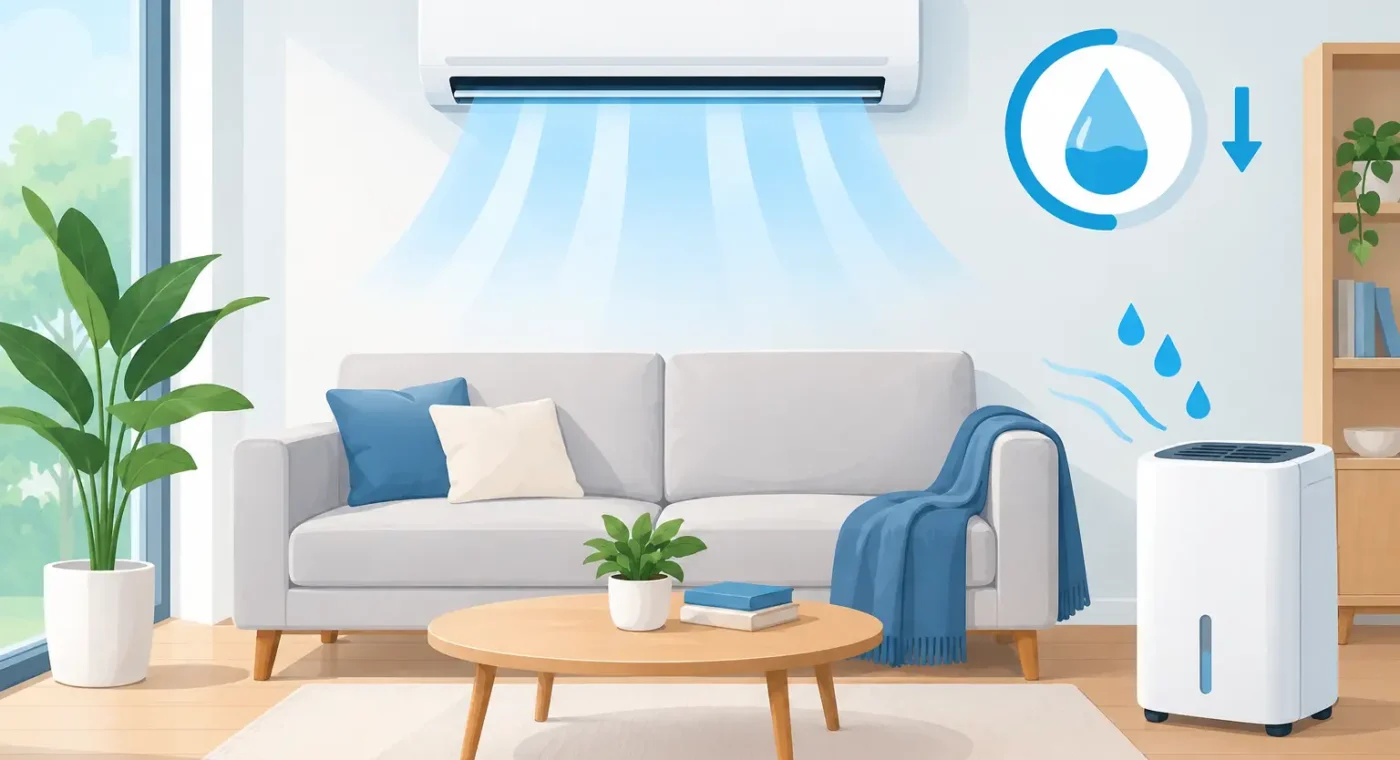
A home can feel sticky at 72 degrees when the air conditioner is cooling but not removing enough moisture. That clammy feeling is more than a comfort issue. Excess indoor humidity can encourage musty odors, window condensation, mold growth, and higher strain on your cooling system. When customers ask about the best ways to reduce AC humidity, the answer usually starts with checking whether the system is sized, set, and draining correctly.
A working air conditioner should cool the air and pull moisture from it during normal operation. If it cannot do both, turning the thermostat lower may not solve the problem. The right fix depends on what is causing the humidity – and some causes need professional attention before they turn into a larger repair.
How Your AC Is Supposed to Remove Humidity
As warm indoor air passes over the AC system’s cold evaporator coil, moisture condenses on the coil and drains away through the condensate line. The cooled, drier air then circulates back through the home. This process works best when the equipment runs long enough, airflow is balanced, and the drain system is clear.
Short cooling cycles are a common reason a house feels humid. If an AC reaches the thermostat setting too quickly, it may shut off before it has time to remove much moisture. This can happen with an oversized system, a thermostat installed in a poor location, or a unit that is operating incorrectly.
For most homes, indoor relative humidity between 30% and 50% is a comfortable target. Readings consistently above 60% deserve attention, especially if you see condensation on windows, smell mildew, or notice damp areas around vents.
Best Ways to Reduce AC Humidity at Home
Use a steady thermostat setting
Constantly lowering the thermostat to chase a damp feeling can increase energy use without addressing the source of the problem. Set a comfortable temperature and allow the system to run normally. During humid weather, a setting around 72 to 76 degrees works for many households, but comfort preferences, insulation, and local conditions all matter.
If your thermostat has a fan setting, use “Auto” rather than “On” in most cases. With the fan set to On, it may continue blowing after the cooling cycle ends. That airflow can re-evaporate moisture from the coil and send it back into the living space. Auto allows the fan to stop with the cooling cycle, helping moisture drain away instead.
Check the air filter and return airflow
A clogged filter restricts airflow across the evaporator coil. When airflow drops, the AC may cool unevenly, freeze up, run longer than necessary, or fail to remove moisture effectively. Check the filter monthly during heavy-use seasons and replace it when it looks dirty or according to the manufacturer’s schedule.
Also make sure return vents and supply registers are open and unobstructed. Furniture, rugs, boxes, and closed interior doors can interfere with balanced circulation. In larger homes or commercial spaces, airflow problems may point to duct leakage, poor duct design, or a blower issue that should be inspected by a qualified technician.
Clear condensate drainage problems quickly
Your AC cannot manage humidity properly if the water it removes has nowhere to go. A blocked condensate drain line, full drain pan, disconnected line, or failed condensate pump can create water damage and shut down some systems.
Signs of a drainage issue include water near the indoor unit, a musty smell, visible overflow, or an AC that stops unexpectedly. Do not ignore these symptoms. Avoid repeatedly resetting a system that is shutting down on a safety switch. The shutoff may be protecting your property from an overflow.
Reduce moisture coming into the building
Sometimes the AC is working, but the home is taking in more moisture than it can reasonably remove. Check for gaps around exterior doors, windows, plumbing penetrations, attic access points, and duct connections. Unsealed leaks allow warm, humid outdoor air inside and make the system work harder.
Daily habits can also raise indoor humidity. Long hot showers, unvented cooking, drying clothes indoors, and running a dryer with a damaged or clogged vent all add moisture to the air. Run bathroom exhaust fans during showers and for a short period afterward. Use the kitchen exhaust fan when cooking. Make sure the dryer vents outdoors and have the duct cleaned if drying times are getting longer or lint buildup is noticeable.
Consider a dehumidifier for the right situation
A portable dehumidifier can help in a problem area such as a basement, laundry room, storage space, or one room with limited airflow. It is useful as a targeted solution, but it should not be used to hide an AC problem affecting the entire home.
For consistently humid whole-home conditions, a whole-house dehumidifier may be a better option. This is especially true in humid climates, tightly sealed homes, basements, or properties where occupants prefer cooler, drier air without lowering the thermostat excessively. Proper sizing is essential. An oversized or poorly installed unit can waste energy, while an undersized unit may run continuously without reaching the desired humidity level.
When High Humidity Means Your AC Needs Service
If filters, thermostat settings, and basic ventilation checks do not improve the problem, it is time for a professional diagnosis. Air conditioning humidity issues can be caused by low refrigerant, a dirty evaporator coil, a failing blower motor, damaged ductwork, incorrect system sizing, thermostat faults, or drainage problems.
Low refrigerant is not a normal maintenance item. If refrigerant is low, there may be a leak that needs to be located and repaired. Simply adding refrigerant without addressing the leak can lead to repeat failures, poor performance, and unnecessary expense.
A dirty evaporator coil is another frequent culprit. Dust and buildup can insulate the coil and restrict heat transfer, reducing the system’s ability to cool and dehumidify. Because coil access, electrical components, and refrigerant lines are involved, cleaning should be handled carefully by a trained technician.
System size matters, too. Bigger is not always better. An oversized air conditioner may blast cool air and satisfy the thermostat quickly, but its short cycles can leave too much moisture behind. On the other hand, an undersized system may run for long periods and still struggle during peak heat and humidity. A load calculation, not a guess based on square footage alone, is the right way to evaluate replacement sizing.
Humidity Problems in Rental and Commercial Properties
Property managers and business operators often have more at stake than discomfort. Persistent humidity can affect tenant satisfaction, stored inventory, flooring, electronics, kitchen operations, and indoor air quality. It can also create recurring maintenance calls if the underlying mechanical issue is not addressed.
Document where and when humidity is highest. Note whether it occurs across the property or only in certain rooms, whether doors are frequently opened, and whether there are water leaks or ventilation concerns. This information helps a technician identify whether the issue is tied to the AC equipment, building envelope, exhaust ventilation, or duct system.
For businesses, avoid waiting for visible mold or equipment damage. Fast service is usually less disruptive and less costly than an emergency repair after a drain overflow, failed blower, or major indoor-air-quality complaint.
Know When to Call for Fast, Professional Help
Call for AC service promptly if you have water leaking from the system, ice on refrigerant lines, a persistent musty odor, weak airflow, unusual cycling, or humidity that stays above 60% despite normal operation. These signs can indicate a problem that will not improve through thermostat adjustments alone.
EAAIRS Services and Repair Ltd. can diagnose the cooling, drainage, electrical, and airflow factors that affect indoor comfort, so you are not left coordinating multiple contractors. A clear assessment helps you choose the repair, maintenance, or humidity-control solution that fits your property and budget.
A dry, comfortable home should not require running the AC at an uncomfortably low temperature. Addressing humidity early protects comfort, helps prevent moisture damage, and gives your system a better chance to perform when you need it most.