
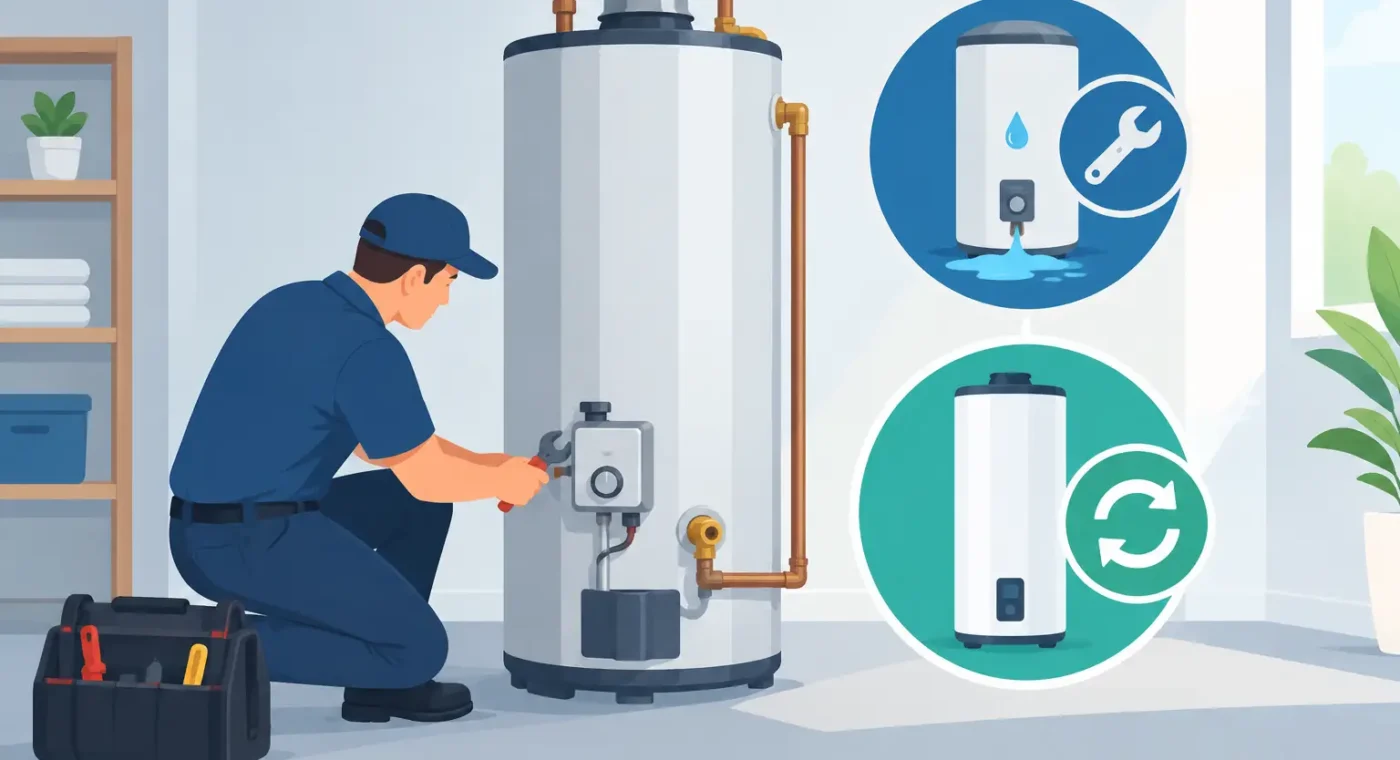
A cold shower, a puddle near the utility room, or rusty water from the tap can bring an ordinary day to a stop. Water heaters work quietly in the background until something changes, and then the problem affects everything from morning routines to a restaurant kitchen’s ability to operate. Fast, accurate service matters because hot water is not a luxury for most homes and businesses. It is an essential system.
The right response depends on what has failed, how old the unit is, and whether repair will provide dependable results. A professional diagnosis helps avoid two costly mistakes: replacing a unit that has a straightforward repair or spending money on repeated repairs when replacement is the better long-term decision.
Signs Your Water Heater Needs Attention
Not every water heater problem begins with a complete loss of hot water. In many cases, the unit provides warning signs for days or weeks before it stops working. Calling for service early can often limit water damage, prevent a larger breakdown, and restore normal operation sooner.
Water that is only lukewarm may point to a failed heating element in an electric model, a thermostat issue, sediment buildup, or a burner problem in a gas unit. If hot water runs out faster than usual, the tank may be undersized for current demand, or one part of the heating system may no longer be working efficiently.
Discolored water deserves prompt attention. Brown, reddish, or rust-colored water can indicate corrosion inside the tank or deterioration in connected plumbing. If the discoloration appears only when hot water is running, the water heater is a likely source. A technician can determine whether replacing an anode rod may help protect the tank or whether internal corrosion has progressed too far.
Unusual sounds are another reason to schedule an inspection. Popping, rumbling, or banging often comes from hardened sediment at the bottom of a tank. This forces the system to work harder, reduces efficiency, and can contribute to premature failure. A small amount of sound does not always mean an emergency, but a new or worsening noise should not be ignored.
Leaks require faster action. Moisture around fittings may come from a loose connection, pressure relief valve, or supply line. A leak from the tank itself is more serious and usually means replacement is necessary. Turn off the water supply if it is safe to do so, protect nearby belongings, and arrange professional service as soon as possible. For gas units, leave the area and seek immediate help if you smell gas.
Repair or Replace? Make the Practical Choice
A water heater repair is often the most affordable solution when the unit is relatively new and the problem is isolated. Elements, thermostats, ignition components, pressure relief valves, and certain plumbing connections can frequently be repaired or replaced without installing a new system. The goal is not simply to get hot water back for the day. It is to restore safe, reliable performance.
Replacement becomes more sensible when a tank is leaking, corrosion is advanced, repairs are becoming frequent, or the unit is nearing the end of its expected service life. Conventional tank units commonly last around eight to 12 years, though water quality, maintenance history, usage, and installation conditions can shorten or extend that range. A unit that has been dependable for many years may still be worth repairing, but the repair cost should be weighed against the likelihood of another failure.
For landlords and property managers, this decision also involves tenant comfort and downtime. Repeated service calls can cost more than a planned replacement, especially when an aging heater serves a multi-unit property or a high-demand space. Commercial operators face an even clearer business concern: inadequate hot water can interrupt cleaning, food preparation, guest service, and code-sensitive operations.
A clear estimate should explain the issue, the repair options, and the expected value of replacement before work begins. That gives property owners the information needed to choose based on safety, budget, and long-term reliability rather than pressure.
Choosing Water Heaters for Your Property
The best replacement is not always the largest tank or the highest-priced model. It should match the building’s hot-water demand, available fuel source, electrical capacity, installation space, and usage pattern.
A traditional tank water heater stores a set amount of heated water. These models are familiar, practical, and often cost less upfront than tankless options. They work well for many homes, but sizing is critical. A household with several bathrooms, frequent laundry loads, and back-to-back showers may need more capacity than a smaller home with one or two occupants.
Tankless water heaters heat water on demand rather than storing it. They can offer energy savings and a smaller footprint, and they are a strong option where hot-water use is steady or space is limited. However, they must be correctly sized for the number of fixtures that may run at once. A poorly sized tankless unit can struggle when multiple showers, appliances, or commercial fixtures call for hot water at the same time.
Gas, electric, hybrid, and commercial-grade systems each have different installation requirements. A gas upgrade may require proper venting and gas-line capacity. An electric unit may require dedicated circuits or electrical-panel work. Heat pump water heaters can be efficient, but they need appropriate space and ambient conditions to perform well. These are not details to guess at during a replacement decision.
A qualified technician evaluates the full setup, not only the old tank. That includes shutoff valves, drain pans, expansion tanks, venting, electrical connections, plumbing condition, and code-related requirements. Correct installation protects the equipment, supports efficiency, and reduces the chance of avoidable leaks or safety issues later.
Why Fast Diagnosis Matters
Hot-water failures can look simple from the outside, but symptoms often overlap. No hot water might be caused by a tripped breaker, a failed element, a pilot or ignition issue, a gas supply concern, a control problem, or a system that has reached the end of its life. Replacing parts without proper testing can waste time and money.
Professional diagnosis starts with safety and follows the system from its power or fuel source through its controls, heating components, tank condition, and plumbing connections. This approach is especially valuable in commercial settings, where a water heater may be connected to high-demand equipment or part of a larger facility system.
For property owners, one point of contact is also a practical advantage. If a water heater issue involves electrical work, ventilation, appliance connections, or related building systems, a multi-trade service provider can coordinate the work instead of leaving customers to manage several contractors. EAAIRS Services and Repair Ltd. provides this kind of responsive support for residential and commercial customers who need clear answers and dependable repairs.
Maintenance That Helps Prevent Surprise Failures
Water heater maintenance cannot stop every breakdown, but it can reduce strain and reveal developing issues earlier. The right maintenance schedule depends on the system type, local water conditions, and how heavily the unit is used.
A professional maintenance visit may include checking for leaks and corrosion, testing safety components, inspecting connections, evaluating heating performance, and addressing sediment where appropriate. In tank systems, flushing may help remove mineral buildup, though the method and timing should be based on the unit’s condition. Older units with heavy sediment need careful assessment rather than a one-size-fits-all approach.
Homeowners should keep the area around the water heater clear and avoid storing flammable materials near gas equipment. It also helps to watch for changes in water temperature, pressure, sound, or color. Small changes provide useful information before a failure becomes urgent.
For businesses, maintenance should be planned around operational needs. A restaurant, salon, laundry facility, or multi-tenant building may need service at a time that minimizes disruption. Scheduled inspections support equipment reliability and make it easier to budget for repairs or replacement before hot water becomes an emergency.
When a water heater shows signs of trouble, acting early gives you more options. A professional inspection can turn an unexpected inconvenience into a clear plan, whether that means a focused repair, a properly sized replacement, or maintenance that keeps reliable hot water flowing.