
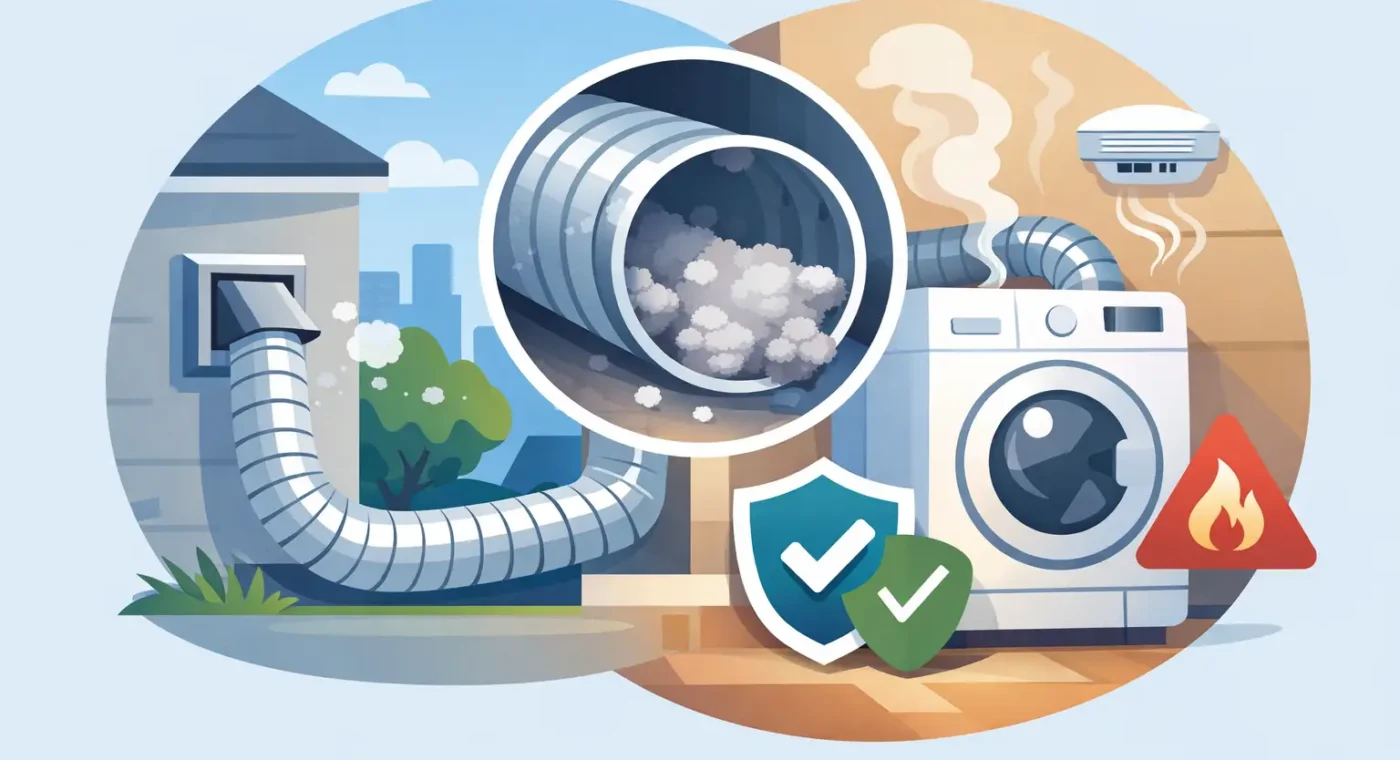
A load of laundry should not leave the laundry room hot, humid, or carrying a burning smell. This dryer duct safety guide helps homeowners, property managers, and business operators recognize the warning signs before restricted airflow becomes a costly repair, a disruption, or a serious fire concern.
Dryers move large amounts of warm, moisture-filled air through a vent system. Every load also produces lint. Even with a clean lint screen, fine lint can pass into the duct, settle at bends, and gradually narrow the passage to the outside. The dryer then has to run longer, operate hotter, and work harder to do a job that should be routine.
Why Dryer Duct Safety Deserves Attention
A clogged or poorly installed dryer duct affects more than drying time. Restricted airflow can cause excess heat inside the dryer, raise energy use, wear out components sooner, and release moisture into the building. In homes, that moisture can contribute to odors and damage around the laundry area. In rental properties and commercial facilities, it can lead to resident complaints, equipment downtime, and preventable maintenance costs.
Lint is highly combustible, which is why dryer vent maintenance is a basic property-safety task rather than an optional cleaning project. The risk depends on several factors: how often the dryer runs, how long and complex the duct route is, whether the system is correctly installed, and whether occupants clean the lint screen consistently.
A household with light laundry use may need service less often than a busy family, shared laundry room, salon, hotel, or commercial operation. There is no one schedule that fits every property. What matters is checking performance and responding quickly when the dryer shows signs of restricted ventilation.
Dryer Duct Safety Guide: Warning Signs to Act On
The clearest sign of a duct problem is laundry that takes more than one cycle to dry. Heavy items such as towels and bedding naturally take longer than lightweight clothing, but a sudden change in drying time deserves attention. If the dryer used to handle a normal load in one cycle and no longer does, airflow should be inspected.
Other warning signs include an unusually hot dryer exterior, a hot or humid laundry room, a burning or musty odor, visible lint around the dryer connection, and little to no airflow at the exterior vent hood while the dryer is running. A vent flap that does not open can indicate blockage, a stuck damper, or an exterior cover that is not suitable for dryer exhaust.
Do not ignore repeated high-limit thermostat trips, error codes, or a dryer that shuts off before the load is dry. Those symptoms can have several causes, including an appliance fault, but restricted ducting is a common issue that should be ruled out. Continuing to run an overheating dryer can turn a manageable service call into a more expensive appliance repair.
For property managers, patterns matter. If multiple residents report damp laundry, excessive heat, or recurring dryer failures in the same building, the issue may be in shared duct routing or an exterior termination rather than in one appliance.
What a Safe Dryer Duct System Looks Like
The best dryer duct is short, direct, properly supported, and made from approved metal material. Smooth-wall rigid metal duct generally provides the best airflow and is easier to clean. Semi-rigid metal transition duct may be appropriate for the short connection between the dryer and the wall, where movement is needed to service the appliance.
Thin plastic or vinyl ducting is not a safe substitute. It can sag, tear, trap lint in its ridges, and become damaged by heat. Flexible foil-style duct may also restrict airflow when crushed or stretched, especially behind a dryer pushed too close to the wall. If the connection is kinked, flattened, or packed with lint, it needs correction.
The exterior termination should vent outdoors, not into an attic, crawl space, garage, or interior area. Sending humid exhaust into a building can create moisture problems and leaves lint where it does not belong. The exterior hood should open freely when the dryer runs and close afterward to help keep weather and pests out.
Avoid exterior screens that catch lint. While screens may seem useful for pest control, they can clog quickly and reduce airflow. A proper dryer-rated exterior hood with a working damper is usually the better choice. Local building requirements and manufacturer instructions can vary, particularly in multifamily and commercial settings, so an experienced technician should evaluate unusual installations.
Duct length also matters. Long runs and multiple turns make it harder for the dryer to exhaust air. Manufacturers commonly set a maximum allowable duct length and require reductions for elbows, because each bend adds resistance. When a laundry room is far from an exterior wall, proper duct design and regular cleaning become even more critical.
Safe Maintenance Between Professional Cleanings
Simple habits make a meaningful difference. Clean the lint screen before or after every load, and wash it periodically with warm water and mild soap if dryer sheets or fabric softener residue create a film. A screen can look clean while that residue restricts air movement.
Keep the space behind and around the dryer free of loose lint, storage boxes, paper products, and cleaning supplies. Do not push the appliance so tightly against the wall that it crushes the transition duct. If moving the dryer is necessary, use care around electrical cords, gas connections, and vent connections. A gas dryer should be serviced by a qualified professional if there is any concern about the gas line or connection.
Check the exterior vent periodically while the dryer is operating. You should feel warm air exhausting and see the damper open. If airflow is weak, stop treating it as a minor inconvenience. The blockage may be at the connection, inside the duct, or at the termination point.
Never use a leaf blower, improvised rod, or aggressive tool that can damage or disconnect duct sections inside a wall or ceiling. DIY cleaning can be reasonable for a short, accessible run when the ducting is clearly visible and easy to reassemble. It is less suitable for long runs, rooftop exits, concealed ductwork, multi-unit properties, or systems with several turns.
When to Schedule Professional Dryer Duct Cleaning
Professional service is the safer choice when drying times increase, lint is visible at the exterior outlet, the duct route is inaccessible, or the dryer has overheated. A complete service should address more than the lint screen area. The technician should inspect the transition connection, clear lint from the duct path, check the exterior hood, and identify installation issues that could continue causing restrictions.
For a busy household, annual evaluation is a practical starting point. Properties with frequent dryer use may need cleaning more often. Commercial laundry equipment, high-occupancy rentals, and shared laundry facilities should have a planned maintenance schedule based on usage, duct length, and operating conditions.
It is also wise to arrange an inspection after a renovation, dryer replacement, pest issue, water intrusion, or any event that could have shifted or damaged ductwork. A new appliance may have different airflow requirements than the one it replaced, and a duct that was barely adequate before may no longer perform safely.
EAAIRS Services and Repair Ltd. can inspect dryer duct conditions, identify airflow restrictions, and help correct problems that affect appliance performance and property safety. Clear recommendations and prompt service help reduce downtime without leaving customers guessing about the condition of their equipment.
A dryer should dry efficiently without filling the room with heat, moisture, or concern. If your appliance is taking longer than usual or the vent system has not been checked in some time, addressing it now is a practical way to protect your equipment, your energy budget, and the people who use your property.