
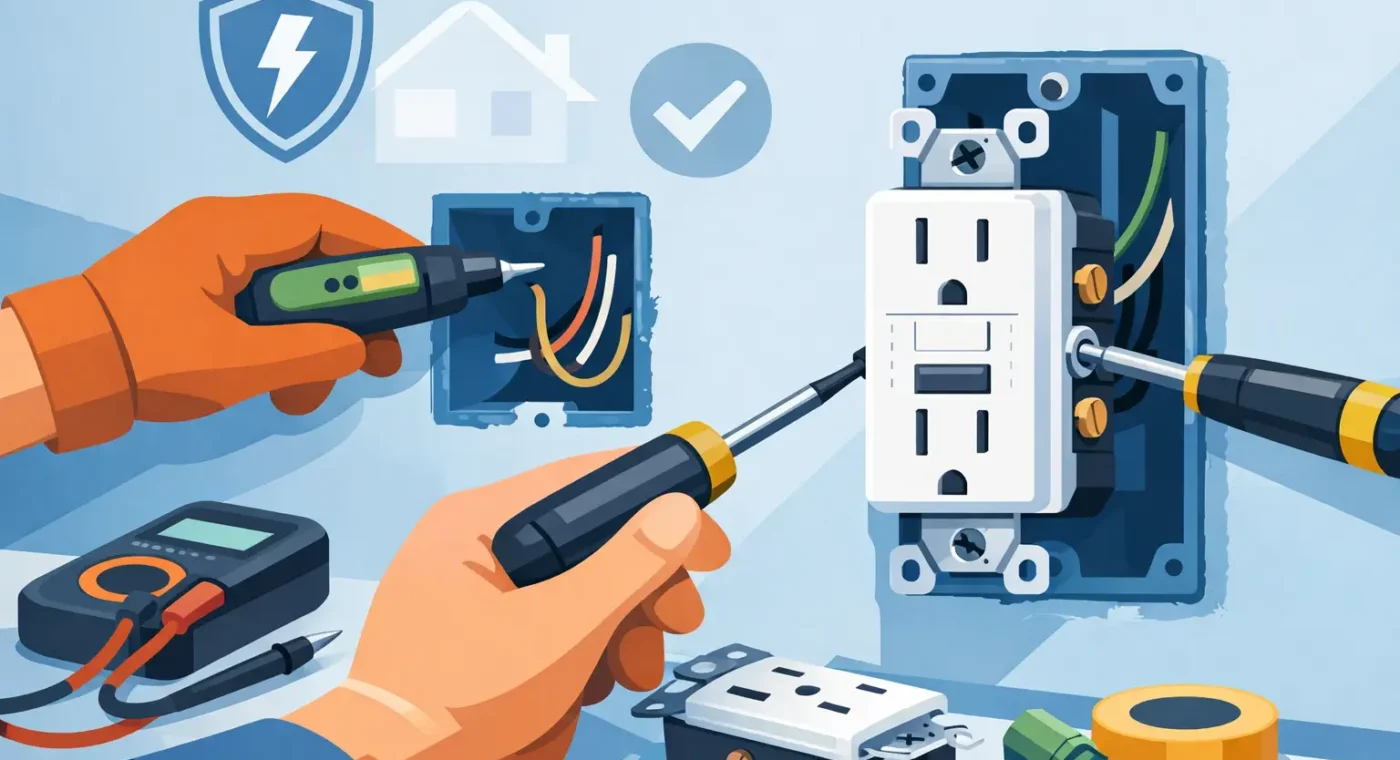
A bathroom outlet that will not reset, a kitchen receptacle with no protection, or an outdoor plug exposed to weather is more than an inconvenience. When you need to install GFCI outlet protection, the goal is simple: reduce the risk of electrical shock without creating a hidden wiring problem behind the wall. The work can look straightforward, but correct identification of the circuit and terminals matters just as much as the device itself.
GFCI outlets are designed to shut off power quickly when they detect an imbalance between the electricity leaving and returning to the circuit. That protection is especially valuable where people may be near water, grounded surfaces, or damp conditions. For homeowners, landlords, and property managers, a properly installed and tested GFCI is a practical safety upgrade that also helps keep the property aligned with current electrical requirements.
Where GFCI Protection Is Usually Needed
GFCI protection is commonly required in areas where moisture or contact with grounded surfaces increases the risk of shock. This often includes bathrooms, kitchens, garages, unfinished basements, laundry areas, crawl spaces, outdoor locations, and outlets near wet bars or utility sinks. Requirements can vary based on the age of the building, the location of the outlet, the circuit type, and local code enforcement.
Commercial properties have additional considerations. A restaurant prep area, commercial kitchen, janitorial closet, break room, or exterior service outlet may require protection that is different from a typical residential installation. In a business setting, an incorrect repair can affect equipment uptime, employee safety, and inspections. It is worth confirming the requirements before work begins rather than assuming every standard outlet can be swapped the same way.
A GFCI receptacle is not the only option. Some circuits are protected by a GFCI circuit breaker in the electrical panel, while others use a GFCI outlet to protect itself and additional downstream outlets. The right choice depends on the circuit layout and what needs protection.
Before You Install a GFCI Outlet, Check the Circuit
The most common mistake is treating an outlet replacement as a simple color-matching project. Wiring can be altered over time, and older homes may have unexpected splices, shared neutrals, missing grounds, or more than one cable in the box. A device that appears to work after installation may still be wired incorrectly or fail to protect the outlets it was intended to cover.
Start by turning off the correct breaker and verifying that power is off at the outlet with an appropriate electrical tester. Do not rely only on the position of the breaker or a wall switch. If the box contains multiple cables, label the conductors before disconnecting anything. This is particularly helpful if the existing receptacle feeds another outlet, a light, or equipment elsewhere on the circuit.
You should also inspect the electrical box itself. A crowded, damaged, loose, or shallow box can make a safe installation difficult. GFCI devices are larger than standard receptacles, and forcing wires into a tight box can damage insulation or leave connections under stress. If there are signs of overheated wiring, corrosion, melted insulation, moisture, or a burnt smell, stop and arrange a professional inspection.
Understanding LINE and LOAD Terminals
A GFCI outlet has terminals marked LINE and LOAD. The LINE terminals receive incoming power from the electrical panel. The LOAD terminals can send GFCI-protected power to outlets farther down the same circuit. Mixing them up is a frequent cause of a GFCI that will not reset or an outlet that has power but no proper protection.
If only the outlet being replaced needs protection, the incoming conductors are typically connected to the LINE terminals, while the LOAD terminals remain unused. If you intend to protect downstream outlets, you must first identify which cable brings power into the box and which cable carries power onward. That determination should be made with proper testing, not guesswork.
A common trade-off is whether to protect downstream outlets from one GFCI device or use separate GFCI outlets at each location. One properly placed device can be efficient and reduce cost, but it can also mean a tripped receptacle in one room cuts power to outlets in another. Separate devices can make troubleshooting more convenient. The best setup depends on the layout, the purpose of the circuit, and local code requirements.
A Safe Installation Process
Once the circuit has been identified and de-energized, installation follows a careful sequence. Use a GFCI device rated correctly for the circuit, typically 15-amp or 20-amp as required by the wiring and breaker. Never install a higher-rated receptacle simply because it fits the opening.
Connect the verified incoming hot conductor to the brass LINE terminal and the incoming neutral to the silver LINE terminal. Connect the grounding conductor to the green grounding screw. If a correctly identified downstream cable is being protected, connect its hot and neutral conductors to the corresponding LOAD terminals. Keep the conductors neat, ensure terminal screws are secure, and follow the device manufacturer’s instructions for stripping length and torque.
After the device is mounted and the cover plate is installed, restore power at the breaker. Press the RESET button to energize the outlet, then press TEST. The device should trip and shut off power. Press RESET again to restore power. A plug-in tester can provide an additional check, but it does not replace the GFCI’s built-in test button.
If the device will not reset, trips immediately, has no indicator light when it should, or leaves other outlets unexpectedly dead, turn the circuit back off. The issue may be reversed LINE and LOAD wiring, a disconnected neutral, a ground fault farther down the circuit, or a broader wiring concern. Repeatedly resetting a GFCI without identifying the cause is not a repair.
When a Licensed Electrician Is the Better Choice
DIY replacement may be reasonable for an experienced homeowner dealing with a straightforward, modern, single-cable outlet box. It is not the right approach when the wiring is unclear or the property has known electrical issues. The cost of professional service is often small compared with the risk of damaging a circuit, losing power to essential equipment, or leaving a dangerous fault unresolved.
Call a licensed electrician when you find aluminum wiring, no grounding conductor, multiple cables with unclear functions, a shared neutral circuit, water damage, scorched connections, or a breaker that trips repeatedly. The same applies when adding a new outlet, extending a circuit, installing protection in a commercial space, or completing work that may require a permit and inspection.
For rental and commercial properties, professional installation also provides a clearer service record. That can help with maintenance planning, tenant concerns, safety documentation, and future troubleshooting. EAAIRS Services and Repair Ltd. can assess the circuit, explain the available options, and complete electrical work with a focus on safety, clear pricing, and minimal disruption.
Keep Your GFCI Protection Working
A GFCI outlet is not a set-it-and-forget-it device. Test it monthly using the built-in TEST and RESET buttons, especially in bathrooms, kitchens, garages, and outdoor locations. If it does not trip and reset as expected, replace it or have the circuit inspected.
Also pay attention to nuisance tripping. A GFCI may trip because of moisture, a damaged appliance cord, a failing appliance, deteriorated exterior wiring, or a genuine fault on the circuit. The device is doing its job by interrupting power, so the answer is to diagnose the cause rather than bypass the protection.
A correctly installed GFCI outlet gives people and property an extra layer of protection where it matters most. When the circuit is uncertain, the device will not reset, or the work affects a busy home or business, a fast professional diagnosis is the safer way to restore power with confidence.