
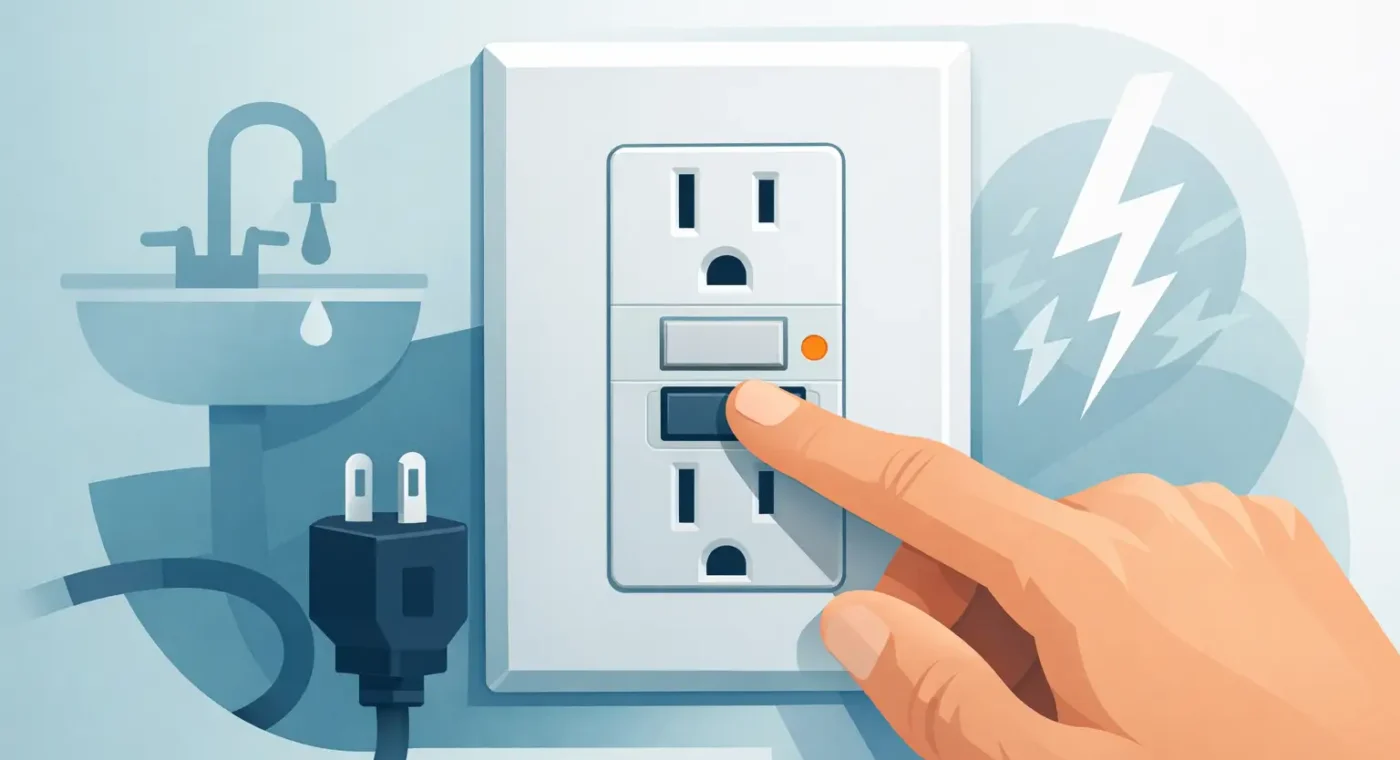
A bathroom outlet stops powering your hair dryer, the kitchen counter outlet goes dead, or a garage freezer suddenly has no electricity. Before assuming the outlet has failed, check whether a ground-fault circuit interrupter has tripped. Knowing how to reset tripped gfci outlet devices safely can restore power quickly, but repeated tripping is a warning that should not be ignored.
GFCI outlets are designed to protect people from electric shock in places where water and electricity may come into contact. A quick reset may be all that is needed after a temporary overload or moisture exposure. If the outlet will not reset or trips again, the safest next step is professional electrical diagnosis.
What a GFCI Outlet Does
A GFCI outlet monitors the flow of electricity through a circuit. When it detects even a small difference between the power going out and the power returning, it shuts off electricity almost instantly. This can happen when current is leaking through water, damaged wiring, a faulty appliance, or a person.
These outlets are commonly installed in bathrooms, kitchens, laundry rooms, garages, unfinished basements, outdoor areas, and commercial workspaces. One GFCI outlet can also protect several regular outlets farther along the same circuit. That means the outlet with the reset button may be in a different room than the outlet that has lost power.
A trip is not necessarily a sign of a serious problem. It is the safety device doing its job. The concern begins when a GFCI trips repeatedly, will not reset, feels warm, shows discoloration, or is connected to equipment that should not lose power without warning.
How to Reset a Tripped GFCI Outlet
Start by locating the GFCI outlet. Look for the two small buttons in the center of the outlet face: one marked TEST and one marked RESET. A tripped outlet may show a red or green indicator light, depending on the model, but not every GFCI has an indicator.
Before pressing reset, unplug everything connected to the outlet and to nearby outlets that may be on the same circuit. This matters because a defective appliance, wet cord, or overloaded device can cause the outlet to trip again immediately.
Press the RESET button firmly until it clicks. If power returns, plug devices back in one at a time. If the outlet trips after a particular item is connected, stop using that item until it has been inspected or repaired.
If the reset button will not stay in, do not force it. Check the electrical panel for a tripped circuit breaker. A breaker may look almost normal when tripped, so move it fully to the OFF position first, then return it to ON. Go back to the GFCI and try the reset button again.
Some homes have more than one GFCI protecting the same area. If the bathroom or exterior outlet is still dead, check other GFCI outlets in the garage, basement, laundry room, kitchen, and outside the home. Property managers should also remember that common-area wiring and utility rooms may contain the upstream GFCI that controls a tenant or work area.
Why a GFCI Outlet May Keep Tripping
An occasional trip after using a high-demand appliance or during wet weather may have a clear cause. A recurring trip needs a closer look because the outlet is detecting an unsafe electrical condition or the device itself may be worn out.
Moisture in the Outlet or Connected Equipment
Outdoor outlets, garage outlets, bathroom receptacles, and kitchen counter outlets are especially vulnerable to moisture. Rain, condensation, a splash from a sink, or a damp extension cord can be enough to trigger a GFCI.
Do not reset an outlet if the box, cover, plug, or surrounding wall is wet. Turn off power at the breaker if it can be done safely, keep the area dry, and arrange service. An outdoor outlet should have a weather-resistant cover and proper protection for the environment where it is installed.
A Faulty Appliance or Damaged Cord
A GFCI may trip because of a problem inside a coffee maker, microwave, dishwasher, refrigerator, power tool, washer, or other plugged-in equipment. Frayed cords, cracked plugs, damaged extension cords, and aging heating elements are common causes.
Unplugging everything before resetting helps separate an appliance issue from an outlet or wiring issue. If the GFCI holds with nothing connected but trips when one device is plugged in, that device is the likely source. Avoid repeatedly resetting the outlet to keep the appliance running. That can turn a safety warning into a larger repair and fire risk.
Overload, Circuit Problems, or Aging Components
A GFCI is not the same as a circuit breaker, but a heavily loaded circuit can still lead to nuisance trips or a breaker trip. Kitchens, garages, and laundry areas often have several high-demand appliances competing for limited circuit capacity.
Loose connections, damaged wire insulation, improper wiring, and worn GFCI receptacles can also cause problems. GFCI devices have a service life, and newer self-testing models may refuse to reset when internal testing detects a failure. In that situation, replacement and verification of the circuit are needed.
When You Should Stop Resetting and Call an Electrician
Resetting a GFCI once after a known, temporary cause can be reasonable. Repeated resets are not a fix. Call for electrical service when the outlet trips immediately with all devices unplugged, the reset button will not engage, or power disappears again shortly after being restored.
You should also stop and seek help if you notice a burning smell, buzzing, a warm outlet cover, scorch marks, melted plastic, sparks, flickering lights, or water near electrical components. Turn off the breaker if it is safe to access, keep people away from the affected area, and do not use the circuit until it has been inspected.
For commercial properties, a tripped GFCI can affect prep equipment, cleaning stations, refrigeration support equipment, point-of-sale devices, and employee safety. Fast diagnosis helps prevent avoidable downtime, but bypassing a GFCI or replacing it with a standard outlet is never an acceptable solution.
A Few Checks That Protect Your Property
Test GFCI outlets periodically by pressing the TEST button. The outlet should shut off, and the RESET button should restore power. If it does not respond correctly, schedule service. Test after unplugging sensitive electronics or equipment that could be interrupted.
Use weather-rated outlet covers outdoors, keep cords in good condition, and avoid running too many high-demand appliances from the same circuit. Landlords and property managers can reduce emergency calls by including GFCI testing in regular property maintenance, especially before rainy seasons and tenant turnover.
If you are unsure which outlet controls an area, have a qualified technician map the circuit and identify any wiring or capacity concerns. EAAIRS Services and Repair Ltd. can inspect the outlet, connected appliances, and circuit so the problem is diagnosed correctly rather than temporarily reset.
A GFCI outlet is a small device with a major safety role. Treat a single trip as useful information, and treat repeated trips as your signal to get the underlying issue resolved before it disrupts your home, business, or peace of mind.