
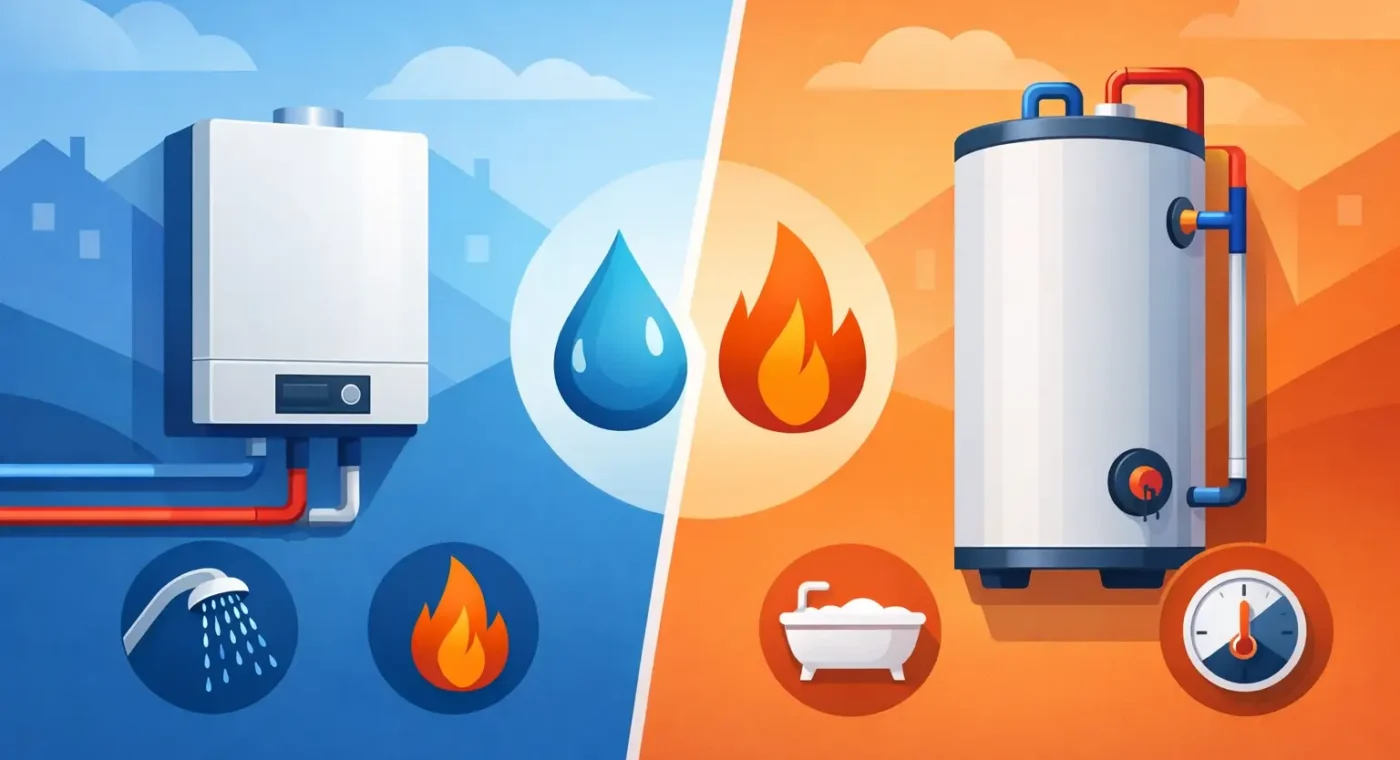
A water heater usually gets attention at the worst possible time: when the shower turns cold, a utility room starts leaking, or tenants call because there is no hot water. The tankless vs tank water heater decision affects more than the equipment price. It affects comfort during busy mornings, monthly energy use, installation requirements, and how quickly your property can get back to normal when a unit fails.
For many homes, a conventional tank water heater remains the most practical, affordable choice. For others, especially homes with limited space or long-term efficiency goals, a tankless system can be a worthwhile upgrade. The right answer depends on your hot-water demand, fuel source, existing plumbing and electrical capacity, and budget for installation.
How Tank and Tankless Water Heaters Work
A traditional tank water heater stores a set supply of heated water, commonly 40 to 80 gallons. Gas burners or electric elements heat the stored water, and the unit cycles on and off to keep it ready. When someone opens a hot-water faucet, heated water leaves the top of the tank and cold water enters to replace it.
A tankless water heater heats water only when there is demand. Water flows through a heat exchanger and is warmed as it passes through the unit. Because it does not store a limited tank of hot water, it can provide hot water for an extended period as long as it is correctly sized for the incoming water temperature and the number of fixtures running at once.
That difference sounds simple, but it creates very different trade-offs in daily use and installation.
Tankless vs Tank Water Heater: Everyday Performance
A tank water heater is familiar and straightforward. It can deliver a large amount of hot water quickly, which works well for a household with a bathtub, dishwasher, or several people getting ready around the same time. The limitation is recovery. Once the stored hot water is used, the unit needs time to heat the next supply.
A properly sized tankless unit does not run out of stored hot water. That is a major advantage for long showers, back-to-back guests, or properties where hot water is needed throughout the day. However, “endless” does not mean unlimited flow. Every tankless unit has a maximum gallons-per-minute capacity. If multiple showers, a washing machine, and a dishwasher are all drawing hot water at once, an undersized unit can struggle to maintain the desired temperature.
Cold climates matter, too. Tankless systems must raise colder incoming water to the selected temperature, which reduces the flow rate the unit can provide. A technician should account for local groundwater temperatures and your real peak demand rather than selecting equipment based only on household size.
Upfront Cost and Installation Requirements
Traditional tank units generally cost less to purchase and replace. If the existing water heater location, venting, gas line, electrical connection, and plumbing are in good condition, a replacement can often be completed with fewer changes. That makes a tank system an appealing option when a failed unit needs to be replaced quickly and budget is the main concern.
Tankless installation is often more involved. A gas tankless water heater may require a larger gas line, new venting, condensate drainage for high-efficiency models, and electrical power for controls and ignition. An electric tankless model can require substantial electrical capacity, sometimes including new circuits or a panel upgrade. These requirements can increase the installed cost significantly.
This does not make tankless a poor investment. It means the estimate should cover the entire job, not just the price of the heater. Ask whether it includes permits where required, venting materials, gas or electrical upgrades, water-line modifications, removal of the old unit, and startup testing. Clear scope and transparent pricing prevent surprises once work begins.
Energy Use and Long-Term Operating Costs
Tankless water heaters can reduce standby heat loss because they are not constantly maintaining a full tank of hot water. This can lower energy use, particularly in homes with moderate hot-water consumption. A high-efficiency gas tankless model may be attractive for owners planning to stay in the home for years.
The savings are not identical for every property. A household with very high hot-water use will still consume significant energy, regardless of heater type. A tankless unit may also need periodic maintenance to keep operating efficiently, especially where water contains high levels of minerals.
Modern tank water heaters are also more efficient than older models, and a well-selected tank can offer dependable performance at a lower initial cost. For a rental property, a conventional tank may provide a faster, more economical replacement when the priority is restoring service without a major retrofit. For a long-term residence or a commercial setting with steady demand, tankless efficiency and service life may justify the higher installation expense.
Space, Lifespan, and Maintenance
A tank water heater occupies floor space and needs room around it for safe service. In a tight utility closet, garage, or mechanical room, that footprint can be inconvenient. Tankless units mount on a wall, freeing up valuable space and making them useful in smaller homes, condos, and some commercial applications.
Tankless systems often have a longer expected service life than conventional tanks when they are professionally installed and maintained. Their internal components can be serviced or replaced in many cases. A tank heater has a simpler design, but its storage tank is subject to corrosion over time. Once a tank begins leaking, replacement is typically the practical solution.
Both types need maintenance. Tank water heaters benefit from periodic flushing, anode rod inspection, and safety checks. Tankless systems should be flushed to remove mineral scale, with frequency based on water quality and manufacturer guidance. Neglecting maintenance can reduce efficiency, cause error codes, shorten equipment life, and lead to avoidable service calls.
Choosing Based on Your Property
The best water heater is the one that meets demand safely without creating unnecessary installation costs. A tank system may be the better fit if you need a lower-cost replacement, have an existing setup that supports it, or manage a property where quick, predictable repairs are the priority.
A tankless unit may be worth considering if space is limited, your household wants longer hot-water availability, or you are already upgrading gas, electrical, or plumbing systems. It can also be a strong option for businesses that need consistent hot water but cannot afford the downtime caused by a depleted storage tank.
Before choosing, have a qualified technician evaluate four practical details:
- Your peak hot-water demand, including simultaneous showers and appliances.
- The available gas supply or electrical capacity at the installation location.
- Venting, drainage, plumbing changes, and local code requirements.
- Water quality and the maintenance needed to protect the new equipment.
For property managers and commercial operators, capacity planning is especially important. A system that works for one apartment or one restroom may not work for a busy salon, restaurant prep area, or multi-unit building. Equipment sizing should reflect actual usage patterns, not assumptions.
When Replacement Should Not Wait
A leaking tank, rusty water, frequent temperature swings, unusual noises, or repeated pilot and ignition problems deserve prompt attention. Waiting can turn a manageable repair or replacement into water damage, tenant disruption, or a business interruption.
A professional diagnosis can also identify issues outside the heater itself, such as failing shutoff valves, venting problems, electrical concerns, pressure issues, or damaged plumbing connections. EAAIRS Services and Repair Ltd. can assess the full installation, explain practical options, and help restore safe, dependable hot water with a clear recommendation based on your property.
The best next step is not to choose based on a single feature like endless hot water or a lower purchase price. Choose the system that matches how your home or business actually uses hot water, then protect that investment with correct installation and routine maintenance.