
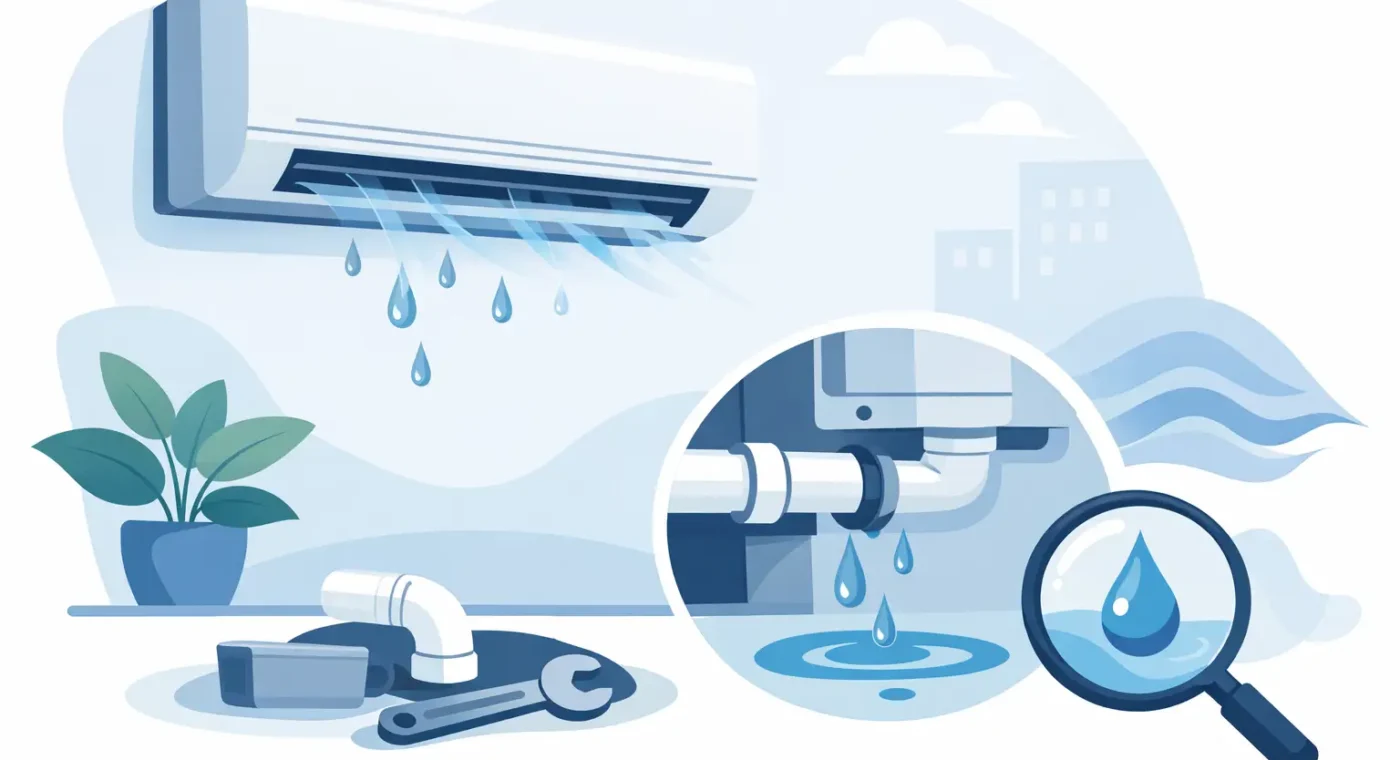
A puddle beside an indoor air handler, water dripping from a ceiling vent, or moisture around a commercial AC unit can turn a comfort problem into a property-damage concern fast. An air conditioner draining water is often part of normal operation, but the location, amount, and timing of that water determine whether you can simply monitor it or need prompt service.
Your AC does more than cool the air. It also removes humidity. That moisture has to go somewhere, and a properly working system directs it safely through a condensate drain line. When that path is blocked, damaged, or overwhelmed, water can back up into the home or business instead.
When Air Conditioner Draining Water Is Normal
During cooling mode, warm indoor air passes over the evaporator coil. As the coil cools that air, moisture condenses on its surface, much like water forming on a cold glass. The water drips into a drain pan and travels through a condensate line to an approved drainage point outside or near a plumbing drain.
For many central air conditioning systems, seeing a steady but modest amount of water at the outdoor condensate drain is normal, especially on hot, humid days. In humid climates, a system may remove several gallons of water over the course of a day. That is a sign the unit is dehumidifying as intended.
A window unit may also drip outside from its rear drainage area. It should not, however, leak into the room or down the interior wall. Portable air conditioners collect condensate differently. Some evaporate part of the moisture automatically, while others require periodic draining based on humidity levels and the unit’s design.
The key distinction is simple: normal condensate goes to the designated drain location. Water appearing inside, below the unit, in a ceiling, or around electrical components is not normal.
Signs the Water Is a Problem
Water near an AC system deserves attention before flooring, drywall, insulation, or equipment is affected. Turn off cooling at the thermostat if water is actively leaking from the indoor unit, ceiling, or wall. If water is near wiring, a breaker panel, or other electrical equipment, avoid touching the area and arrange professional help.
You should schedule service promptly if you notice any of the following:
- Water pooling around the furnace, air handler, or indoor AC cabinet
- Stains, bubbling paint, damp drywall, or dripping from a ceiling
- A musty smell near vents or the mechanical room
- An AC system that stops cooling while water accumulates
- Repeated drain-line clogs or a float switch that keeps shutting the unit down
- Ice on refrigerant lines or the indoor evaporator coil
For landlords and property managers, a small recurring leak can become a larger maintenance issue between inspections. For restaurants, offices, and other commercial properties, water around equipment can also disrupt operations and create slip hazards. Fast diagnosis protects both comfort and the building.
Common Reasons an AC Starts Leaking Water
A clogged condensate drain line
This is one of the most common causes. Dust, algae-like growth, rust particles, and debris can build up in the drain line over time. Once the line is restricted, condensate backs up into the drain pan and eventually spills over.
Some systems include a safety float switch that shuts the AC off when the pan fills. That shutdown can feel inconvenient, but it is designed to prevent water damage. Resetting the system without clearing the blockage only invites another overflow.
A cracked or rusted drain pan
The primary drain pan sits beneath the evaporator coil and handles water during normal operation. Older metal pans can corrode, while plastic pans can crack. A damaged pan may leak even when the drain line is clear.
There may also be a secondary pan below the air handler, particularly for units installed in attics or above finished ceilings. Water in that backup pan is a warning that the primary drainage system needs attention.
A frozen evaporator coil
A coil can freeze when airflow is restricted or refrigerant levels are incorrect. Dirty air filters, blocked return vents, blower problems, and refrigerant leaks are all possible contributors. When the ice melts, it can produce more water than the pan and drain system can manage.
Changing a visibly dirty filter is a reasonable first step. But if the coil is frozen, the system is not operating normally. Turn the cooling function off and let the ice thaw. Do not chip at the coil, as the fins and refrigerant tubing can be damaged easily. A technician should identify why it froze before the system returns to regular use.
A disconnected, poorly installed, or damaged drain line
Drain piping needs the correct slope and secure connections. A loose fitting, cracked section, or line that has shifted out of position can send water into the equipment area instead of to the drain. Installation errors can also cause chronic drainage problems, including poorly trapped lines or inadequate venting.
This matters in both homes and commercial buildings. A recurring leak is not always a simple clog. Correcting the pipe routing or connection may be the actual repair.
A failed condensate pump
When gravity cannot carry water to a drain, systems use a condensate pump. The pump collects water in a small reservoir and discharges it through tubing. If the pump loses power, its float sticks, the discharge tube clogs, or the motor fails, water can overflow.
You may hear the pump running but see no water moving, or you may notice the reservoir is full. Because pumps involve electrical components and drainage connections, service is the safest way to confirm the failure and replace the part if needed.
What You Can Check Before Calling for Service
Start with the least risky checks. Confirm that the thermostat is set to cool and that the indoor unit is not actively overflowing. Look at the air filter and replace it if it is dirty or overdue. Make sure supply and return vents are open and not blocked by furniture, boxes, or inventory.
If you can safely access the exterior end of the condensate line, look for visible blockage or no drainage during a cooling cycle. Do not force sharp tools, high-pressure air, or harsh chemicals into the line. These methods can disconnect piping, damage fittings, or push debris deeper into the system.
For a portable unit, check the manufacturer’s water tank indicator and drain it according to the operating instructions. For a window unit, confirm it is installed with the slight outward tilt required by its manufacturer. An incorrect angle can send condensate into the room rather than outside.
Avoid removing AC cabinet panels, handling electrical connections, or adding refrigerant yourself. Refrigerant work requires proper equipment and licensing, and an incorrect repair can create a more expensive problem.
Why Fast AC Drain Repairs Save Money
Water damage rarely stays contained. Moisture can soak insulation, warp flooring, stain ceilings, encourage mold growth, and damage nearby electrical components. In an attic installation, the first visible sign may be a ceiling stain in a room below, long after the pan began overflowing.
A drain issue can also reduce system reliability. If a safety switch shuts the unit off repeatedly, the property may lose cooling during the hottest part of the day. If the underlying cause is a frozen coil or blower issue, continued operation can place added stress on the equipment.
For commercial operators, the cost is more than the repair itself. A wet mechanical area, uncomfortable customer space, or interruption to daily operations can affect staff, customers, and inventory. Addressing a drain problem early is usually simpler than repairing the damage it leaves behind.
Professional Diagnosis for Recurring Water Leaks
A professional AC technician does more than clear a visible blockage. The inspection should confirm that the drain line flows correctly, the pans are intact, the condensate pump operates properly, and the system is producing condensate under normal cooling conditions. If icing is present, the technician should also check airflow, filter condition, blower performance, coil condition, and refrigerant-related concerns.
At EAAIRS Services and Repair Ltd., technicians focus on finding the source of the problem rather than applying a temporary fix. That means clear communication about the repair, transparent recommendations, and service designed to restore cooling without unnecessary disruption.
Preventing Future Condensate Problems
Regular maintenance is the best protection against surprise water leaks. Replace filters on schedule, keep vents clear, and have the condensate system inspected and cleaned as part of seasonal AC service. Properties with heavy cooling demand, high humidity, pets, or dusty work areas may need more frequent attention.
Do not ignore a small puddle just because the AC still cools. When water is leaving the system where it should, it is doing its job. When it is reaching your floor, ceiling, or equipment room, it is asking for a timely repair before a manageable issue becomes a costly interruption.