
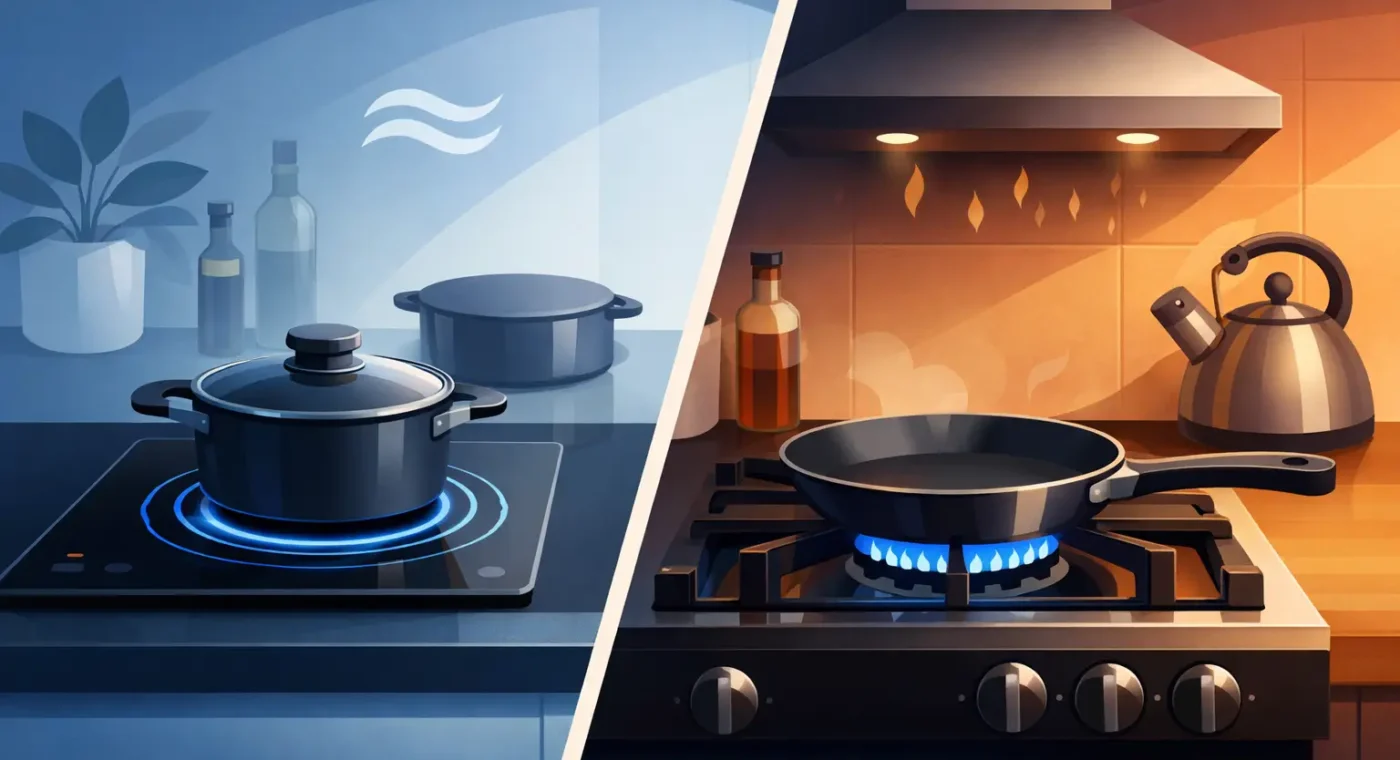
A cooktop replacement can quickly become a bigger decision than expected. In the induction vs gas cooktops conversation, the best choice is not simply about what cooks faster. It affects your electrical capacity, ventilation, cookware, daily cleaning routine, and, in a rental or commercial setting, the reliability of a kitchen people depend on.
Both options can produce excellent results when they are installed correctly and matched to the way you cook. The practical question is whether your home or property is better prepared for an electric induction system or a gas-fueled one.
Induction vs Gas Cooktops: The Everyday Difference
Gas cooktops create a visible flame that heats the bottom and sides of a pan. The burner responds immediately when you turn the knob up or down, which is why many experienced cooks appreciate the familiar control. Gas also works with nearly any flat-bottomed cookware, including aluminum, copper, stainless steel, cast iron, and many types of ceramic cookware.
Induction cooktops work differently. Magnetic energy heats compatible cookware directly, while the glass surface beneath the pan stays comparatively cool. Because heat is created in the pan rather than transferred from a flame or hot element, induction can boil water quickly and provide highly controlled low-temperature cooking.
For a busy household, the difference often shows up after dinner. A gas grate and burner assembly have multiple parts that collect grease and spills. An induction surface is flat and typically wipes clean with a soft cloth once it has cooled. That simpler cleanup is a meaningful advantage for families, landlords preparing a unit between tenants, and commercial spaces where kitchen cleanliness matters every day.
Speed, Control, and Cooking Performance
Induction is usually the faster option for heating water and bringing a pan to temperature. Less heat is lost to the air around the cookware, so more of the energy goes into the pan. It also offers steady control for tasks such as melting chocolate, holding sauces at a low simmer, or cooking eggs without scorching them.
Gas remains a strong performer, especially for cooks who prefer seeing and adjusting a flame. It is also well suited to certain cooking styles, such as charring peppers or using a round-bottom wok with the correct grate. While an induction cooktop can deliver precise control, it may feel unfamiliar at first to someone who has cooked with gas for years.
There is no universal winner on performance. If speed, easy cleanup, and consistent low-heat control are priorities, induction has a clear edge. If open-flame cooking, broad cookware compatibility, and a familiar feel matter more, gas may still be the better fit.
Safety and Indoor Air Considerations
Induction is often the easier choice for households focused on reducing burn and fire risk. The surface does not heat in the same way as a traditional electric cooktop, and it stops actively heating when compatible cookware is removed. The pan itself can still be hot, of course, so normal kitchen care is still necessary.
Gas cooktops require more attention because they use an open flame and a fuel supply. A burner that fails to ignite, flames that look yellow instead of mostly blue, gas odors, or recurring clicking from the igniter should be checked promptly by a qualified professional. Never ignore a suspected gas leak or try to repair a gas connection yourself.
Ventilation is valuable with either type of cooktop. Cooking produces moisture, grease particles, and odors regardless of the heat source. With gas, a properly functioning range hood is especially important because combustion adds additional byproducts to the kitchen air. If you are replacing a cooktop as part of a remodel, this is the right time to evaluate whether the hood vents outdoors, has adequate airflow, and is sized appropriately for the appliance.
Installation Requirements Can Decide the Issue
The kitchen infrastructure often determines whether induction or gas makes financial sense. A gas cooktop needs a properly installed gas line, shutoff valve, and compatible appliance connection. If your property does not already have gas service in the kitchen, adding it may require permits, routing work, and coordination with the utility provider.
An induction cooktop usually requires a dedicated 240-volt electrical circuit. Many full-size models need substantial amperage, so the existing electrical panel and circuit capacity should be evaluated before you purchase the appliance. Older homes, apartment units, and commercial spaces may need electrical upgrades before an induction cooktop can be installed safely and to code.
Do not rely on an appliance listing alone when planning the installation. The manufacturer’s requirements, local code, countertop cutout dimensions, clearances, ventilation setup, and available utility connections all matter. A professional site assessment before ordering can prevent costly returns, delayed installation, or unexpected panel and gas-line work.
For property managers, this planning step is especially useful. Standardizing appliance types across units can simplify future repairs and replacement parts, but only if the building’s electrical and gas infrastructure can support that standard reliably.
Cookware Compatibility and Maintenance
Gas is the more forgiving option if you have a varied collection of pots and pans. Induction requires magnetic cookware. Cast iron and many stainless steel pans work well, while aluminum, copper, glass, and some stainless steel cookware may not work unless they have a magnetic base.
A quick magnet test helps. If a magnet sticks firmly to the bottom of the pan, it will generally work on induction. Flat-bottom cookware is also important because it makes consistent contact with the cooking surface.
Induction surfaces need gentle care. Avoid dragging heavy cast-iron pans across the glass, clean spills before they bake on, and use products recommended for glass cooktops. Gas cooktops need regular attention too, particularly around burner caps, ports, grates, and igniters. Food debris can cause uneven flames, poor ignition, and reduced performance.
Neither option is maintenance-free. The better choice is the one you can keep clean, use correctly, and service without unnecessary disruption.
Energy Costs and Long-Term Value
Induction is highly efficient because it directs heat into the cookware. That may reduce wasted heat and help keep the kitchen more comfortable during long cooking sessions. Actual operating costs still depend on local electricity and gas rates, how often the cooktop is used, and the efficiency of the specific model.
Gas pricing can be attractive in some areas, and many customers value having a cooking option that can operate during a power outage when paired with a compatible ignition method. However, modern gas cooktops often use electric ignition, so they may not function normally without power. Check the appliance specifications rather than assuming your cooktop will work during an outage.
Upfront cost deserves equal attention. An induction cooktop may cost more than an entry-level gas model, and electrical upgrades can add to the project budget. Gas installation can also become expensive when a new line, ventilation improvements, or permits are needed. The most affordable appliance is not always the most affordable installed solution.
Which Cooktop Fits Your Property?
Choose induction when you want fast heating, a cooler cooking surface, easier cleanup, and strong energy efficiency. It is often a practical option for updated kitchens where the electrical system can support a dedicated 240-volt circuit and the household is comfortable using compatible cookware.
Choose gas when you prefer visible flame control, need maximum flexibility with existing cookware, or already have a safe, properly sized gas connection in place. It can be an excellent choice for serious home cooks and commercial kitchens, provided ventilation and gas-system maintenance are treated as essential, not optional.
For rental properties and commercial operations, reliability should carry as much weight as cooking preference. Consider who will use the equipment, how quickly staff or tenants can learn it, the availability of service, and the cost of downtime if a cooktop fails. A solution that fits the building and operating routine is usually more valuable than one chosen solely for a feature list.
Before committing to either option, have the kitchen’s gas, electrical, and ventilation systems assessed by qualified technicians. EAAIRS Services and Repair can help identify the installation requirements before a small appliance upgrade turns into an unexpected property-wide project. A clear assessment gives you the confidence to choose a cooktop that keeps your kitchen safe, functional, and ready for the demands placed on it.