
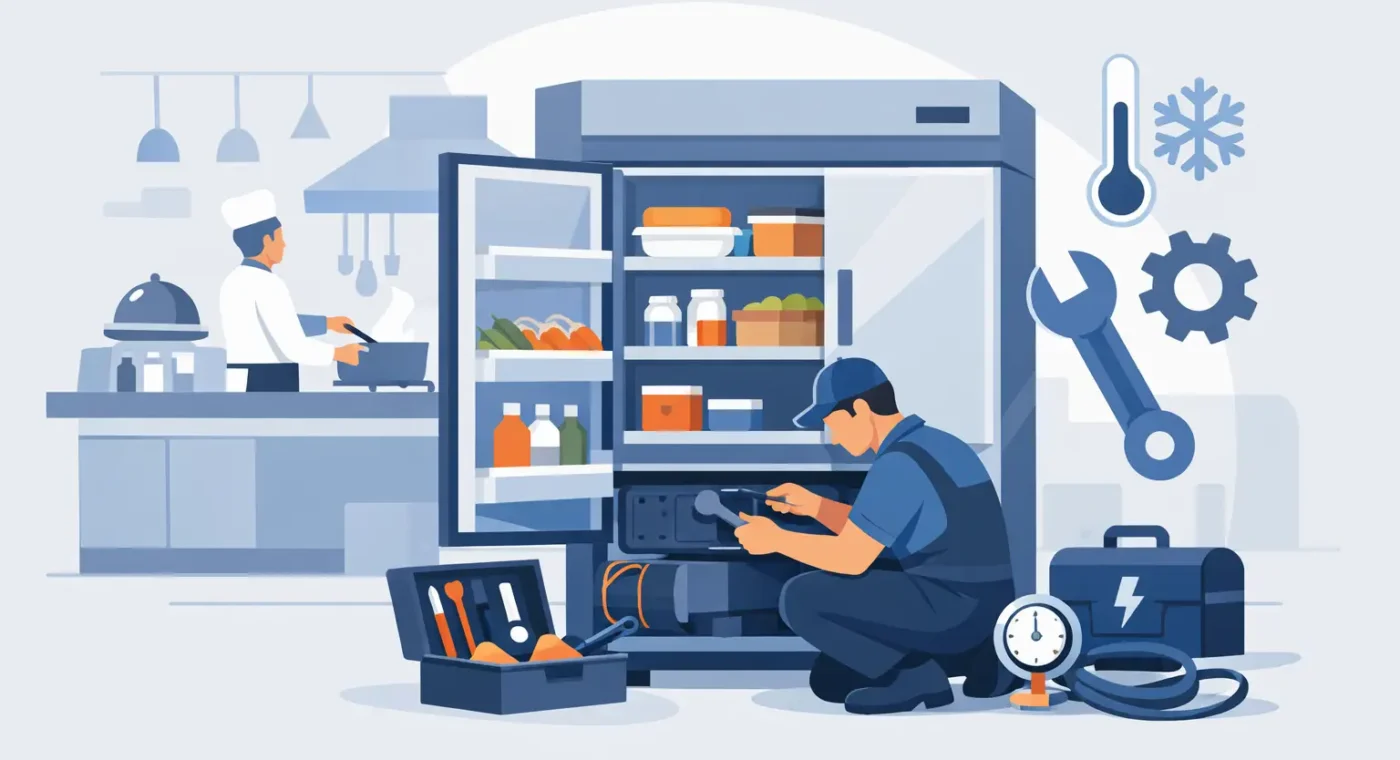
A walk-in cooler that starts running warm at 10:30 a.m. can turn into a full-service problem by lunch. When food safety, inventory, and daily operations are all on the line, restaurant refrigerator repair service is not something to put off until the next slow day. The right response is fast diagnosis, clear communication, and repair work that gets your kitchen back under control without adding more disruption.
Why fast restaurant refrigerator repair service matters
Commercial refrigeration problems move quickly. A small refrigerant issue, a failing evaporator fan motor, or a damaged door gasket can start as a minor temperature fluctuation and end with spoiled product, missed service, and compliance concerns. In a restaurant, downtime is never just about one machine. It affects prep schedules, staff workflow, delivery storage, and customer experience.
That is why speed matters, but speed alone is not enough. A rushed visit that only treats the symptom can leave you calling again in a day or two. Reliable repair means identifying the actual source of the problem, checking related components, and making sure the unit can hold proper temperature under normal kitchen demand.
For restaurant owners, managers, and property operators, the best service call is the one that reduces uncertainty. You need to know what failed, whether repair is practical, what parts may be required, and how soon the equipment can return to stable operation.
The warning signs you should not ignore
Not every refrigeration issue starts with a full breakdown. In many cases, the equipment gives you a window to act before the problem gets expensive.
If your reach-in refrigerator is cycling constantly, struggling to stay cold, building up excess frost, leaking water, or making new noises, those are signs something is off. A unit that feels cool in the morning but warms up during peak hours may have airflow restrictions, dirty condenser coils, fan issues, or a compressor beginning to fail. Doors that do not seal tightly can also force the system to work harder, especially in hot kitchens where ambient temperatures stay high.
Restaurants should also pay attention to product temperature, not just the number on the display. A bad sensor, control board issue, or thermostat problem can show one reading while the internal temperature tells a different story. If staff are rearranging inventory to find cold spots inside the cabinet, that is already a service issue.
Common problems behind commercial refrigerator failures
Most restaurant refrigeration repairs come back to a handful of common causes, but the exact fix depends on the age of the unit, the model, and how heavily it is used.
Dirty condenser coils are one of the most common problems. In busy kitchens, grease, dust, and airborne debris can build up fast and reduce cooling performance. Fan motor failures are also common, especially in equipment that runs long hours every day. Without proper airflow, temperatures climb and the compressor takes on extra strain.
Thermostats, sensors, relays, and control boards can also fail. These electrical and control issues may cause short cycling, inconsistent temperatures, or a unit that does not start at all. Then there are refrigerant-related problems, including leaks and low charge, which require proper diagnosis and licensed handling.
Door gaskets are easy to overlook, but they matter. A worn gasket can let warm kitchen air into the cabinet all day long, creating temperature instability and forcing the system to overwork. In some cases, what looks like a major cooling issue is partly a sealing or airflow problem.
Compressor failure is the repair most operators worry about, and for good reason. It can be costly, and whether it makes sense to replace the compressor or the entire unit depends on the equipment age, repair history, parts availability, and overall condition.
Repair or replace? It depends on the unit and the urgency
There is no one-size-fits-all answer here. Some refrigeration problems are straightforward and cost-effective to repair. Others point to a machine that is near the end of its service life.
If the unit is relatively new, has been dependable, and the issue is isolated to a fan motor, control component, gasket, or coil cleaning, repair is usually the practical choice. If the refrigerator has a long history of breakdowns, poor temperature recovery, repeated refrigerant issues, or compressor trouble, replacement may be the smarter long-term move.
Urgency also affects the decision. If a critical prep refrigerator fails during your busiest stretch, you may need the fastest workable option, even if that means a short-term repair while you plan replacement. A good technician should explain the trade-offs clearly instead of pushing one option automatically.
What to expect from a professional service call
A dependable restaurant refrigerator repair service should begin with diagnosis, not guesswork. That means checking temperatures, electrical components, airflow, fans, condenser condition, defrost function, door seals, and overall operating behavior. The goal is to find the actual cause of the problem and identify any related issues that could affect reliability after the repair.
From there, you should get a clear explanation of the recommended work, estimated pricing, and expected timeline. If parts are needed, you should know whether the unit can safely continue operating in the meantime or if shutdown is the safer option.
The best service experience is straightforward. You call with an urgent problem, the response is quick, the diagnosis is accurate, and the repair path is explained in plain language. That matters even more in restaurants, where delays can affect staff schedules, food storage, and revenue in a matter of hours.
For businesses that need broader support beyond one appliance, working with a company like EAAIRS Services and Repair Ltd. can also simplify the process. When electrical, appliance, and other technical issues overlap, having one reliable service partner can save time and reduce coordination headaches.
How to reduce future breakdowns
Restaurant refrigeration works hard every day, so preventive attention goes a long way. That does not always mean complex maintenance. Often, it comes down to consistent cleaning, basic inspections, and fixing small problems before they trigger larger ones.
Condenser coils should stay clean. Door gaskets should be checked for tears, gaps, and looseness. Staff should avoid overloading cabinets in ways that block airflow. If a unit starts making unusual sounds or showing temperature swings, schedule service early instead of waiting for complete failure.
Maintenance is especially important in hot kitchen environments where refrigerators are exposed to grease, heat, frequent door openings, and long operating hours. In those settings, wear happens faster. A routine service visit can catch problems that are still affordable to fix.
Choosing the right repair company
Not every appliance company is equipped for commercial kitchen refrigeration. Restaurant equipment has different demands, tighter timelines, and higher consequences when it fails. You want technicians who understand commercial systems, can diagnose efficiently, and respect the urgency of foodservice operations.
Look for a company that offers fast response, transparent pricing, and clear communication. Licensing and experience matter, but so does follow-through. If a repair requires parts or a return visit, you need to know what happens next and when.
It also helps to work with a provider that understands the bigger picture. In restaurants, equipment problems are rarely convenient or isolated. A refrigerator issue may happen alongside electrical concerns, ventilation problems, or other kitchen equipment demands. A service company with broader technical capability can often be a more practical long-term partner.
When an emergency call is the right call
Some issues can wait until the next scheduled opening. Others cannot. If your refrigerator is not holding safe temperature, has stopped cooling entirely, is tripping breakers, smells like something is burning, or is leaking enough water to create a safety hazard, treat it as urgent.
The same goes for walk-ins and high-volume storage units protecting large amounts of product. Delaying service to save a few hours can cost far more in spoiled inventory, lost prep time, and interrupted service. Fast action can prevent a larger operational problem.
Restaurant refrigeration is one of those systems that only gets attention when it stops doing its job. By then, the pressure is already on. The smartest move is to treat early warning signs seriously, call for qualified help quickly, and work with a service team that values your time, your inventory, and your ability to keep the kitchen running.
One Reply on “Restaurant Refrigerator Repair Service Guide”