
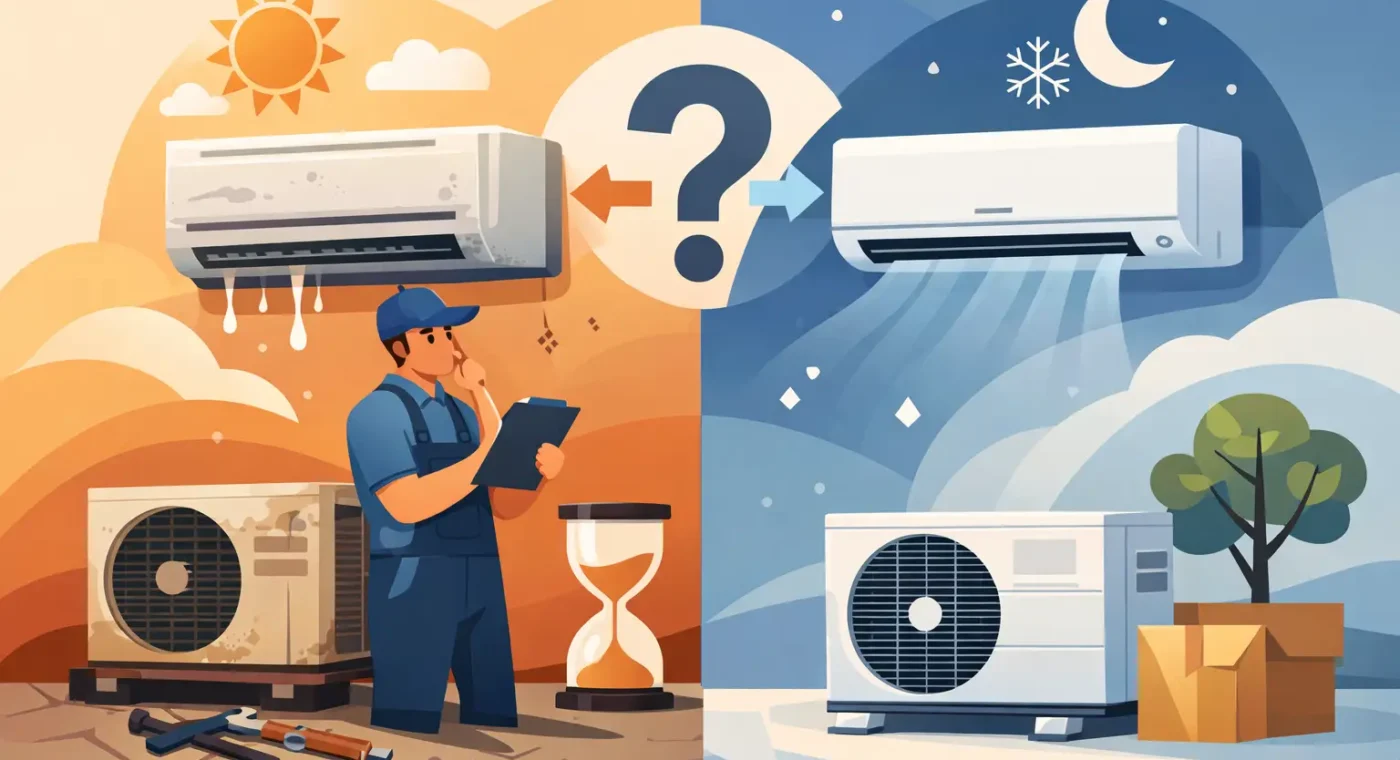
A system that used to cool the house in minutes now runs all afternoon, the upstairs still feels sticky, and the electric bill keeps climbing. That is usually when homeowners start asking the right question: when to replace air conditioner equipment instead of putting more money into one more repair.
The answer is not always based on age alone. Some systems should be replaced sooner because they are unreliable, oversized, undersized, or expensive to run. Others still have useful life left if the core components are in good condition. The right decision comes down to comfort, repair history, energy use, and how much disruption you can afford at home or in a commercial space.
When to replace air conditioner equipment
Most central air conditioners last around 10 to 15 years, though real lifespan depends on usage, installation quality, maintenance, and local climate. A unit that has been serviced regularly and sized properly may stay dependable longer. A system that has struggled from day one can become a problem much earlier.
Age matters because older systems naturally lose efficiency, and replacement parts become harder to source. If your air conditioner is over 12 years old and needs a major repair, replacement often makes more financial sense than continuing to patch it. That is especially true if the compressor, evaporator coil, or condenser coil is failing.
For rental properties and commercial spaces, timing matters even more. Waiting until the system fully fails can mean uncomfortable tenants, customer complaints, or lost business. Replacing before peak-season breakdowns can prevent emergency calls, rushed decisions, and higher downtime costs.
The clearest signs your AC is near the end
A rising repair count is one of the strongest indicators. If you have called for service multiple times in the last two years, the issue is usually not just bad luck. Repeated capacitor failures, refrigerant leaks, fan motor issues, and electrical faults often point to a system that is wearing out overall.
High utility bills are another warning sign. If your usage habits have stayed about the same but cooling costs keep climbing, your system may be working much harder to produce less cooling. That can happen from age-related efficiency loss, failing components, or poor airflow. At a certain point, the monthly waste becomes part of the replacement decision.
Uneven temperatures also matter. If some rooms are cool while others never get comfortable, the problem could be ductwork, insulation, or thermostat placement. But it can also mean the air conditioner is no longer moving enough air or removing humidity effectively. An older system that cannot maintain consistent comfort is often telling you it is time.
Listen to the equipment as well. Grinding, banging, buzzing, or frequent hard starts are not normal. Noise does not always mean replacement is required immediately, but it does mean the system needs a professional diagnosis. When multiple noisy components show wear at the same time, replacement is often the more dependable option.
Repair or replace? The real decision point
A repair is usually worth it when the unit is relatively young, the issue is isolated, and the repair cost is reasonable compared to the value of the system. Replacing a contactor, capacitor, or thermostat on a well-maintained unit is very different from investing in a major repair on equipment that is already near the end of its service life.
A common rule of thumb is to multiply the age of the unit by the repair cost. If the number is high, replacement deserves serious consideration. It is not a perfect formula, but it helps frame the decision. For example, a 14-year-old system needing a costly compressor repair is usually a strong candidate for replacement.
Still, there are trade-offs. A full replacement costs more upfront, and if the current problem is minor, repairing can buy you time. That may be the right move if you are planning a renovation, selling the property soon, or trying to schedule the expense for a less demanding season. The key is to make that choice with clear expectations, not false hope.
Age is important, but efficiency matters too
Older air conditioners are simply less efficient than newer models. Even if your system still runs, it may cool the building at a much higher operating cost. That gap becomes more noticeable in long, hot summers or in properties with high occupancy and long daily runtime.
If your current unit uses outdated refrigerant or struggles to meet modern efficiency standards, replacement can bring more than lower utility bills. It can also improve humidity control, reduce cycling problems, and deliver steadier indoor temperatures.
For businesses, efficiency is not just about the monthly bill. It also affects equipment strain, customer comfort, and indoor working conditions. A commercial operator dealing with hot dining areas, uncomfortable staff, or inconsistent cooling in key spaces may benefit from replacement even before total failure occurs.
When repairs stop being dependable
Some systems can be repaired repeatedly and still remain reliable. Others become unpredictable. That difference matters.
If your AC breaks down during every high-demand period, or if one repair seems to reveal the next issue, reliability has become the main problem. Homeowners feel that in sleepless nights and constant inconvenience. Property managers feel it in repeat complaints and scheduling pressure. Business owners feel it in interrupted operations.
Dependability has value. So does confidence that the system will start on the hottest day of the year. When an air conditioner can no longer offer that confidence, replacement often becomes the safer and more cost-effective decision.
Situations where replacement makes sense sooner
There are cases where replacing earlier is the smarter move, even if the unit still runs. If the system was incorrectly sized from the start, you may have dealt with short cycling, humidity issues, poor airflow, or uneven cooling for years. Continuing to repair the same unit will not solve those design problems.
Replacement also makes sense if you are upgrading major parts of the property. A home addition, a remodeled commercial space, or ductwork changes can alter cooling needs enough that the old system no longer fits the building.
The same goes for safety and electrical concerns. If an aging AC system is contributing to breaker trips, wiring issues, or control failures, the problem may involve more than mechanical wear. In those cases, a full assessment is the right place to start.
What a professional inspection should tell you
A good technician should not push replacement automatically. They should explain what is failing, what can still be trusted, what the repair will realistically accomplish, and how long the current system may continue to operate.
That evaluation should include the condition of the compressor, coils, blower components, refrigerant system, electrical connections, and airflow performance. It should also consider the bigger picture, including the age of the equipment, parts availability, and whether the system is meeting the needs of the space.
For many customers, the most helpful service is not just the repair itself. It is an accurate diagnosis with straightforward pricing and clear next-step options. That is where an experienced service company can save you time, money, and unnecessary frustration.
How to plan replacement without waiting for failure
If your system is older but still operating, planning ahead gives you leverage. You can compare options, schedule installation at a better time, and avoid the pressure of replacing the unit during an emergency heat wave.
That matters for homeowners, but it is even more important for landlords and commercial operators. A planned replacement is easier to coordinate around tenants, staff, customers, and business hours. It also reduces the chance of rushed equipment choices or temporary cooling disruptions.
At EAAIRS Services and Repair Ltd., this is often where customers get the most value from a service call. A clear inspection can tell you whether to repair confidently, monitor the system, or start planning replacement before the next breakdown forces the issue.
The right time is usually earlier than total failure
Many people wait until the AC completely stops working because it feels simpler. In practice, that can be the most expensive and disruptive time to act. Emergency replacement often limits your options and turns a manageable decision into a stressful one.
If your air conditioner is aging, costing more to operate, struggling to keep up, or needing repeated service, do not treat those signs as normal. They are usually the system’s way of telling you it is running out of dependable life.
A well-timed replacement is not just about new equipment. It is about restoring comfort, controlling costs, and avoiding the next breakdown before it interrupts your home or business.