
A breaker that trips once during a storm or after plugging in a space heater can feel like a minor annoyance. A breaker that keeps shutting off power to the same room, appliance, or panel is different. If you are asking what causes circuit breaker tripping, the short answer is that your electrical system is detecting a problem and cutting power before wires overheat, equipment is damaged, or a fire risk develops.
That is the breaker doing its job. The real question is why it keeps seeing a problem in the first place.
What causes circuit breaker tripping in most homes and buildings?
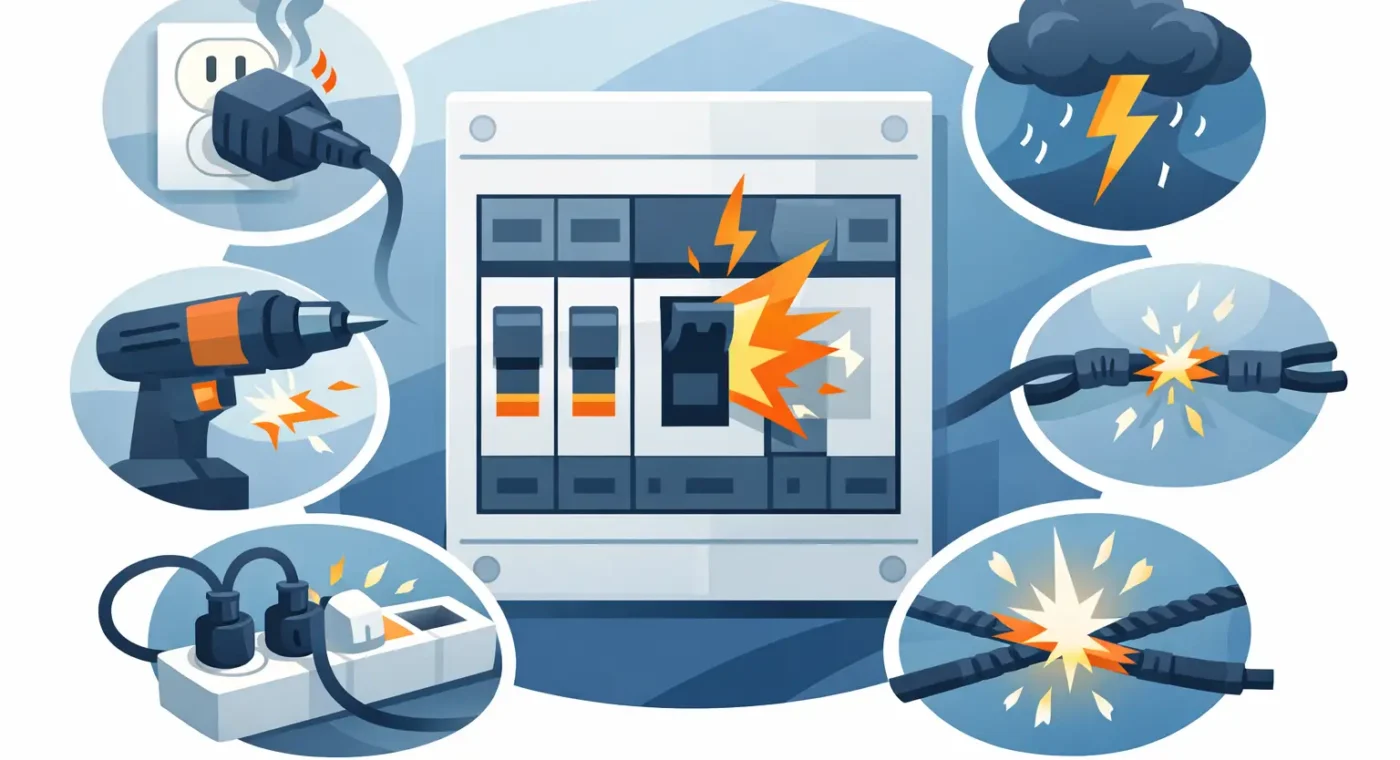
In most cases, breaker tripping comes down to one of a few issues: an overloaded circuit, a short circuit, a ground fault, a faulty breaker, or a problem inside a connected appliance or piece of equipment. The cause is not always dramatic. Sometimes it is as simple as too many high-draw devices running on one circuit. Other times, it points to wiring damage that needs immediate attention.
For homeowners, this often shows up in kitchens, laundry rooms, garages, bathrooms, and older parts of the house where modern power use has outgrown the original wiring plan. For commercial spaces, it may involve refrigeration, cooking equipment, HVAC loads, or multiple devices sharing circuits that were never meant to carry that demand all day.
Overloaded circuits are the most common cause
An overloaded circuit means the breaker is seeing more electrical demand than it is rated to handle. When that happens, it trips to stop the wiring from overheating.
This is common when several heat-producing or motor-driven devices run at the same time. Microwaves, coffee makers, toasters, portable heaters, hair dryers, air fryers, and window AC units can all draw significant power. In a commercial setting, the same issue may come from multiple countertop appliances, warming equipment, or shared-use circuits in work areas.
The tricky part is that overloads are not always constant. A breaker may hold for a while, then trip after ten or fifteen minutes once the load stays high long enough. That delay can make the problem feel random when it is actually very predictable.
If the breaker only trips when certain devices run together, overload is a strong possibility. If it trips with almost nothing plugged in, the issue may be more serious.
Signs of an overloaded circuit
You may notice lights dimming when an appliance starts, outlet covers feeling warm, or a breaker that trips only during peak use. Extension cords and power strips are often part of the story, especially in rooms that do not have enough dedicated outlets for how the space is being used now.
That does not always mean the house was wired poorly. It may simply mean your electrical needs have changed over time.
Short circuits are more urgent
A short circuit happens when electrical current takes an unintended path, often because a hot wire touches a neutral wire. This creates a sudden surge of current, and the breaker trips almost immediately.
Short circuits can be caused by damaged insulation, loose wire connections, worn cords, failed switches, or internal appliance defects. In some cases, moisture plays a role. In others, age, vibration, pests, or accidental damage to wiring are the root cause.
This kind of tripping tends to be fast and repeatable. You reset the breaker, and it trips again right away or as soon as a specific switch is turned on. That pattern matters because it points away from simple overload and toward a fault that needs professional diagnosis.
A short circuit should not be ignored. It raises the risk of wire damage, equipment failure, and heat buildup inside walls, outlets, or devices.
Ground faults are common in wet or utility areas
Ground faults are similar to short circuits, but instead of current flowing where it should not between conductors, the electricity finds a path to ground. This often happens around moisture, damaged insulation, or deteriorated wiring.
Bathrooms, kitchens, basements, laundry rooms, utility rooms, and outdoor circuits are common locations. Ground fault circuit interrupter devices, or GFCIs, are designed to react very quickly in these situations because the hazard includes electric shock.
If a breaker or GFCI keeps tripping in a damp location, do not assume the device itself is bad. Sometimes it is. But just as often, it is detecting leakage current from an appliance, outlet, or wiring connection that is no longer safe.
The appliance may be the real problem
Sometimes the breaker is not the issue and the house wiring is not the issue. The fault may be inside the appliance.
Refrigerators, dishwashers, dryers, microwaves, garbage disposals, water heaters, air conditioners, and commercial kitchen equipment can all develop electrical faults as they age. A failing motor, damaged heating element, compressor issue, or pinched internal wire can trip a breaker even if the rest of the circuit is fine.
This is where diagnosis matters. If the breaker trips only when one appliance starts or reaches a certain cycle, that appliance deserves attention. Replacing a breaker without confirming the equipment condition may only delay the real repair.
For property managers and business owners, this distinction is especially important. A recurring breaker trip tied to one unit of equipment can mean downtime, spoiled inventory, tenant complaints, or interrupted service if it is not addressed quickly.
What causes circuit breaker tripping in older panels?
Older electrical systems can add another layer to the problem. Breakers do wear out. Panels age. Connections loosen over time. Circuits installed decades ago may not match how the building is used today.
An older breaker may become overly sensitive, fail to hold normal loads, or trip inconsistently. That said, a failing breaker is not the first assumption a licensed electrician should make. It is one possible cause, but it has to be tested against the circuit load, wiring condition, and connected equipment.
In older homes and commercial buildings, nuisance tripping can also come from outdated panel capacity, shared neutral issues, deteriorated insulation, or previous repair work that was never done correctly. The safest approach is a full diagnosis, not trial and error.
When repeated tripping is a warning sign
A breaker that trips once after an unusual load is one thing. A breaker that keeps tripping is a message.
If you smell burning, see scorch marks near outlets or the panel, hear buzzing, or notice a breaker that will not reset, stop using that circuit and have it inspected right away. The same goes for tripping that starts suddenly with no clear change in usage. Electrical problems often become more expensive and more dangerous when they are ignored for too long.
There is also a business continuity issue here. In commercial environments, one unstable circuit can affect refrigeration, point-of-sale areas, kitchen production, tenant spaces, or customer comfort. Fast diagnosis is not just about safety. It is also about avoiding extended disruption.
What you can check before calling for service
There are a few reasonable first steps. Unplug recently added devices from the affected circuit. Think about whether the breaker trips only when certain equipment runs. Check for visible cord damage and avoid resetting the breaker repeatedly if it trips right away.
Beyond that, caution matters. Electrical panels and fault conditions are not good places for guesswork. If the cause is overload, the solution may be load balancing or adding a dedicated circuit. If the cause is a short, ground fault, or failing equipment, the repair needs to be specific and safe.
At EAAIRS Services and Repair Ltd., this is exactly why accurate diagnosis comes first. The goal is not just to get the power back on. It is to identify the true cause, make the repair correctly, and reduce the chance of the same issue interrupting your home or business again.
When to call a licensed electrician
Call for professional help if the same breaker trips repeatedly, if a breaker trips instantly after reset, if you see signs of heat or damage, or if the problem involves major appliances, HVAC equipment, water heaters, laundry equipment, or commercial electrical loads. You should also call if the panel is older, unlabeled, or already showing signs of wear.
A licensed electrician can test the circuit, inspect the breaker, evaluate the panel, and determine whether the issue is wiring-related, equipment-related, or load-related. That saves time, avoids unnecessary part replacement, and helps protect both property and people.
A tripping breaker is frustrating, but it is also a built-in warning system doing exactly what it was designed to do. The smart move is to treat it as useful information and act on it before a small interruption turns into a larger repair.
2 Reply on “What Causes Circuit Breaker Tripping?”