
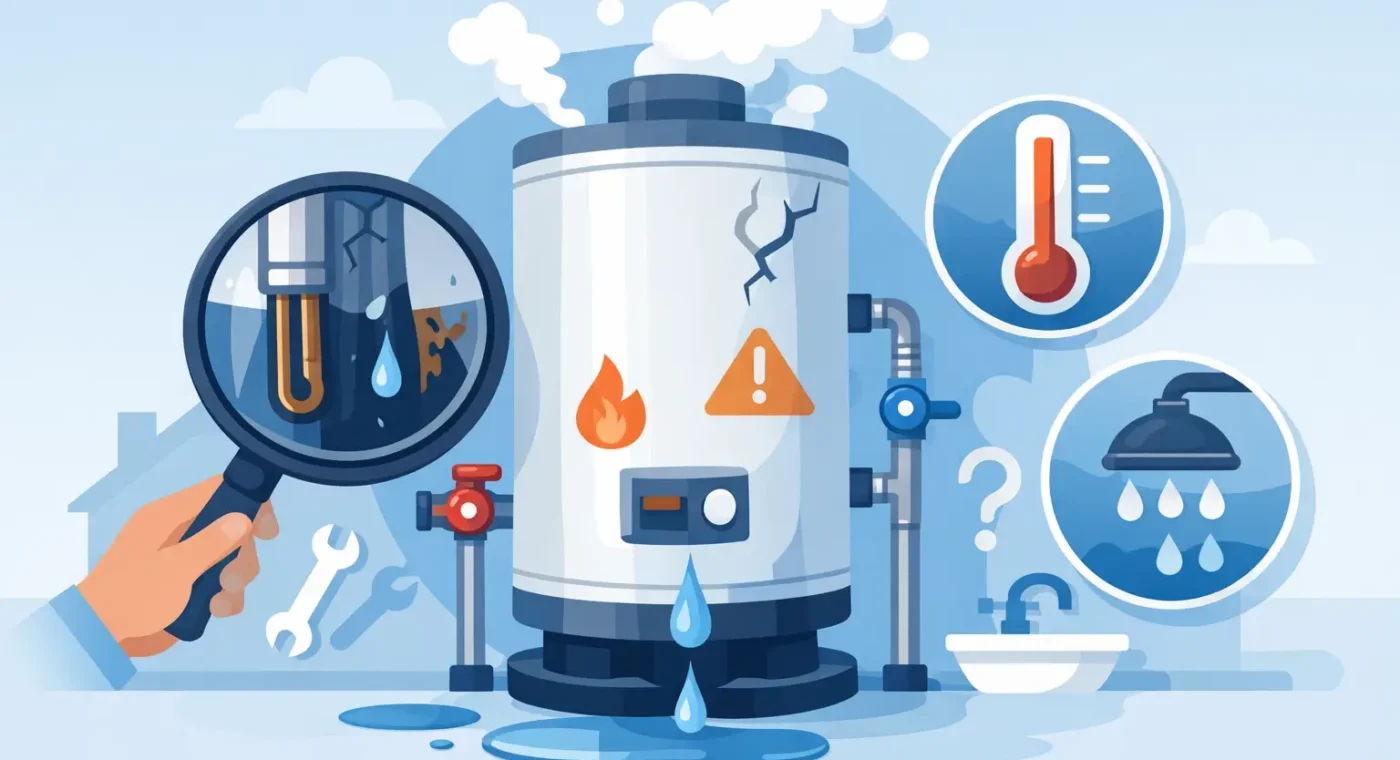
A water heater usually does not quit without warning. It starts with small changes – a shower that turns cold too fast, rumbling sounds from the tank, rusty water at the tap, or a leak that seems minor until it is not. If you are wondering how to know if water heater is failing, the key is spotting these early signs before you end up with no hot water, water damage, or a larger repair bill.
For homeowners, landlords, and property managers, timing matters. A failing unit can interrupt daily routines, upset tenants, and create avoidable property damage. For commercial spaces, even a short loss of hot water can affect operations, sanitation, and customer experience. The good news is that most water heaters show clear symptoms when they are under stress.
How to know if water heater is failing before it stops
The most obvious sign is inconsistent hot water. If the water starts hot and turns lukewarm much sooner than usual, or if it takes longer to heat up, your unit may be losing efficiency. In electric models, a heating element may be failing. In gas models, burner issues or sediment buildup can reduce performance. In either case, the system is telling you it is no longer operating the way it should.
Another common warning sign is reduced hot water capacity. If your household used to handle back-to-back showers without a problem and now struggles with one, something has changed. Sometimes the cause is a simple part replacement. Other times, the tank is aging or collecting too much sediment to work properly.
Noises also matter more than many people realize. Popping, banging, and rumbling sounds often point to sediment hardened at the bottom of the tank. That buildup forces the heater to work harder, increases wear, and can overheat the tank base over time. A quiet hum is normal. Loud, repeated knocking is not.
Leaks are a more urgent sign. Moisture around the tank, pooling water, or drips from fittings should never be ignored. It depends on where the leak is coming from. A loose connection or failing valve may be repairable. A crack in the tank itself usually means replacement is the safer move.
Water quality changes can point to trouble
If your hot water looks rusty, cloudy, or has a metallic smell, your water heater could be corroding inside. Discolored hot water often suggests tank rust or a worn anode rod. If only the hot water is affected and the cold water looks normal, the heater is a likely source.
Odd smells can also signal a problem. A rotten egg odor in hot water is sometimes caused by bacteria reacting with the anode rod inside the tank. While that issue does not always mean total failure, it does mean the system needs attention. Left alone, these internal problems tend to get worse, not better.
Water quality symptoms can be subtle at first. People often assume the issue is temporary, especially if it comes and goes. But if discoloration or odor returns repeatedly, it is worth having the unit checked before corrosion or contamination causes a bigger service issue.
Age still matters, even if the heater is working
One of the simplest ways to judge risk is the age of the unit. Traditional tank water heaters often last around 8 to 12 years, depending on maintenance, water quality, and usage. Tankless systems can last longer, but they still develop wear-related issues. If your unit is nearing the end of its typical lifespan and showing symptoms, replacement may make more financial sense than repeated repair.
This is where a lot of property owners hesitate, and fairly so. Not every older water heater needs immediate replacement. Some units have years left with the right repair. But when age combines with leaks, corrosion, noise, or poor heating performance, you are usually looking at a unit in decline.
If you manage multiple properties or a commercial site, age tracking is especially useful. Replacing a water heater on your schedule is usually less disruptive than dealing with an emergency failure after hours or during peak occupancy.
Signs your water heater may be failing fast
Some symptoms suggest the unit is not just struggling, but getting close to a breakdown. If you notice water around the base of the tank, sudden loss of hot water, tripped breakers on an electric unit, a pilot that will not stay lit on a gas unit, or visible corrosion around valves and fittings, it is smart to act quickly.
A spike in utility bills can also be part of the picture. When a water heater is fighting sediment, failing components, or thermostat issues, it often runs longer to produce less hot water. That inefficiency shows up in monthly operating costs.
There is also a safety side to this. Gas water heaters with burner or venting issues can create serious hazards. Electric units with wiring faults or repeated breaker trips should be checked by a qualified technician. A water heater problem is not just a comfort issue when heat, pressure, gas, and electricity are involved.
What causes a water heater to fail?
In most cases, failure is not caused by one dramatic event. It is usually the result of wear over time. Sediment buildup is one of the biggest culprits, especially in areas with hard water. As minerals settle in the tank, the heater has to work harder, and internal components wear down faster.
Corrosion is another major factor. The anode rod is designed to attract corrosive elements and protect the tank, but it does not last forever. Once it is depleted, the tank itself becomes more vulnerable to rust and deterioration.
Heating elements, thermostats, gas valves, burners, pressure relief valves, and connections can all fail as well. Some of these are straightforward repairs. Others are signs of broader system decline. The difference usually comes down to the unit’s age, condition, and whether the problem is isolated or part of a larger pattern.
Lack of maintenance speeds everything up. Periodic flushing, inspection, and part replacement can help a water heater last longer and perform more reliably. Without that upkeep, small issues tend to pile up until the unit becomes unreliable.
Repair or replace? It depends on the full picture
If you are trying to decide what to do next, the answer depends on more than one symptom. A newer water heater with a faulty thermostat or heating element is often worth repairing. An older unit with corrosion, leaking, and weak performance is usually a better candidate for replacement.
Cost matters, but so does reliability. The cheapest option today is not always the least expensive over the next year. If a unit keeps failing, loses efficiency, or creates downtime for tenants or staff, replacement can be the more practical choice.
This is where a professional diagnosis saves time. A qualified technician can determine whether you are dealing with a repairable component issue, a maintenance problem, or a tank that is simply nearing the end of its service life. At EAAIRS Services and Repair Ltd., that kind of clear, fast diagnosis is what helps customers avoid guesswork and make the right call.
When to call for service
If you have no hot water at all, see leaking around the unit, smell gas, hear loud tank noises, or notice rusty hot water, do not wait. Those issues can move from inconvenient to expensive very quickly. Even if the heater is still working, delayed service often means more wear, more damage, and fewer repair options.
For landlords and commercial operators, fast response is even more important. A hot water issue can affect habitability, customer service, sanitation, and daily operations. Getting the unit inspected early can prevent an emergency replacement later.
If the symptoms seem minor, that does not always mean the problem is minor. Water heaters tend to fail progressively. Catching the problem at the first sign gives you more control over cost, scheduling, and next steps.
A dependable water heater should not make you second-guess every shower, sink, or service call. If something feels off, trust that instinct and get it checked. Acting early is often the difference between a manageable repair and a full system failure.
One Reply on “How to Know if Water Heater Is Failing”