
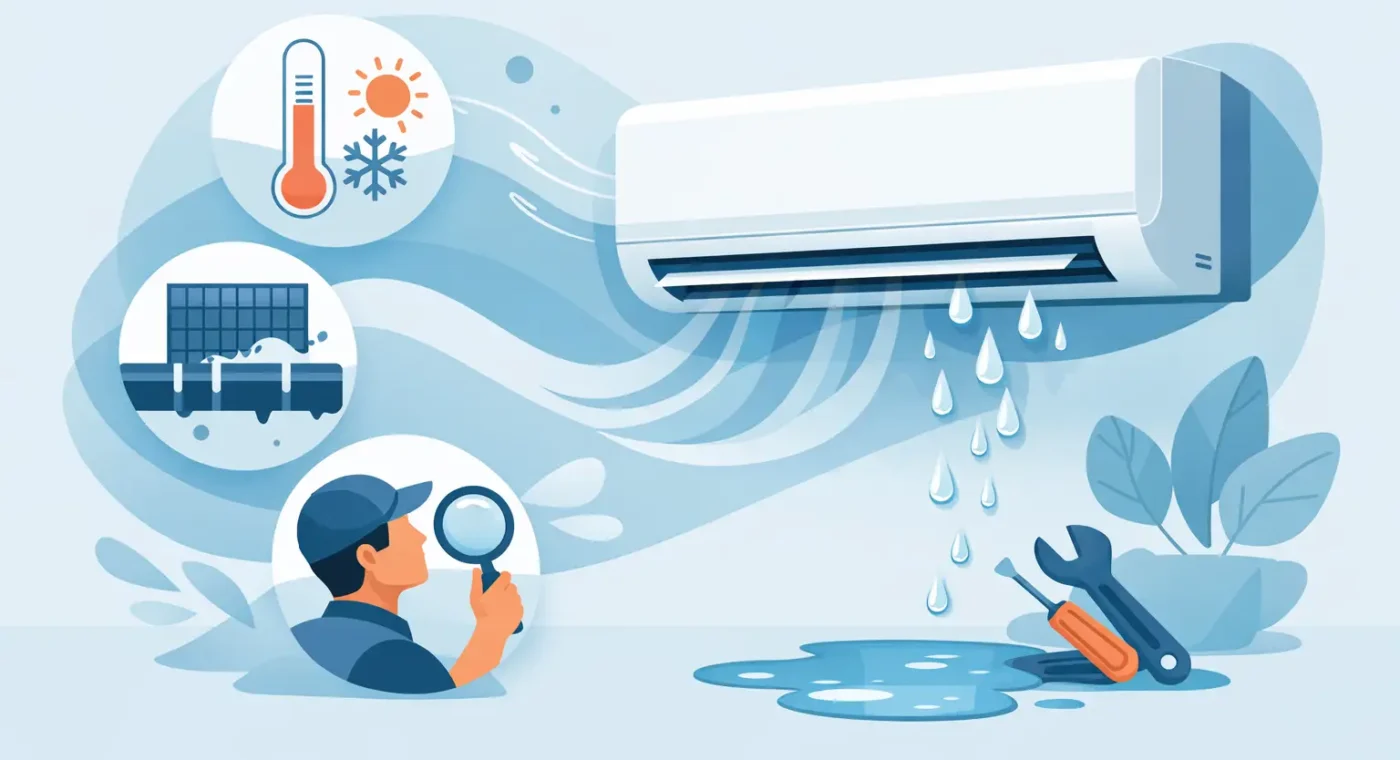
You notice a puddle near the indoor unit, the ceiling around a vent looks damp, or water starts showing up where it definitely should not. If you are asking, “why is my AC leaking,” the short answer is this: your air conditioner is pulling moisture from the air, and something is stopping that water from draining the way it should.
Sometimes the fix is simple, like a dirty filter. Other times, the leak points to a clogged drain line, a damaged drain pan, frozen evaporator coils, or an installation issue that needs professional repair. The key is not to ignore it. A leaking AC can lead to water damage, mold growth, reduced cooling performance, and a bigger repair bill if the root problem keeps getting worse.
Why is my AC leaking indoors?
Your air conditioner does more than cool the air. It also removes humidity. That moisture condenses on the evaporator coil and normally drains through a condensate line into a safe discharge point. When that process gets interrupted, the water backs up or drips where it should not.
An indoor leak usually means there is a drainage problem, airflow problem, or frozen component. In some cases, the AC is not technically failing to make water. It is making water exactly as designed, but the system cannot manage it properly anymore.
A clogged condensate drain line
This is one of the most common reasons an AC starts leaking inside. Dust, dirt, algae, and sludge can build up in the condensate drain line over time. When the line clogs, the water has nowhere to go, so it backs up into the drain pan and overflows.
This type of issue is especially common during heavy AC use because the system is removing more moisture from the air. If you have noticed musty smells, inconsistent drainage, or a shutoff from a float switch, a blocked line is a strong possibility.
A dirty air filter causing frozen coils
Restricted airflow can create a chain reaction. When the filter is dirty, not enough warm air moves across the evaporator coil. The coil gets too cold, ice forms, and when that ice melts, it can overwhelm the drain system and create a leak.
This is why a small maintenance issue can turn into a water problem. If the filter has not been changed in a while, start there. It is one of the few things most homeowners can check safely and quickly.
A cracked or rusted drain pan
Older systems can develop rust or cracks in the drain pan. If that pan is damaged, water may drip out before it ever reaches the drain line. This tends to show up in aging units, especially if corrosion has been building for years.
A pan replacement may be straightforward in some systems, but in others it depends on the unit design and overall condition. If the AC is older and leaking from a deteriorated pan, it may also be time to weigh repair costs against replacement value.
Low refrigerant and coil freezing
Low refrigerant can cause the evaporator coil to get too cold and freeze over. Once the ice melts, water can spill out faster than the system can drain it. Low refrigerant does not just happen from normal use. It usually means there is a leak somewhere in the refrigerant circuit.
This is not a do-it-yourself issue. Refrigerant problems require proper diagnosis, leak testing, and licensed repair. If your AC is leaking water and also struggling to cool, running longer than usual, or blowing warmer air, low refrigerant should be on the list.
Improper installation or poor leveling
If the system or drain components were not installed correctly, water may not flow in the right direction. A slightly unlevel indoor unit or a poorly pitched drain line can cause recurring leaks, even when other parts of the system are working normally.
This is one reason the same leak can keep coming back after a quick patch. If the underlying setup is wrong, the symptom returns. A proper inspection can usually spot this fast.
What to check before calling for AC repair
If you are wondering why your AC is leaking, there are a few basic checks you can make without opening equipment or taking risks. Start with the thermostat and filter. If the system is still running while leaking, turn it off to limit water damage and help prevent further stress on frozen components.
Next, look at the air filter. If it is visibly dirty, replace it. Check around the indoor unit for standing water and pay attention to whether the leak appears constant or only happens during cooling cycles. If you can safely see the condensate drain line access point, signs of backup or algae around it can be useful information for a technician.
What you should not do is keep restarting the system and hoping it clears itself. You also should not attempt refrigerant work, electrical disassembly, or coil cleaning if you are not trained for it. Water around HVAC equipment can involve both mechanical and electrical risk.
Signs the leak is more serious than it looks
Not every AC leak is a quick maintenance fix. Some situations point to a more urgent repair need, especially if the water issue comes with other performance problems.
If your home feels humid, the AC is not cooling well, the system is short cycling, or you see ice on the refrigerant lines or indoor coil, the leak may be part of a larger failure. Water stains on walls or ceilings, repeated drain backups, and leaks that return after a filter change are also red flags.
For landlords and property managers, timing matters here. A slow leak in one unit can turn into drywall damage, flooring damage, tenant complaints, and mold concerns surprisingly fast. For commercial operators, downtime and indoor comfort issues can disrupt staff, customers, and equipment conditions. The sooner the cause is diagnosed, the less disruption you have to manage.
Why is my AC leaking from the ceiling or vent?
If water is showing up at a ceiling vent, the source may still be the central AC system. Cold air moving through ductwork in a hot, humid space can create condensation if the ducts are poorly insulated or if there is an airflow imbalance. In other cases, the leak may be traveling from the air handler, attic unit, or drain pan and showing up at the nearest visible point.
This is where leak location can be misleading. The water stain you see is not always where the problem starts. If an attic-mounted air handler is involved, a blocked drain line or secondary drain pan issue can become a ceiling repair problem very quickly.
When professional service makes the most sense
A leaking AC is one of those problems that looks minor until it is not. If replacing the filter does not stop it, or if there are signs of freezing, poor cooling, recurring water, or visible drain blockage, a professional diagnosis is the safest next step.
A trained technician can inspect the condensate system, test airflow, check for refrigerant issues, examine the pan and coil condition, and confirm whether the installation is contributing to the problem. That matters because the right repair depends on the actual cause. Clearing a line helps if the line is clogged. It does not help much if the real issue is a frozen coil caused by low refrigerant or chronic airflow restriction.
This is also where working with a multi-service company can save time. Water around an AC unit may affect nearby electrical components, ceilings, walls, or connected systems. Having one reliable point of contact for diagnosis and repair makes the process faster and far less stressful. That is a big part of why customers call EAAIRS Services and Repair Ltd. when comfort systems start affecting the rest of the property.
How to reduce the chance of future AC leaks
Routine maintenance goes a long way. Clean filters on schedule, seasonal AC inspections, drain line cleaning, and coil checks help catch small issues before they turn into indoor leaks. If your system is older, it is also worth having the drain pan and condensate setup inspected before peak cooling season.
There is a trade-off here. Skipping maintenance can save money in the short term, but it often increases the risk of emergency repairs, water damage, and reduced system life. For homeowners, that means avoidable disruption. For commercial properties, it can mean complaints, downtime, and preventable service calls.
If your AC is leaking, treat it as an early warning, not just a mess to clean up. Water is your system telling you something is off, and the fastest way back to reliable cooling is to address the cause before the damage spreads.